The Lobito Corridor: A Chinese Paradox
Rui Verde
The Objectives of the Lobito Corridor
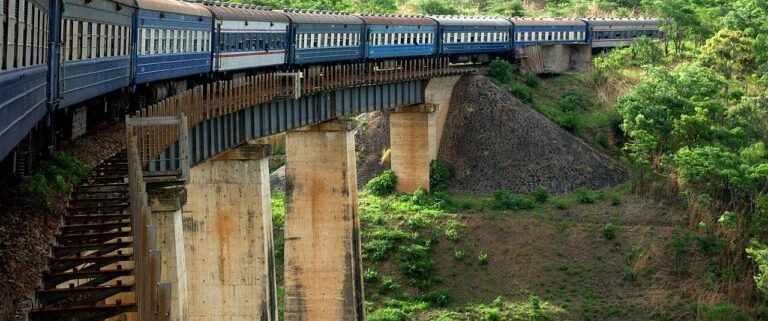
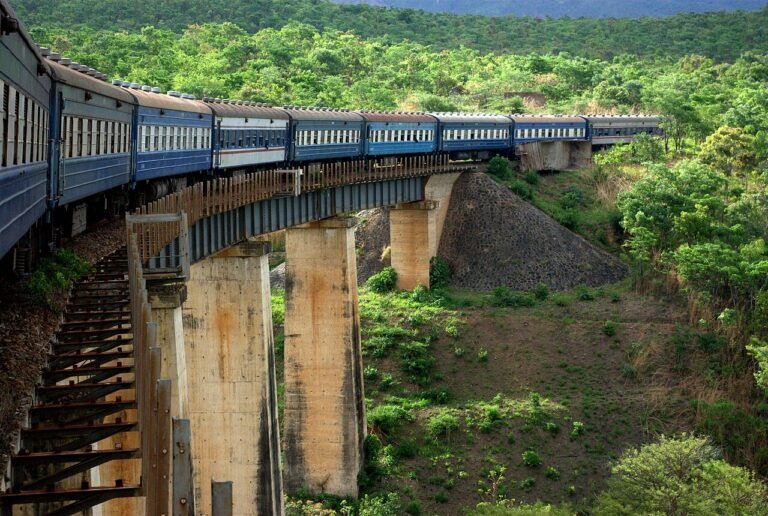
In recent years, the Lobito Corridor has become the most visible symbol of the attempt to reconfigure supply chains for critical minerals between Africa and the transatlantic market. The initiative, promoted by the United States, the European Union, and the governments of Angola and the Democratic Republic of the Congo—though some ambiguity remains regarding Zambia—seeks to offer a logistical alternative to Chinese dominance in the export of copper, cobalt, and other strategic minerals from the DRC and, to a lesser extent, from Angola1 . The rehabilitation of the railway line, the international concession, and the promise of additional investments in energy and port infrastructure are presented as a coordinated effort to strengthen Western autonomy in a sector vital to the energy transition2 .
The Chinese Paradox
However, a structural analysis reveals a more complex reality. The Lobito Corridor is undoubtedly a necessary project for the region and its international partners.
But, paradoxically, one of the major ultimate beneficiaries of its implementation is China, for three fundamental reasons: the decisive role of Mota-Engil, whose governance is heavily influenced by Chinese shareholders; the Chinese ownership of a substantial portion of the mines that will supply the corridor; and the strategic incapacity of the so-called West, marked by hesitation, a lack of vision, and a cultural environment that devalues collective ambition.
This article advocates for the Lobito Corridor as a tool for regional development and logistical diversification, but demonstrates that, in the final balance of geopolitical power, the project further strengthens China’s position, contrary to what many experts and politicians claim3 .
Mota-Engil as a Key Player: China’s Structural Influence on Its Governance
The primary reason for considering China the ultimate beneficiary of the Lobito Corridor lies in Mota-Engil’s central role in the project. The company has simultaneously become a major railway operator, one of the largest contractors for complementary works, and a player with a simultaneous presence in Angola and the DRC—something few European companies can replicate on such a scale and with such continuity. In recent years, Mota-Engil has secured key contracts for the rehabilitation of railway sections, the modernization of stations, the construction of bridges, and heavy engineering works associated with the corridor. In Angola, the company has been responsible for critical projects on the Benguela Railway (CFB), such as slope stabilization, platform renovation, and the modernization of signaling systems, in addition to being part of the consortium that manages and operates the line. In the DRC, Mota-Engil secured contracts for the rehabilitation of sections of the line between Kolwezi and Dilolo, as well as for complementary road works that ensure the connection between mining areas and the railroad4 .
Without this capacity for simultaneous execution in both countries, the Lobito Corridor simply would not move forward. The company has become the operational linchpin linking the political vision to technical reality. But it is precisely here that the decisive factor emerges: Mota-Engil is today a company with significant Chinese influence. The China Communications Construction Company’s (CCCC) acquisition of a stake in Mota-Engil—holding about one-third of the shares—and its position on the board are decisive5 .
In other words, although Mota-Engil remains formally Portuguese, the company’s strategic control is deeply influenced by the Chinese presence6 . This has direct implications for the Lobito Corridor: the company that carries out a large part of the construction work and ensures logistical operations is, in practice, guided (or partially guided) by a Chinese state-owned corporation with global interests aligned with Beijing’s industrial policy7 .
Chinese influence over Mota-Engil is not merely formal but manifests itself in its focus on African markets where China already has a strong presence, in its coordination with Chinese engineering and mining companies, and in its ability to secure financing through Chinese banks for large-scale projects. Mota-Engil has thus become a hybrid entity, European in appearance but Chinese in its decision-making structure8 .
In a project like the Lobito Corridor, where technical execution is as important as—or even more important than—diplomacy, this fact is decisive: through Mota-Engil, China controls an essential part of the infrastructure that the West intends to use to reduce its dependence on China. It is a strategic irony that is hard to ignore.
Chinese Ownership of the Mines That Will Supply the Corridor
The second reason why China emerges as the ultimate beneficiary of the Lobito Corridor is even more structural: a substantial portion of the mines from which the minerals transported via the corridor will originate belongs to Chinese companies.
In the DRC, Chinese companies dominate the mining sector. Companies such as China Molybdenum (CMOC), Zijin Mining, and Huayou Cobalt control copper and cobalt mines that rank among the most productive in the world. Kisanfu, Tenke Fungurume, Kamoa-Kakula (in partnership with Ivanhoe, but with a strong Chinese presence in the supply chain), Mutoshi, and other strategic operations are integrated into value chains where China holds equity stakes, operational control, or long-term purchase agreements9 . Over the past two decades, China has consolidated a dominant position in the Democratic Republic of the Congo’s copper and cobalt sector. The country controls between 70% and 80% of industrial production of these minerals through majority stakes in fifteen of the largest Congolese mines. This dominance stems from a long-term strategy of acquisitions, infrastructure financing, and long-term supply contracts that tie Congolese production to Chinese value chains. China’s dependence on copper from the DRC has intensified, reaching 44.7% of its total imports in the first seven months of 2026. At the same time, the Congolese policy of banning the export of concentrate further strengthens China’s position, since the new smelters needed to process the ore are financed primarily by Chinese capital, closing the cycle of control from extraction to processing10 .
The Lobito Corridor was designed to offer a logistical alternative for transporting these minerals, which currently go mostly to ports in Tanzania and South Africa. However, changing the route does not change ownership. If the minerals continue to be extracted by Chinese companies, the corridor merely facilitates the export of resources controlled by Beijing, now through infrastructure promoted by the West.
China benefits in two ways because the Lobito Corridor simultaneously offers it logistical efficiency and geopolitical leverage.
First, it significantly reduces transportation costs by providing a shorter, more stable, and less congested route to the Atlantic.
Second, it gives Beijing greater strategic flexibility: by diversifying its export routes, China can now direct these minerals to both Western and Asian markets.
Furthermore, China has demonstrated the ability to vertically integrate these supply chains: from extraction to processing, through refining and battery production. By ac ly accelerating the flow of minerals, the corridor strengthens China’s position in the global value chain, even as Western rhetoric claims the opposite.
It is important to emphasize that this reality does not stem from any recent Western mismanagement, but from two decades of consistent, patient, and strategically oriented Chinese investment. China consolidated its positions in the DRC while the West hesitated, retreated, or limited itself to short-term interventions. The Lobito Corridor arrives too late to alter this ownership structure.
The West’s Strategic Inability: The Reflection of a Civilization in Self-Doubt
The third reason why China emerges as the ultimate beneficiary of the Lobito Corridor is more profound and less visible: the West has, to a large extent, lost its ability to think strategically and to act with a will to win. This assertion may seem excessive, but it is supported by cultural, sociological, and economic analyses. One need only observe mainstream cultural production—for example, Netflix series—to discern a recurring pattern: Western heroes are often defeated, skeptical, traumatized figures who distrust the system and are unable to believe in a collective future11 .
This cultural environment is not irrelevant, as it shapes expectations, influences political and economic elites, and reduces the ability to mobilize societies for long-term projects.
In contrast, productions from other regions—from Asia to the Middle East—feature confident protagonists who are integrated into the system and focused on progress and overcoming challenges.
The contrast is revealing, as it demonstrates that the West doubts itself while other regions believe in their future. Joseph Schumpeter anticipated part of this phenomenon by arguing that capitalism could collapse not for economic reasons, but for ideological ones. For Schumpeter, the success of capitalism would create intellectual elites who, while benefiting from the system, would become critical of the system itself, eroding the cultural legitimacy that underpins the market economy12 .
This erosion is evident in the hesitations, delays, and contradictions that have marked the Lobito Corridor. The project was announced with great enthusiasm, but its implementation has been marked by institutional confusion, excessive marketing, a lack of coordination among partners, and a tendency to promise more than is actually delivered.
Meanwhile, China observes, invests, consolidates its positions, and benefits from the infrastructure that others finance and promote. The West seems to have lost the ability to act with the strategic clarity that characterized decisive historical moments—from European reconstruction to investment in science and technology during the Cold War. Today, ambition is often replaced by communication; strategy, by slogans; and execution, by hesitation.
Conclusion
On balance, the Lobito Corridor reveals a paradox that is hard to ignore. It is a necessary, useful, and structurally transformative project for Angola, the DRC, and the entire south-central African region. The modernization of the railroad, the creation of new economic opportunities, the reduction of logistics costs, and the opening of an alternative to traditional routes represent concrete and immediate gains. For the so-called West, the corridor emerges as instrument for diversifying supply chains in a context of increasingly intense geoeconomic competition.
However, when one examines the project’s underlying structure, it becomes evident that China emerges as the major structural beneficiary. The decisive influence it exerts over Mota-Engil—the company responsible for essential aspects of the project’s implementation and operation—its ownership of a substantial portion of the mines that will supply the corridor, and Western strategic hesitation all converge to strengthen China’s position.
This observation does not mean that the Lobito Corridor is a Western failure. On the contrary, it demonstrates that well-intentioned initiatives, when not accompanied by a consistent strategic vision, can end up reinforcing precisely the power they were intended to balance. China did not “win” the Lobito Corridor; rather, the West failed to truly step up to the plate with the determination, coherence, and capacity for execution that the moment demanded.
At the end of the day, there is no alternative but to abandon this confrontational perspective and seek a collaborative solution that places Angola and the DRC at the center of decision-making. Persisting in a narrative of absolute competition between the West and China only weakens the corridor, fuels suspicion, and creates tensions that could jeopardize its sustainability.
The Lobito Corridor will succeed if it overcomes the geopolitical disputes surrounding it and becomes an instrument of regional development. Cooperation—even if pragmatic, even if limited—is the only way to ensure that the corridor’s benefits are not concentrated exclusively among external actors.
The choice is clear: either the corridor establishes itself as a platform for convergence, where different international interests are coordinated in a transparent manner focused on local development, or it risks becoming yet another project hijacked by external agendas. The choice does not depend solely on Washington, Brussels, or Beijing; it depends above all on the ability of the region’s governments (Angola and the DRC) to demand that the corridor serve, first and foremost, their own citizens.
1 And also from Zambia, which, however, seems more interested in TAZARA—an alternative route to the Indian Ocean. China, Tanzania, and Zambia are currently implementing a plan for the extensive modernization of TAZARA, including the complete rehabilitation of the railway, new locomotives, digitization, and a possible concession to Chinese operators.
2 See Mpiana Tshintenge, “Lobito Corridor: The Geopolitical Reconfiguration of Mineral Transport Flows from the DRC and Zambia,” Konrad Adenauer Stiftung, 2026.
3 As one example among countless articles, see Africa Briefing. (2026). “US backs Lobito Corridor to counter China.” Africa Briefing. https://africabriefing.com/us-backs-lobito-corridor-to-counter-china/#google_vignette
4 Castro, F. (August 26, 2026). Mota◻Engil Signs $1.8 Billion Contract for Railroad in the DR Congo. ECO. https://eco.sapo.pt/2026/08/26/mota-engil-ganha-contrato-para-ferrovia-no-congo;
5Jornal de Negócios. (2020, November 5). Chinese firm CCCC acquires 30% of Mota◻Engil. Jornal de Negócios. https://www.jornaldenegocios.pt/empresas/industria/detalhe/chinesa-cccc-compra-30-da-mota-engil
6 Youkee, M. (November 20, 2020). Chinese Expansion with a Portuguese Face: CCCC’s Acquisition of Mota◻Engil. Dialogue Earth. https://dialogue.earth/pt-br/negocios/38445-expansao-chinesa-portugal-mota-engil-america-latina-africa-cccc
7 Pirio, G. (2024). Should a Federal Agency Be Supporting Chinese Companies Sanctioned by the U.S. Government? Unpublished manuscript.
8 Ibid.
9 Hidayat, M. (September 8, 2026). China Tightens Its DRC Copper Grip — 44.7% Share. Discovery Alert. https://discoveryalert.com/analysis/china-drc-copper-dominance.
10 Ibid.
11Booker, C. (2004). The Seven Basic Plots: Why We Tell Stories, Continuum; Han, B.-C. (2015). The Burnout Society. Stanford University Press. Sun, W. (2020). Chinese Soft Power and Television Drama. Routledge.
12 Schumpeter, J. A. (1942). Capitalism, Socialism, and Democracy. Harper & Brothers.