
Artigos

China Invested 1.4 Billion USD in the Tanzania–Zambia Railway (TAZARA)

What is the impact on the Lobito Corridor?

João Shang
Associate Researcher at CEDESA (China–Africa Area)
Visiting Professor at Beijing University of International Business and Economics


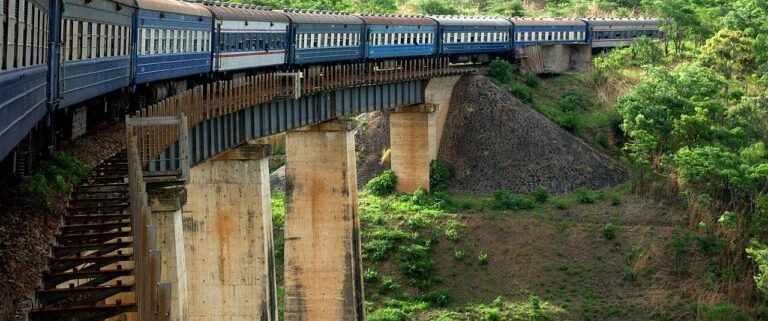
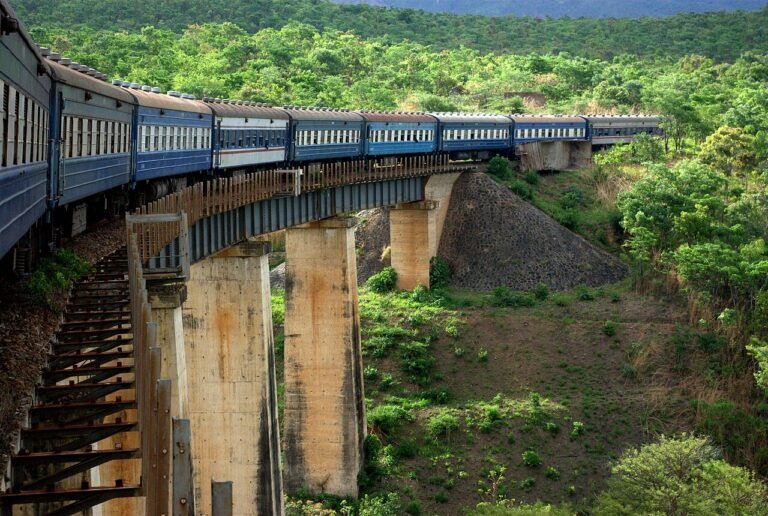
Across the vast plateau of southern Africa stretches a steel artery symbolizing friendship and cooperation between China and Africa—the Tanzania–Zambia Railway (TAZARA). Spanning approximately 1,860 km, the railway connects the port of Dar es Salaam on the Indian Ocean to the city of Kapiri Mposhi in central Zambia, crossing Tanzania’s highlands and linking landlocked, mineral-rich countries to the outside world.

TAZARA is not only an infrastructure project but also a historic symbol of Africa’s economic independence and regional integration. For resource-rich countries such as Zambia, Tanzania, and the Democratic Republic of the Congo (DRC), the railway plays a crucial role in mineral transport, trade promotion, and regional cooperation.

Zambia: The Lifeline of the Copper Economy

Zambia is one of the world’s top copper producers, and copper exports account for about 70% of its foreign exchange earnings. With TAZARA, Zambia gained an independent railway route to the Indian Ocean, reducing reliance on routes controlled by former colonial powers.

Through this railway, copper produced in the Copperbelt region is transported to the port of Dar es Salaam for export to Asia and Europe. At its peak, TAZARA handled more than one million tons of copper and other goods annually. This transport network significantly reduced logistics costs and ensured Zambia’s economic stability.

The railway also promoted integration between mining areas and industrial cities, fostering the growth of towns such as Ndola and Kapiri Mposhi and creating thousands of direct and indirect jobs.

Tanzania: A Link Between the Port and the Economic Corridor

For Tanzania, TAZARA serves not merely as a national railway but as an international trade corridor. The port of Dar es Salaam has become one of East Africa’s main mineral export hubs thanks to this line.

The growing cargo volume—including minerals, fuels, fertilizers, and industrial products—has boosted the port’s growth and driven economic development in cities along the route, such as Mbeya and Mpika, forming a new internal economic axis. TAZARA has also strengthened Tanzania’s geostrategic position within the Southern African Development Community (SADC), consolidating its role as a regional hub.

Congo-Kinshasa: An Alternative Route to the Lobito Corridor

Katanga, in southeastern DRC, is extremely rich in copper, cobalt, tantalum, and lithium. Historically, exports of these minerals were hindered by poor infrastructure. With stronger regional cooperation, many Congolese mining companies began using TAZARA, transporting their products via Lubumbashi through Zambia and then by rail to Dar es Salaam.

Although this route is slightly longer than the Lobito Corridor in Angola, it offers greater stability, safety, and reliability, especially during political instability. With rising global demand for strategic minerals—particularly cobalt and copper—TAZARA has become essential for exporting DRC’s mineral wealth and securing a steady flow of foreign exchange.

TAZARA has enhanced logistical integration between inland and coastal countries of southern Africa. Beyond linking Zambia and Tanzania, it connects through branch lines and roads with the DRC, Malawi, Rwanda, and Burundi, providing direct access to the sea. This connectivity system has greatly increased intra-African trade, supporting the goals of the African Continental Free Trade Area (AfCFTA).

Reducing Costs and Increasing Efficiency

Compared with road transport, rail is cheaper, safer, and less polluting. For mining companies, rail use can reduce logistics costs by 30% to 40%. The railway also offers greater reliability and lower risk of cargo damage.

Before the railway, many of the regions it crosses were economically isolated. TAZARA created new opportunities for employment, trade, and services, fostering progress in education, healthcare, and social infrastructure. The project became a hallmark of Sino–African cooperation aimed at improving local livelihoods.

China Invested 1.4 Billion USD to Modernize the TAZARA Railway

Despite its historic significance, TAZARA faces major challenges: aging infrastructure, outdated locomotives, and reduced capacity. Yet it remains one of China’s most comprehensive overseas cooperation projects.

Years of wear, obsolete equipment, and management issues reduced operational efficiency. In the early 21st century, China, Tanzania, and Zambia began joint inspections and negotiations, reaching a preliminary agreement on TAZARA’s revitalization.

With rising global commodity prices, especially copper, both Tanzania and Zambia became more determined to boost mineral exports. They expressed a strong interest in modernizing and expanding the railway to meet growing transport demand.

During the Beijing Summit of the Forum on China–Africa Cooperation in September 2024, the three heads of state—China, Tanzania, and Zambia—signed a Memorandum of Understanding on the TAZARA Revitalization Project.

Early this year, the TAZARA Authority signed a concession agreement with a Chinese company under which China will invest 1.4 billion USD to modernize the railway.

Why Modernize TAZARA?

After modernization—reinforced tracks, upgraded signaling, renewed locomotives, and digital management systems—railway efficiency and safety improved substantially. Average train speeds rose from 30–40 km/h to 60–80 km/h, while cargo turnaround times fell by about 40%. Annual capacity increased from under 1 million tons to between 3 and 5 million tons, with potential for further growth.

This allows Zambia’s copper and DRC’s cobalt to reach international markets more efficiently. The logistics system between inland regions and the port became faster and more reliable. Rail transport costs dropped by 30%–40% compared to road, and energy consumption nearly halved.

For example, copper transport from the Copperbelt to Dar es Salaam, which previously took 10–14 days, now takes 5–7 days. For mining companies, this means lower costs, better predictability, and greater competitiveness in the global metals market.

Dar es Salaam’s port also benefits from increased exports, generating higher revenues from port fees, storage, and currency exchange—a win-win for all involved countries.

Modernization transformed TAZARA into a transnational economic corridor based on the “resources–transport–processing–export” model. The port of Dar es Salaam was expanded and upgraded, becoming an integrated mineral export and container transport hub.

The modernization process created over 30,000 direct and indirect jobs in construction, maintenance, logistics, and management. Cities like Mpika, Mbeya, and Kapiri Mposhi grew rapidly, with more business activity and real estate development.

New passenger trains are safer and more comfortable, boosting tourism and mobility. For rural communities, the railway provides vital access to schools, hospitals, and markets, greatly improving living conditions.

Modernization strengthened economic and institutional integration among Tanzania, Zambia, and the DRC. The railway now serves as both a physical and political link fostering customs cooperation, border facilitation, and regional trade—aligned with the African Union’s Agenda 2063 for a connected, industrialized, and self-reliant continent.

The new TAZARA also supports the AfCFTA by improving the mobility of goods and people across Africa’s east–south axis. It stands as a key landmark of China’s Belt and Road Initiative (BRI) in Africa.

Future Prospects and Strategic Value

In the context of China’s Belt and Road Initiative, TAZARA takes on new strategic relevance. In the future, it should consolidate itself not only as a mineral transport route, but also as an integrated economic corridor:

Adding value to minerals – creation of industrial zones for smelting and processing copper and cobalt; Formation of a regional economic corridor – integration between rail, road, port, and energy infrastructure; Green and sustainable transport – rail transport emits less carbon and promotes ecological development; Symbol of modern Sino-African cooperation – the revitalization of TAZARA represents a new model of partnership based on mutual benefit and joint development.

The Tanzania–Zambia Railway spans borders and generations. It embodies China–Africa friendship while powering southern Africa’s economy. From Zambia’s Copperbelt to the DRC’s cobalt mines and the port of Dar es Salaam, TAZARA connects Africa’s mineral wealth to the global market.

In today’s context of deeper African regional integration and Belt and Road cooperation, TAZARA is poised for renewed vitality, continuing its irreplaceable role in mineral transport and Africa’s economic development.

China investiu 1,4 bilhão dólares na Ferrovia Tanzânia-Zâmbia (TAZARA).

Qual o impacto no Corredor Lobito?

JOÃO SHANG

Investigador Associado ao CEDESA (área China-África)

Visiting Professor na Beijing University-International Business and Economics

No vasto planalto do sul de África, estende-se uma artéria de aço que simboliza a amizade e a cooperação entre a China e a África — a Ferrovia Tanzânia-Zâmbia (TAZARA). Com aproximadamente 1.860 km de extensão, a linha ferroviária liga o porto de Dar es Salaam, no oceano Índico, à cidade de Kapiri Mposhi, no centro da Zâmbia, atravessando o planalto da Tanzânia e conectando os países do interior ricos em recursos minerais ao mundo exterior.

A TAZARA não é apenas um projeto de infraestrutura, mas também um símbolo histórico da independência econômica e da integração regional africana. Para países ricos em recursos como Zâmbia, Tanzânia e República Democrática do Congo (RDC), esta ferrovia desempenha um papel fundamental no transporte de minerais, promoção do comércio e fortalecimento da cooperação regional.

Zâmbia: a linha vital da economia do cobre

A Zâmbia é um dos principais produtores mundiais de cobre, e as exportações do metal representam cerca de 70% das receitas de divisas do país. Com a TAZARA, a Zâmbia passou a dispor de uma rota ferroviária independente para o oceano Índico, reduzindo a dependência das rotas controladas por antigos regimes coloniais.

Por meio da ferrovia, o cobre produzido na região do Copperbelt é transportado até o porto de Dar es Salaam para exportação à Ásia e à Europa. No auge das suas operações, a TAZARA chegou a movimentar mais de 1 milhão de toneladas de cobre e outros produtos por ano. Essa rede de transporte reduziu significativamente os custos logísticos e garantiu a estabilidade da economia zambiana.

Além disso, a ferrovia estimulou a integração entre as áreas mineiras e as cidades industriais, promovendo o desenvolvimento urbano e industrial de localidades como Ndola e Kapiri Mposhi, e criando milhares de empregos diretos e indiretos.

Tanzânia: elo entre o porto e o corredor econômico

Para a Tanzânia, a TAZARA não é apenas uma ferrovia nacional, mas sim um corredor internacional de comércio. O porto de Dar es Salaam tornou-se, graças à ferrovia, um dos principais centros de exportação de minerais da África Oriental.

O aumento do volume de cargas — minerais, combustíveis, fertilizantes e produtos industriais — impulsionou o crescimento do porto e fomentou a economia das cidades ao longo da linha, como Mbeya e Mpika. Assim, formou-se um novo eixo econômico interno. A existência da TAZARA também fortaleceu a posição geoestratégica da Tanzânia dentro da Comunidade de Desenvolvimento da África Austral (SADC), consolidando o país como ponto de convergência regional.

Congo Kinshasa: rota alternativa ao Corredor do Lobito para exportação mineral

A região de Katanga, no sudeste da RDC, é extremamente rica em cobre, cobalto, tântalo e lítio. Historicamente, a exportação desses minerais era dificultada por uma infraestrutura rodoviária e ferroviária precária. Com o fortalecimento da cooperação regional, muitas empresas mineradoras congolesas passaram a utilizar a TAZARA: transportam seus produtos via Lubumbashi até a Zâmbia, e de lá seguem de trem até Dar es Salaam.

Embora esta rota seja ligeiramente mais longa que o corredor de Lobito (em Angola), ela oferece maior estabilidade, segurança e confiabilidade, especialmente em períodos de instabilidade política. Com a crescente demanda mundial por minerais estratégicos —especialmente cobalto e cobre —, a TAZARA tornou-se uma via essencial para o escoamento das riquezas da RDC, garantindo uma fonte estável de receitas em moeda estrangeira. A TAZARA promoveu a integração logística entre os países do interior e os do litoral do sul da África. Além de conectar a Zâmbia e a Tanzânia, a ferrovia interliga-se, por meio de ramais e estradas, com RDC, Maláui, Ruanda e Burundi, proporcionando-lhes acesso direto ao mar.

Esse sistema de conectividade aumentou significativamente o volume de comércio intra-africano, contribuindo para os objetivos da Zona de Livre Comércio Continental Africana (AfCFTA).

Redução de custos e aumento da eficiência

Comparado ao transporte rodoviário, o ferroviário é mais econômico, mais seguro e menos poluente. Para as empresas mineiras, o uso da ferrovia pode reduzir 30% a 40% dos custos logísticos. A ferrovia também oferece maior regularidade e menor risco de deterioração das cargas minerais.

Antes da ferrovia, muitas regiões atravessadas pela linha eram economicamente isoladas. A chegada da TAZARA gerou novas oportunidades de emprego, comércio e serviços, promovendo avanços em educação, saúde e infraestrutura social. Dessa forma, o projeto tornou-se um exemplo emblemático da cooperação sino-africana voltada ao bem-estar das populações locais.

China investiu 1.4 bilhão dólares americanos para modernização de ferrovia de TAZARA

Apesar da sua importância histórica, a TAZARA enfrenta desafios crescentes:

Infraestrutura envelhecida: trilhos e locomotivas obsoletos reduzem a velocidade e a capacidade de carga; mais até o momento, a Ferrovia TAZARA (Tanzânia–Zâmbia) continua a ser um dos maiores projetos de cooperação integral já apoiados pela China no exterior.

Devido ao desgaste ao longo dos anos, à obsolescência dos equipamentos e a problemas de gestão, a capacidade operacional da ferrovia diminuiu significativamente por um período prolongado. Para superar essa situação, no início do século XXI, China, Tanzânia e Zâmbia realizaram diversas negociações e inspeções conjuntas, chegando a um acordo preliminar sobre a revitalização da Ferrovia TAZARA.

Nos últimos anos, com o aumento dos preços internacionais das commodities, especialmente do cobre, tanto a Tanzânia quanto a Zâmbia tornou-se mais empenhadas em acelerar a exportação de seus recursos minerais. Nesse contexto, ambos os países expressaram o desejo de modernizar e expandir a ferrovia, a fim de atender à crescente demanda por transporte de carga.

Durante a Cúpula de Pequim do Fórum de Cooperação China–África, realizada em setembro de 2024, os chefes de Estado dos três países — China, Tanzânia e Zâmbia — assinaram um Memorando de Entendimento sobre o Projeto de Revitalização da Ferrovia TAZARA.

No início deste ano, a Administração da Ferrovia TAZARA firmou um acordo de concessão com uma empresa chinesa, pelo qual a parte chinesa investirá 1,4 bilhão de dólares americanos para modernizar a ferrovia de TAZARA.

Porquê modernizar a ferrovia de TAZARA?

Após o processo de modernização — que incluiu reforço das vias, atualização do sistema de sinalização, renovação das locomotivas e introdução de sistemas digitais de gestão — a eficiência e a segurança ferroviária melhoraram de forma substancial. A velocidade média dos comboios passou de 30–40 km/h para 60–80 km/h, e o tempo de rotação do transporte de mercadorias diminuiu cerca de 40%. A capacidade anual aumentou de menos de 1 milhão de toneladas para 3 a 5 milhões de toneladas, com potencial para crescer ainda mais. Isto permite que o cobre da Zâmbia e o cobalto da República Democrática do Congo (RDC) sejam exportados de forma mais estável e eficiente para os mercados internacionais. Com a modernização, o sistema logístico entre o interior e o porto tornou-se mais fiável e rápido. O custo de transporte ferroviário reduziu-se em cerca de 30% a 40% em relação ao transporte rodoviário, e o consumo energético diminuiu quase para metade.

Por exemplo, o transporte de cobre desde a região de Copperbelt até ao porto de Dar es Salaam, que antes demorava entre 10 e 14 dias, agora realiza-se em 5 a 7 dias. Para as empresas mineiras, isto representa poupança de custos, maior previsibilidade logística e competitividade acrescida no mercado global de metais.

O porto de Dar es Salaam também beneficia: o aumento do volume de exportações gera maiores receitas portuárias, de armazenagem e de câmbio, resultando numa situação de ganhos mútuos para todos os países envolvidos. A modernização da TAZARA não é apenas uma melhoria técnica — ela impulsionou a criação de um corredor económico transnacional baseado no conceito “recursos–transporte–transformação–exportação”. O porto de Dar es Salaam foi ampliado e modernizado, tornando-se um centro integrado para exportação mineral e transporte de contentores. Assim, a TAZARA deixou de ser apenas um canal de escoamento de matérias-primas, passando a constituir a espinha dorsal da integração económica regional.

O processo de modernização criou mais de 30.000 empregos diretos e indiretos em construção, manutenção, logística e gestão. Cidades como Mpika, Mbeya e Kapiri Mposhi cresceram rapidamente, com maior dinamismo comercial e desenvolvimento imobiliário.

As novas composições de passageiros são mais seguras e confortáveis, facilitando o turismo e a mobilidade interna.

Para as comunidades rurais, a ferrovia representa uma ligação vital a escolas, hospitais e mercados, melhorando significativamente a qualidade de vida ao longo da linha.

A modernização reforçou a integração económica e institucional entre Tanzânia, Zâmbia e RDC. A ferrovia tornou-se um elo físico e político que favorece acordos aduaneiros, facilitação de fronteiras e comércio intrarregional. Este avanço está em consonância com a Agenda 2063 da União Africana, que visa construir uma África interligada, industrializada e autossuficiente.

A nova TAZARA é também um instrumento de apoio à Zona de Comércio Livre Continental Africana (AfCFTA), pois contribui para a mobilidade de mercadorias e pessoas no eixo leste-sul do continente. Reforço da cooperação sino-africana e da confiança internacional. A TAZARA modernizada é hoje um dos marcos mais emblemáticos da Iniciativa “Cinturão e Rota” (BRI) no continente africano.

Os resultados da modernização da Ferrovia Tanzânia-Zâmbia são profundos e multifacetados.

A linha recuperou a sua função estratégica de transporte e passou a desempenhar um papel central no crescimento económico da África Austral e Oriental.

A “nova TAZARA” acelera a exportação de minerais, dinamiza os portos, revitaliza as cidades e estreita a cooperação regional. Do ponto de vista económico, social, ambiental e político, a modernização desta ferrovia simboliza o renascimento da infraestrutura africana e o espírito de parceria ganha-ganha entre a China e a África, apontando para um futuro africano mais interligado, próspero e sustentável.

Perspetivas futuras e valor estratégico

No contexto da Iniciativa Cinturão e Rota da China, a TAZARA ganha nova relevância estratégica. No futuro, deverá consolidar-se não apenas como rota de transporte de minerais, mas também como corredor econômico integrado:

Agregação de valor aos minerais – criação de zonas industriais para fundição e processamento de cobre e cobalto; Formação de um corredor econômico regional – integração entre infraestrutura ferroviária, rodoviária, portuária e energética; Transporte verde e sustentável – o transporte ferroviário emite menos carbono e favorece o desenvolvimento ecológico; Símbolo da cooperação sino-africana moderna – a revitalização da TAZARA representa um novo modelo de parceria baseada em benefício mútuo e desenvolvimento conjunto.

A Ferrovia Tanzânia-Zâmbia é uma linha que atravessa fronteiras e gerações. Ela não apenas testemunha a amizade entre os povos da China e da África, mas também sustenta o pulso econômico do sul do continente. Do cinturão do cobre da Zâmbia às minas de cobalto da RDC, até o porto de Dar es Salam, a TAZARA conecta as riquezas minerais africanas ao mercado global.

Num novo contexto histórico, com a crescente integração regional africana e a cooperação no âmbito da Iniciativa Cinturão e Rota, a TAZARA certamente renascerá com vigor renovado, continuando a desempenhar um papel insubstituível no transporte de minerais e no desenvolvimento econômico da África.

The need for a joint African Union mechanism for Africa’s debt to China

The framework and problems of debt to China in Africa

Africa is a continent that is mentioned many times because of its vast natural wealth. Unfortunately, this is not reflected in the wealth of the African populations, who consequently suffer a variety of deprivations.

In this context, the issue of the debt owed by African countries to China is taking on somewhat worrying contours. The loans taken out by sub-Saharan African countries from China have seen a major boost, especially since the Road and Belt Initiative (RBI) was established in 2013. This ambitious Chinese initiative, whose main driving force was President Xi Jinping, aimed to increase the country’s economic and geopolitical influence. And while loans grew dramatically in 2013 with 17.5 billion dollars, and even peaked in 2016 with 28.4 billion dollars, in the following years the drop in loan amounts was incessant, reaching 1.2 billion in 2021, and the following year totalling just 994 million dollars (a total of 9 loans), making it the lowest level of Chinese loans since 2004.[1]

Fig.1 – Annual evolution of Chinese loans to Africa (billions of dollars)

Source: Chinese Loans to Africa Database, Boston University

The channelling of this Chinese money into development in Africa, specifically in the financing of various infrastructure projects and other ventures, has stimulated some African economic growth. However, there have been several “grey clouds”, many of which are clearly visible in the Angolan economy, but which also stand out in other countries. This translates into an often undisguised unease in Sino-African relations. Some countries have even become hostages to the so-called “debt trap diplomacy”. China, by unleashing the RBI, provoked the idea of facilitating loans to other developing economy states, and indeed, this ended up making the Asian country the largest international creditor. However, these loans have often lacked transparency: cases of corruption have multiplied, often because the financing did not go through public tender processes. The problem of the so-called ‘hidden debt’ arose when “China stopped lending to central governments and state-owned or state-supported companies. These debts do not appear on government balance sheets, although governments are often responsible for them if the official debtor is unable to pay.”[2]

You might think that this situation could eventually benefit the Chinese, since they have several countries “stuck” with monstrous debts. However, this is not the case, because at the same time, China is facing very serious domestic economic problems, which, until they are solved, will make it difficult to promote a reduction in foreign debt at the same time. [3]

Indeed, the slow recovery from the pandemic, the problem of youth unemployment, and the collapse of the property sector have shaken what seemed to be China’s unshakeable growth. This is how Christoph Nedopil, founder and director of the Chinese think tank Green Finance and Development Centre (GFDC), argues: “it will be a domestic challenge for China to simultaneously promote debt reduction abroad as long as domestic economic problems are not fully resolved.”[4]

In December 2022, Chatham House published a report analysing the development of the model of Chinese loans to African states (2000-2020), which were initially based on providing resources, and then evolved into more strategic or business-oriented choices.

Fig 2: Top 10 recipients of Chinese loans in Africa, 2000-20

Source: Chatham House: https://www.chathamhouse.org/2022/12/response-debt-distress-africa-and-role-china/02-case-studies-chinese-lending-africa

It should be noted, however, that from 2021 onwards the Asian country’s orientation changed, for reasons already mentioned, and also because several states were not meeting their payments. The Chinese leadership changed course and stopped investing in large projects, such as railways and motorways, to focus on smaller loans with a more beneficial social and environmental impact. The climate agenda was another factor to enter the equation.[5]

In addition, the money began to change direction; previously most of the loans went to countries in East and Southern Africa. From 2021-22 there was a shift towards West Africa, with countries like Senegal, Benin and Côte d’Ivoire receiving most of the money.[6]

Many African states and others have defaulted on their debts, so it was imperative that ways were found to resolve China’s so-called ‘odious debt’.

According to the International Monetary Fund (IMF), the world’s most indebted poor countries have all borrowed heavily from China. This situation, as we have already mentioned, may constitute “debt trap diplomacy”, in which China deliberately grants loans to countries it knows it cannot repay, in the hope of gaining political influence.[7]

What we saw last year was a growth in Chinese exports to Africa, which reached 173 billion dollars, an increase of 7.5 per cent compared to 2022, while its imports from the continent fell by 6.7 per cent to 109 billion dollars (data provided by the Chinese General Administration of Customs).

Although the annual increase of 100 million dollars made bilateral trade in 2023 a record, Africa’s trade deficit with China continued to rise, from 46.9 billion dollars in 2022 to 64 billion dollars last year.[8]

In 2022, 60 per cent of China’s debtor nations were in financial difficulties, compared to 5 per cent in 2010.[9]

How have some of these African nations dealt with this debt problem, and how has China changed its behaviour over time?

Let’s analyse a few cases:

Zambia:

The Middle Kingdom has been tough in the debt restructuring negotiations, and the situation, despite all the constraints, is not worse because other actors are gaining prominence, not just states, such as economic institutions like the IMF or the World Bank, or organisations that promote international negotiation and dialogue, such as the G20.

In the case of Zambia, which is the continent’s largest copper producer, it was the first sovereign nation in Africa during the pandemic to default when it failed to make a bond payment of 42.5 million dollars. The debt ended up preventing the country from developing economically and taking on new projects. So, in June 2023, Zambia and its creditors, including China, finally reached an agreement within the G20 Common Framework to restructure 6.3 billion dollars in loans.[10] This relief was limited to deadline extensions and a grace period on interest payments, but in order to reach a consensus there were no debt cuts,

However, in November there were already disagreements, as the Zambian government announced that a revised agreement to rework 3 billion dollars in eurobonds could not be implemented due to objections from official creditors, including China.

These problems in restructuring Zambia’s debt, which had been negotiated within the G20 Common Framework, ended up greatly undermining the negotiations and further delaying debt restructuring, putting the lives of ordinary Zambians in ever greater agony.[11]

Ghana:

At the beginning of last year, Ghana owed China 1.7 billion dollars, according to the International Institute of Finance, a financial services trade association focused on emerging markets.[12] Like Zambia, Ghana went into sovereign default on 60 billion dollars in domestic and external debt at the end of 2022 and sought a resolution to this problem soon afterwards under the Common Framework for official external debt of 5.4 billion dollars.[13]

An agreement was reached with the official creditors to restructure the debt, along the same lines as Zambia. However, although this agreement has unlocked an IMF loan, progress has been slow.

Currently, according to some sources, “Ghana intends to carry out a simple debt restructuring, exchanging old bonds for new notes, at a time when the country is seeking to relieve a debt of around 13 billion dollars owed to international private creditors”.[14] However, the information provided has been contradictory, which is why the Ghanaian government has been cautious about a debt overhaul that would include a gradual reduction, in which bondholders would receive less if macroeconomic results were not as good as expected.[15]

Nevertheless, the government has told investors that it would like to reach a solution following the agreement on public debt reached with creditors such as the Paris Club and China.

Ethiopia:

Ethiopia is the second most populous country in Africa and the tenth largest in terms of area, but it is also one of the African states experiencing the greatest geopolitical, military and economic turbulence. The proximity to the Chinese state goes back a long way. Ethiopia recently signed several bilateral agreements with several of its official creditors, including China itself. With low foreign currency reserves, which have been a constant problem in the country, and high inflation, it has reached bilateral agreements to suspend debt servicing. With China, it obtained a two-year debt suspension, which is quickly being cancelled. Ethiopia has 28.2 billion dollars in foreign debt, half of which is Chinese. According to the African Development Bank, Ethiopia’s GDP is expected to grow by 5.8 per cent in 2023 and 6.2 per cent in 2024, mainly on the basis of industry, consumption and investment. On the other hand, inflation reached 34 per cent in 2022. Due to high defence spending and declining revenue collection, the budget deficit was 4.2% of GDP in 2022.[16] Against this backdrop, Ethiopia needs development support, debt relief and Foreign Direct Investment.[17]

The Angolan situation

Angola’s debt to China is older than the Belt and Road initiative of 2013. It began to develop after the end of the Civil War in 2002, with China becoming the main financier of the reconstruction that followed. At the moment, according to official data from the National Bank of Angola (BNA), Angola’s public debt stock in relation to China is 18.4 billion dollars (billions in Anglo-American terms), corresponding to 37 per cent of the total debt. What’s more, the figures show that between 2019 and 2023 this amount fell from 22.4 billion to 18.4 billion. This means that, in four years, Angola has paid – in capital alone, not counting interest – 4 billion dollars to China[18] . Everyone has noticed the weight that public debt payments have on the state budget, and there were serious problems with Angola’s public finances in 2023, and it is expected that the same will happen in 2024, especially from March onwards, given the need for payments to China.

Although we don’t believe that the payment of the debt to China jeopardises the solvency of the Angolan state, we do believe that it has a very significant crowding out effect, since it removes resources from the General State Budget that could be earmarked for development and the social sector to pay off debt, debt that is controversial to some extent, since the loans were used in a very questionable way: Part of that debt was earmarked for disposable infrastructure, such as stadiums and roads that today are in a precarious condition. In addition, a significant portion of these loans ended up being privately appropriated by Angolan leaders, damaging the country’s economy.

There is a clear Angolan problem with Chinese debt, which, as we have just briefly described, also exists in relation to other African countries.

Fig. 3 – Chinese loans to Africa and Angola (in USD$ billion)

Source: China Africa Research Initiative – Johns Hopkins University (https://www.sais-cari.org/) 

The creation of a common mechanism within the African Union (AU) to negotiate Chinese debt

Since the Chinese debt is an African issue, it should no longer be dealt with bilaterally, as it is clear that each state on its own may be too weak to negotiate with China, one of the world powers of today, or to appear alone in the organisations promoted by the creditors. The creditors unite, while the African countries face them individually without support.

It would be important for the Conference of the African Union, the AU’s supreme body made up of heads of state and government (Article 6 of the AU’s Constitutive Act), to set up a Joint Chinese Debt Negotiation Committee (Article 6(d)), mandated to negotiate with the Chinese authorities a global framework for readjusting Africa’s debt to China, which would then be applied to all those seeking debt relief.

It is clear that negotiating Africa’s debt with China is a complex process that involves interaction between different parties with different interests and objectives. In order to achieve success, it is essential to consider African unity in demanding Chinese co-operation. This unity means, from the outset, gathering information and obtaining as many elements as possible for the negotiation, which a joint body can facilitate. In complex negotiations, time and the ability to understand the other person are fundamental aspects, and in this sense, a unified African solution will allow for a much greater exchange of experiences and, at the same time, a more technical, less emotional and more ‘negotiatingly’ weighty follow-up to the negotiation.

It is essential that Africa draws up a joint policy to deal with Chinese debt on an equal footing and not from a position of weakness.

A clear solution is to pass all the negotiations through a united African body within the African Union, becoming an enlarged African Union-China negotiation. This would also make it possible to strengthen the unity of the cradle continent.


[1] https://www.reuters.com/world/africa/chinese-loans-africa-plummet-near-two-decade-low-study-2023-09-19/

[2] Africa Defence Forum Magazine: https://adf-magazine.com/pt-pt/2022/02/dividas-com-a-china-colocam-20-paises-africanos-em-dificuldades-financeiras/

[3] https://www.bbc.com/portuguese/articles/cmj544lg205o

[4] idem

[5] https://www.voanews.com/a/china-s-lending-to-africa-hits-a-low-study-shows/7280214.html

[6] idem

[7]  Visual Capitalist: https://www.visualcapitalist.com/countries-loans-from-china/

[8] South China Morning Post: https://www.scmp.com/news/china/diplomacy/article/3250552/china-africa-trade-hit-282-billion-2023-africas-trade-deficit-widens-commodity-prices-key-factor

[9] Visual Capitalist: https://www.visualcapitalist.com/countries-loans-from-china/

[10] Associated Press: https://apnews.com/article/zambia-debt-restructuring-deal-china-a0d14e7af986e2f873555685cedb86b3

[11] Afronomics Law: https://www.afronomicslaw.org/category/african-sovereign-debt-justice-network-afsdjn/one-hundred-and-fourth-sovereign-debt-news

[12] https://www.reuters.com/world/africa/china-says-its-official-bilateral-loans-are-less-than-5-ghana-debt-2023-03-02/

[13] Economist Intelligence: https://www.eiu.com/n/china-and-africas-long-road-to-debt-recovery/

[14] https://www.reuters.com/markets/rates-bonds/ghana-pushes-simple-debt-rework-proposal-bondholders-sources-2024-01-30/

[15] idem

[16] Observer Research Foundation: https://www.orfonline.org/research/the-changing-face-of-ethiopia

[17] idem

[18] Rui Verde, https://www.makaangola.org/2024/01/angola-eua-trump-e-divida-a-china/