Policy brief-CEDESA

Dossier Surveillance in Angola

Rui Verde

This policy brief examines the current state of intelligence surveillance oversight in Angola, highlighting the legislative framework, its shortcomings, and the reforms needed to align national practices with democratic standards and international norms.

Intelligence surveillance in Angola has historically been shaped by the country’s authoritarian legacy and the central role of security services in maintaining political control. Since independence in 1975, the intelligence apparatus has been closely tied to the presidency and ruling party, with limited checks on its activities. Oversight mechanisms have remained weak, and surveillance has often been deployed against political opponents, civil society activists, and journalists. The legacy of discretionary power and opacity continues to undermine trust in institutions, despite recent reforms aimed at modernizing Angola’s legal framework and governance structures. 

The legislation and general operational framework

The legislative framework governing surveillance is fragmented and lacks clarity. Angola’s Constitution recognizes fundamental rights such as privacy, freedom of expression, and due process, but these guarantees are often undermined by broad national security provisions. The National Security Bill, debated in recent years, has raised concerns among legal analysts and civil society because of its vague definitions of threats and its expansive powers granted to intelligence agencies. Critics argue that the bill risks institutionalizing surveillance practices without adequate safeguards, thereby perpetuating a culture of impunity. The courts, which should act as a check on executive power, have historically struggled to assert independence, as illustrated by the 15+2 case (2016), where activists were convicted under dubious charges of plotting rebellion. Public and international outcry eventually forced parliament to adopt an amnesty law, demonstrating that external pressure rather than institutional oversight was decisive in curbing abuse. 

Recent legal reforms in Angola, particularly under President João Lourenço, have sought to improve governance and fight corruption. These include new anticorruption laws, reforms to public financial management, and efforts to align Angola’s legal system with international standards. However, reforms in the intelligence and surveillance sector have lagged behind. While Angola has made progress in transparency in some areas, it remains on the Financial Action Task Force’s grey list for weaknesses in anti-money laundering and counter-terrorism financing frameworks. This highlights the persistence of systemic vulnerabilities in oversight mechanisms, especially in sectors where secrecy is justified under national security. 

The absence of a dedicated, independent oversight body for intelligence surveillance is a major gap. In democratic systems, parliamentary committees, judicial review, and independent regulators play a crucial role in ensuring that surveillance powers are exercised lawfully and proportionately. In Angola, parliamentary oversight remains limited to the Second Commission of the National Assembly, with security services enjoying broad discretion. Civil society organizations have attempted to fill this gap, but their capacity is constrained by political pressures and limited access to information. International actors, including NGOs and foreign governments, have occasionally exerted influence, as seen in the Luanda Reading Club case, but such interventions are episodic and cannot substitute for institutionalized oversight. 

The need for reforms

The need for reform is urgent. Angola’s surveillance framework must be recalibrated to balance national security with individual rights.

First, legislation should clearly define the scope of surveillance powers, establish strict criteria for authorization, and require judicial approval for intrusive measures such as wiretapping or data interception.

Second, parliamentary oversight should be strengthened through the creation of a specialized committee with access to classified information and the mandate to scrutinize intelligence operations.

Third, independent regulators should be empowered to audit surveillance practices, investigate abuses, and report publicly on compliance with legal standards.

Fourth, civil society participation should be institutionalized, ensuring that watchdog organizations can contribute to oversight without fear of reprisal. 

Reforms must also address the broader governance environment. Intelligence surveillance does not operate in isolation; it is embedded in a political system where corruption, weak rule of law, and executive dominance persist. Strengthening judicial independence is therefore essential, as courts must be able to adjudicate surveillance-related cases without political interference. Similarly, enhancing transparency in public administration and reinforcing anticorruption measures will create a more conducive environment for effective oversight. International cooperation can play a supportive role, particularly in capacity-building and technical assistance, but reforms must be domestically owned to ensure sustainability. 

The Angolan government faces a strategic choice. Continued reliance on opaque surveillance practices risks eroding public trust, deterring foreign investment, and undermining Angola’s international credibility. Conversely, embracing reform could signal a genuine commitment to democratization and human rights, strengthening Angola’s position in global governance forums. The experience of other countries in Southern Africa demonstrates that oversight of intelligence surveillance is possible even in challenging political contexts. By institutionalizing checks and balances, Angola can move beyond episodic responses to crises and build a durable framework that protects both national security and civil liberties. 

Conclusion

In conclusion, Angola’s current oversight of intelligence surveillance is inadequate, characterized by weak legislative safeguards, limited institutional checks, and reliance on external pressure to curb abuses. While recent governance reforms have improved transparency in other sectors, surveillance oversight remains underdeveloped. The path forward requires comprehensive legislative reform, stronger parliamentary and judicial oversight, independent regulatory mechanisms, and meaningful civil society participation. These measures are not merely technical adjustments; they are essential to consolidating democracy, protecting fundamental rights, and ensuring that intelligence surveillance serves the public interest rather than political expediency. Angola’s future stability and credibility depend on its ability to transform its surveillance framework into one that is transparent, accountable, and aligned with international norms. 

Sources:

-Committee to Protect Journalists. (2024, April 1). Angola’s proposed national security law threatens press freedom, puts journalists at risk* CPJ. https://cpj.org/2024/04/cpj-angolas-proposed-national-security-law-threatens-press-freedom-puts-journalists-at-risk/

-DCAF. (2011). ntelligence oversight: Ensuring accountable intelligence within a framework of democratic governance*. Geneva Centre for Security Sector Governance. https://www.dcaf.ch/sites/default/files/publications/documents/DCAF_BG_11_Intelligence%20Oversight.pdf

-Generis Online. (2024, November 7). Recent legal reforms in Angola: An overview of new laws and their implications. Generis Online. https://generisonline.com/recent-legal-reforms-in-angola-an-overview-of-new-laws-and-their-implications/

-Human Rights Watch. (2024, April 23). Angola: Proposed security law threatens rights*. Human Rights Watch. https://www.hrw.org/news/2024/04/23/angola-proposed-security-law-threatens-rights

-Human Rights Watch. (2025). World Report 2025: Angola. Human Rights Watch. https://www.hrw.org/world-report/2025/country-chapters/angola

-Intelwatch. (2024, February). Mapping intelligence oversight laws in Southern Africa. Intelwatch & Media Policy and Democracy Project. https://intelwatch.org.za/wp-content/uploads/2024/04/Mapping-intelligence-oversight-Laws-in-Southern-Africa_FIN-COMPRESSED.pdf

-OHCHR. (2025). Angola | UN Human Rights Office. Office of the High Commissioner for Human Rights. https://www.ohchr.org/en/countries/angola

-U.S. Department of State. (2024). Angola 2024 human rights report. U.S. Department of State. https://www.state.gov/wp-content/uploads/2025/07/62451_ANGOLA-2024-HUMAN-RIGHTS-REPORT.pdf

-University of Glasgow. (2024). Watching the watchers: Strengthening public oversight of intelligence-driven surveillance – Angola case study. University of Glasgow. https://www.gla.ac.uk/research/az/watchingthewatchers/angola/

-Ver Angola. (2024, August 14). Parliament approves law on national security and UNITA questions “grey areas”. Ver Angola. https://www.verangola.net/va/en/082024/Politics/41166/Parliament-approves-law-on-National-Security-and-UNITA-questions-%E2%80%9Cgrey-areas%E2%80%9D.htm

-Verde, R. (2021). Israeli involvement in electronic surveillance in Angola: A step towards transparency or the sophistication of illegal practices?*Media Policy and Democracy Project. http://www.mediaanddemocracy.com/uploads/1/6/5/7/16577624/angola_report.pdf

This policy brief is an original from CEDESA. The briefing forms part of an eight-country research project titled “Public Oversight of Digital Surveillance for Intelligence Purposes: A Comparative Case Study of Oversight Practices in Southern Africa,” supported by the British Academy Global Professorship Programme through the University of Glasgow.

Unconstitutionalities: the Security and Vandalism Laws

Dossier Surveillance in Angola

Newspaper article

Rui Verde

Disliking a law is not the same as declaring it unconstitutional. In fact, democracy exists to decide on disagreements and is defined by majority decision, respecting the Constitution.

This question arises in relation to two recent laws passed by the National Assembly: the National Security Law (Law No. 15/24 of 10 September) and the Law against Vandalism of Public Property (Law No. 13/24 of 29 August).

The discussion of these laws has sparked heated debates and disputes, with only one extreme position on each side of the argument: either the laws were totally unconstitutional and should be eradicated outright, or they were perfect and there was nothing to change.

The reality, however, is different. Both laws raise questions about certain unconstitutionalities that need to be removed or clarified, but contrary to what has been described, they are not draconian monstrosities. Perhaps for this reason, UNITA, the main opposition party, abstained in the final vote on both laws, not voting against them.

In this sense, it is important to distinguish between a maximalist approach and a minimalist view of unconstitutionality.

Unconstitutionality is not a political or a matter of taste, it is a technical issue and, in simple terms, it translates into the non-compliance of a legal norm with a constitutional norm.

The Constitution is the supreme norm and, as such, is necessarily general, based mainly on principles and sparse indications of the main rules that should prevail in a country. This means that, by its very nature, the Constitution does not provide a direct answer to all legal questions, and the interpretative effort is both greater and more careful than in the interpretation of a law. The foundations of the State, the freedom of citizens and the functioning of institutions are always at stake.

That is why a minimalist and technical approach to questions of unconstitutionality is advocated, freeing them as much as possible from political baggage.

The best contribution that can be made to the fair enforcement of the National Security Law and the Law Against Vandalism of Public Property is to point out specifically and concretely their possible unconstitutionalities, so that the Constitutional Court can effectively rule on them, rather than issuing generalised anathemas that mix everything up and solve nothing.

As the poet Camões beautifully wrote in a sonnet, ‘I embrace the whole world and hold nothing’. Those who opt for a maximalist view of unconstitutionalities are like the lyrical self in Camões’ sonnet: they embrace everything and hold nothing.

Thus, in summary, in order to be specific and not just use general words, the main unconstitutionalities that can be seen in the aforementioned laws are listed below.

With regard to the National Security Law – in the version of the proposed law and not the final version – it was understood that Article 40 (Special duty of cooperation) would be unconstitutional, as it established a general duty to report threats to national security, which were not clearly specified and only vaguely stated. In turn, Articles 39 (Duty to cooperate) and 36 (Preventive measures) did not appear to be unconstitutional (although the issue is debatable), since, based on their wording, they did not appear to be prescriptive rules, i.e., they did not impose a legal command. Article 39 created a civic and patriotic duty to cooperate in the pursuit of national security objectives, rather than a legal duty, let alone a sanctioned one. Article 36 – the one that caused the most uproar, as it appeared to grant broad powers to the security forces – did not, in fact, grant new or different powers to the security forces, but merely listed those already provided for in other laws and in the Constitution.

All of this was explained in an article on this website last February.

The truth is that, once the final version of the law was published (Series I, No. 174, 10 September 2024), it became clear that the detailed discussion in the National Assembly had been fruitful, and the enacted law no longer contained the main problems that had been noted.

Thus, the article that caused the most controversy – the famous Article 36 on preventive measures – no longer exists. Similarly, the former Article 40 on the special duty of collaboration, which we called the “generalised snitching” article, has been transformed into Article 37, with a defined scope based on express law, dispelling the spectre of an absurd duty to report.

However, Article 39, which was dedicated to the duty of patriotic and civic cooperation with the intelligence services, has been retained, now as Article 36. It is understood that this article does not create any legal obligation and that failure to comply with it does not entail any penalty. In any case, a constitutional assessment of the issue would be enlightening.

The novelty lies in Article 35, which reworded what was previously Article 38, which established a duty for citizens to participate in the national security system, specifying what that participation would entail: ‘[n]ot fulfilling their duty to serve in National Defence, Public Security and Internal Order’. The current Article 35 is short, stating that ‘national citizens have a duty to participate in the achievement of National Security objectives, in accordance with the Constitution and the Law.’ It has become an overly vague and generic rule, which may allow the enforcer a margin of latitude that is not well defined.

In conclusion, the final form of the National Security Law does not present the dangers anticipated in its initial version, prior to public and legislative discussion, demonstrating that civic and public discussion of the issues is fundamental. It has been modified for the better. However, in terms of legal certainty, it would be beneficial to see a clear interpretation of Articles 35 and 36.

As for the Vandalism Law, there are two articles that are cause for concern: Article 7 (Destruction of public road, rail and water transport infrastructure or means of transport) and Article 9 (Promotion of vandalism of public property and services).

These articles have two problems. Firstly, they provide for the maximum penalty of 25 years, which is disproportionate. The principle of proportionality, enshrined in Article 2 of the Constitution, establishes a balance between crime and punishment in order to ensure criminal justice. It makes no sense for the destruction of public property to be equated with genocide or aggravated murder.

Secondly, they propose a vague nature of the criminal offence, which violates the principle of criminal legality (Article 65 of the CRA). The principle of criminal legality includes what is known as criminal typicality. Typicality prevents the legislator from using vague, uncertain or indefinable formulas in the description of legal types of crime. There is a constitutional requirement for the content of criminal law to be determinable, both so that citizens can clearly understand what behaviour is not permitted and to avoid arbitrariness in the application of the law.

In summary, and according to the minimalist perspective of unconstitutionality defended here, the Constitutional Court should be called upon to rule on Articles 35 and 36 of the National Security Law as a matter of establishing constitutional interpretation, and on Articles 7 and 9 of the Law against Vandalism of Public Property.

This article was originally published in MakaAngola on the 16 February 2024. The article forms part of an eight-country research project titled “Public Oversight of Digital Surveillance for Intelligence Purposes: A Comparative Case Study of Oversight Practices in Southern Africa,” supported by the British Academy Global Professorship Programme through the University of Glasgow.

Generalised Nonsense Law

Dossier Surveillance in Angola

Newspaper article

Rui Verde

Bizarre things happen in Angolan politics. The most recent concerns the proposed National Security Law. This legislation has already been approved in general terms by the National Assembly, with 112 votes in favour, zero against and 85 abstentions. Therefore, no one, not even any party, voted against it. However, after the vote, a storm arose, with some claiming that this law would establish a dictatorship, transforming Angola into North Korea, and so on.

The truth is that this discussion should have taken place before the general approval, in the context of the debates in the National Assembly. While it is legitimate to discuss the issue now, it is not clear why the proposal was not sufficiently scrutinised prior to the vote.

It is necessary to read the text of the law carefully, with as much distance and objectivity as possible, in order to understand what it actually does or does not endanger. That is what we propose to do here.

Let us begin with what cannot be included in the law. This is Article 40, which stipulates that all civil servants, administrative agents of public and private companies and others have a special duty to report to the national security system any facts that come to their knowledge in the course of their duties, or because of them, and which constitute risks and threats to national security. The same article adds that violation of this duty is subject to disciplinary or criminal liability, in accordance with the law.

This rule is poorly worded, as it is not clear who it covers. All employees of public and private companies? Does the owner of a private company not have this duty to report? What about a sole trader? In addition, the meaning of the term “others” to identify who has this duty is unclear. Other employees? Other people? Who?

This shows that the rule would be impracticable. Similarly, there is no known law that imposes criminal liability on those who violate this duty. Where is this law?

Therefore, we have here a legal mess, with a rule that is vaguely worded, inoperative, and absolutely unconstitutional. If the aim of the rule was to copy a recent provision of Chinese security law, which makes every citizen a potential spy (the National Intelligence Law of the People’s Republic of China, which was enacted in 2017), requiring all organisations and citizens to cooperate with and support intelligence agencies in their work and granting them immunity from legal liability for their actions, then the law is obviously unconstitutional because it violates the rights of freedom enshrined in Article 36 of the Constitution of the Angolan Republic (CRA), namely the right to enjoy full physical and mental integrity, as well as the freedom of conscience in Article 41, among others.

In short, Article 40 of the proposed National Security Law seems to want to establish a general duty to report threats to national security, which are not clearly specified and are only vaguely stated. Consequently, Article 40 should be removed from the law. Generalised ‘snitching’ does not build a democratic rule of law.

Along the same lines, although no longer creating legal duties, but merely civic ones – and therefore without binding legal force – is Article 39, which prescribes to citizens and legal persons the patriotic and civic duty to collaborate in the pursuit of national security objectives and not to obstruct the normal functioning of the sectors, institutions, bodies and services of that system.

This is merely a moral statement, and not a threat of legal action. Similarly, this rule is meaningless, not least because it is not a true legal rule.

Article 36 has been much debated, especially paragraph 4, which would allow the security system’s forces and services to propose the temporary interruption of land, air, sea and river communication routes, telecommunications systems, access and movement of persons, as well as the evacuation or temporary abandonment of places or means of transport.

This rule is not injunctive, i.e. it does not create a new and immediate right. It is merely a list of possibilities that must be specifically provided for or limited by other laws. This means that, for example, the security services may propose internet cuts, provided that this is provided for in other legislation or within the limits of other legislation. This is not a new right established without limitation by this rule, neither in this case nor in any of the measures set out in Article 36. Perhaps the wording could be improved.

If we look closely, this problem (internet disruption) arises in other Western countries and with dubious responses. For example, in the United States, it seems to be accepted that the government can disrupt the internet for national security reasons, although it is not clear exactly who can do so. The President of the United States has executive authority to declare a national emergency and take the necessary measures to protect the nation from external or internal threats. However, the President’s power is subject to constitutional and legal limitations, as well as judicial and congressional oversight. The Department of Homeland Security (DHS), which is the primary federal agency responsible for coordinating and implementing national security strategy, including cybersecurity and critical infrastructure protection, has the authority to issue binding operational directives to federal agencies and request the cooperation of private sector entities to address cyber threats and vulnerabilities.  The Department of Justice (DOJ) has the authority to request or obtain court orders to compel or authorise the interception or disruption of communications for law enforcement or national security purposes.  The Federal Communications Commission (FCC), which is the independent federal agency that regulates the telecommunications sector, including the internet, has the authority to issue rules and orders that affect the availability and quality of communications services, as well as to enforce its regulations and impose penalties for violations. This is a confusing legal framework.

Essentially, the rest of the Angolan bill does not consist of prescriptive rules, i.e. rules that require certain conduct, but merely principles and framework rules that create general guidelines and are essentially organisational. Few elements of this law have immediate application and effect on citizens.

In fact, when it comes to issues related to security services, laws can hardly be perfect. The question that always arises is whether there should be a law on this subject, even if it is imperfect, or whether, on the contrary, there should be no law at all, leaving the services to act in the best way possible in the world of mere facts.

This article was originally published in MakaAngola on the 5 February 2024. The article forms part of an eight-country research project titled “Public Oversight of Digital Surveillance for Intelligence Purposes: A Comparative Case Study of Oversight Practices in Southern Africa,” supported by the British Academy Global Professorship Programme through the University of Glasgow.

Europe looks to Africa once again: reflections on the AU-EU summit

The upcoming African Union–European Union summit, scheduled for November 24 and 25, 2025, in Luanda, represents a decisive moment in redefining the partnership between the two continents.

The meeting, which will bring together 76 heads of state and government, marks 25 years of institutional cooperation and symbolizes the maturity needed to transform the historic relationship between Africa and Europe into a true partnership of equals, which is the only formula for reestablishing good relations between the two blocs.

The seventh AU-EU Summit will take place in Angola, coinciding with the **50th anniversary of Angolan independence, which gives the event additional symbolism. **49 African and 27 European leaders will be present, with the exception of African Union member states under sanctions. This will be one of the largest international political meetings ever held on Angolan soil, consolidating Luanda’s role as the epicenter of intercontinental dialogue. To this extent, it is an international victory for President João Lourenço, who has been betting on closer ties with Europe, beyond and above Portugal.

The meeting aims to reaffirm the AU-EU Joint Vision for 2030, which sets common goals in areas such as economic prosperity, human development, democratic governance, environmental protection, and the defense of multilateralism. The agenda includes key issues such as regional peace and security, economic integration, trade, reform of multilateral institutions, digitalization, migration, and mobility.

In this respect, the Joint Vision is still too European and not African enough, given its Eurocentric view of the world, and more intensive work is needed to blend cultures and political objectives in order to transform it into a true Joint Vision.

However, it is positive that, rhetorically, Europe is returning to Africa not only as an investor but as a strategic partner.

The Global Gateway European infrastructure investment program provides for €150 billion for strategic projects in Africa. This financial package is more than a gesture of cooperation: it is an attempt to balance the growing international dispute for influence on the continent, marked by the presence of China, Russia, Turkey, and the Gulf countries. The big challenge is to make it happen and translate it into real money, not promises or financial engineering.

Unlike the colonial dynamics of the past, Europe now seeks to assert itself as a trusted partner, supporting African regional integration and promoting transparent monitoring mechanisms. The European Parliament has insisted on the need for a partnership of equals, based on solidarity, democracy, and human rights.

This paradigm shift reveals a political maturity that recognizes African autonomy and values cooperation on an equal footing. Without this change, Europe would wither away in Africa.

African post-colonialism has been marked by tensions, dependencies, and mistrust. However, Europe can play a positive role by acknowledging historical mistakes and investing in building solid institutions with models chosen by Africa.

In addition, cooperation in the field of digital transformation and ecological transition offers opportunities to overcome structural inequalities.

The focus on renewable energy, sustainable mobility, and digitization can transform Africa into a central player in the global green economy. Europe, with its regulatory and technological expertise, can support this process without imposing external models, but by adapting them to local realities.

The maturity of the AU-EU relationship requires shared responsibility. Africa must take the lead in defining its priorities, while Europe must abandon any vestiges of paternalism.

The Luanda summit will test the ability of the two blocs to negotiate on an equal footing, respecting regional and cultural specificities.

Enormous challenges remain, particularly in managing migration and creating sustainable financing mechanisms for African projects. There is a political tendency in Europe to humiliate Africans once again. This must be overcome.

Trade between Africa and Europe continues to grow. In 2024, the volume of trade exceeded €300 billion, with sectors such as energy, strategic minerals, and agricultural products standing out.

Europe is still Africa’s largest trading partner, accounting for around 30% of African exports. This economic weight confirms that the EU remains a central player in the African economy, even in a scenario of diversification of partnerships.

The AU–EU Summit in Luanda may not just be a diplomatic meeting: it could be a historic milestone in redefining relations between Africa and Europe.

By bringing together 76 leaders and mobilizing investments of €150 billion, the event demonstrates that Europe is returning as a real partner, willing to take responsibility in the post-colonial era and to support African development on an equal footing. The maturity of this relationship will be measured by its ability to transform commitments into concrete results, respecting African autonomy and promoting transparent and sustainable cooperation.

In a world marked by geopolitical disputes, the AU-EU partnership can become a model of intercontinental cooperation, based on trust, solidarity, and a shared vision for 2030. Luanda, in November 2025, will be the stage where this ambition will be tested.

After all, the United States is the largest beneficiary of China’s global loans!

João Shang – Research Associate at CEDESA and Kwenda Institute

An overlooked fact that is redefining the global narrative

For many years, Washington and its allies have repeatedly warned countries about the “risks of Chinese loans,” portraying China’s international financing as a supposed “debt trap.” However, AidData’s latest report reveals a disruptive fact: between 2000 and 2023, the United States was actually the country that received the most official Chinese loans worldwide.

Of the $2.2 trillion in foreign loans granted by China to more than 200 countries and regions, more than $200 billion went to the US. That’s nearly 2,500 projects, spread across virtually every US state.

This result not only contradicts the prevailing perception in the international media, but also offers a new perspective on global capital flows. The world has always associated Chinese loans with development financing and infrastructure exports to poor countries. However, reality shows that Chinese capital has penetrated deeply into the global value chains of more developed countries, reshaping the international financial order.

Why has the United States become the “biggest beneficiary”?

According to AidData data, Chinese loans to the US are mainly concentrated in three areas:

1. Credit for corporate liquidity: the “hidden dependence” that the US avoids admitting

More than half of the loans involve syndicated loans in which Chinese banks participate. Many multinationals—including Fortune 500 companies—have turned to Chinese financing when facing cash pressures, undergoing mergers, or seeking to expand operations.

These loans do not involve controlling stakes or transfers of power and are common practice in the international financial market. But they reveal one fact: Chinese capital has become an indispensable part of the U.S. corporate financing system — something that contrasts with the traditional narrative that “the U.S. economy is financially self-sufficient.”

2. High-tech acquisitions: the “Chinese shadow” in sensitive US industrial chains. The report cites several cases of Chinese companies acquiring US technology companies, such as OmniVision (image sensors), Paslin (industrial automation), and Ingram Micro (electronic distribution).

All of these transactions received financing from Chinese state institutions. Even when some companies were subsequently acquired by US capital, Chinese financing was crucial in enabling the transactions at the decisive moment. This demonstrates that Chinese capital has already played a significant role in the US technology ecosystem—something largely ignored by US political discourse.

3. Infrastructure investments: from natural gas to airports

From LNG facilities to pipelines, transmission lines, and airport terminals, several strategic US projects have received official Chinese financing. Although the internal US debate often treats these initiatives with concern, AidData shows that, over the past twenty years, dozens of projects essential to US economic security have had Chinese financial participation.

The profound transformation of China’s external lending structure: from aid to strategic investment. The traditional view that Chinese loans are directed primarily to developing countries is outdated.

The report reveals a structural change: In 2000: 88% of loans went to low-income countries. In 2023: only 24%. The main current beneficiaries: US, UK, European Union. This change reflects a combination of China’s national strategy, financial expansion, and industrial evolution.

The impact of “Made in China 2025”

The plan launched in 2015 prioritized sectors such as robotics, automation, aerospace, new materials, semiconductors, and information technology.

AidData notes that after 2015, Chinese loans for international mergers and acquisitions grew rapidly, reflecting this strategy. Thus, China uses state capital to fill technological gaps and integrate into advanced value chains through global acquisitions.

Accelerated expansion of loans for strategic minerals. Between 2021 and 2023, China approved more than 100 financing projects related to critical minerals, totaling more than $14 billion, focused on: lithium (electric cars), cobalt, copper, rare earths, and strategic materials. This reveals a clear strategy: to build a “global resource security network” through loans.

Change of stance in the US and Europe: from criticism to imitation

The geopolitical significance is clear: over the last decade, the G7 countries have changed their attitude. US: from criticism to resumption of state financing. After reducing foreign aid during the Trump administration, the US has significantly increased the budget of the US International Development Finance Corporation (DFC), expanded loans even to rich countries, and strengthened the supervision of foreign investments with national security criteria. This shows that the US has realized that without competing in strategic financing, it would lose ground to China.

Europe: criticizing China, copying China, competing with China

The United Kingdom has reviewed Chinese investments in nuclear energy and ports. The European Union has launched Global Gateway, countering Belt and Road. Germany and France have strengthened protection against foreign acquisitions of high-tech companies. Europe is full of contradictions: it criticizes Chinese financing, but imitates Chinese methods to compete with them.

Global capital competition has entered the “era of geo-finance.”

Data shows that loans are no longer just economic instruments, but tools for international influence, technological acquisition, supply chain construction, and securing strategic resources.

In this context, capital competition will have three levels: Developed countries: competition for technologies and strategic assets. Global South: competition for influence. Resource countries: focus on minerals and energy. The old “aid paradigm” is disappearing.

China-US financial relations will be more interdependent and more complex

Even with greater regulatory scrutiny, the US financial market cannot completely block Chinese capital: syndicated loans have multiple participants, and global supply chains remain highly interdependent. The future will be a scenario of “superficial tightening, real interdependence.”

A global financial story misunderstood for twenty years

Labels such as “Chinese debt export” or “debt trap” have been widely politicized, suggesting that Chinese capital was limited to the developing world.

AidData debunks this narrative:

The biggest beneficiaries were not the poorest, but the richest.

Global competition is not only taking place in the Global South, but also within the developed world.

The real change is not China leaving—it is the financial world moving toward China.

We are facing a silent but profound transformation that alters the global balance of power and redefines the dynamics of international capital.

Over the next ten years, global competition will not only be technological, but also a competition between financial systems — and their rules are increasingly aligned with the model that China has championed and is now expanding to the world.

China Invested 1.4 Billion USD in the Tanzania–Zambia Railway (TAZARA)

What is the impact on the Lobito Corridor?


João Shang
Associate Researcher at CEDESA (China–Africa Area)
Visiting Professor at Beijing University of International Business and Economics


Across the vast plateau of southern Africa stretches a steel artery symbolizing friendship and cooperation between China and Africa—the Tanzania–Zambia Railway (TAZARA). Spanning approximately 1,860 km, the railway connects the port of Dar es Salaam on the Indian Ocean to the city of Kapiri Mposhi in central Zambia, crossing Tanzania’s highlands and linking landlocked, mineral-rich countries to the outside world.

TAZARA is not only an infrastructure project but also a historic symbol of Africa’s economic independence and regional integration. For resource-rich countries such as Zambia, Tanzania, and the Democratic Republic of the Congo (DRC), the railway plays a crucial role in mineral transport, trade promotion, and regional cooperation.

Zambia: The Lifeline of the Copper Economy

Zambia is one of the world’s top copper producers, and copper exports account for about 70% of its foreign exchange earnings. With TAZARA, Zambia gained an independent railway route to the Indian Ocean, reducing reliance on routes controlled by former colonial powers.

Through this railway, copper produced in the Copperbelt region is transported to the port of Dar es Salaam for export to Asia and Europe. At its peak, TAZARA handled more than one million tons of copper and other goods annually. This transport network significantly reduced logistics costs and ensured Zambia’s economic stability.

The railway also promoted integration between mining areas and industrial cities, fostering the growth of towns such as Ndola and Kapiri Mposhi and creating thousands of direct and indirect jobs.

Tanzania: A Link Between the Port and the Economic Corridor

For Tanzania, TAZARA serves not merely as a national railway but as an international trade corridor. The port of Dar es Salaam has become one of East Africa’s main mineral export hubs thanks to this line.

The growing cargo volume—including minerals, fuels, fertilizers, and industrial products—has boosted the port’s growth and driven economic development in cities along the route, such as Mbeya and Mpika, forming a new internal economic axis. TAZARA has also strengthened Tanzania’s geostrategic position within the Southern African Development Community (SADC), consolidating its role as a regional hub.

Congo-Kinshasa: An Alternative Route to the Lobito Corridor

Katanga, in southeastern DRC, is extremely rich in copper, cobalt, tantalum, and lithium. Historically, exports of these minerals were hindered by poor infrastructure. With stronger regional cooperation, many Congolese mining companies began using TAZARA, transporting their products via Lubumbashi through Zambia and then by rail to Dar es Salaam.

Although this route is slightly longer than the Lobito Corridor in Angola, it offers greater stability, safety, and reliability, especially during political instability. With rising global demand for strategic minerals—particularly cobalt and copper—TAZARA has become essential for exporting DRC’s mineral wealth and securing a steady flow of foreign exchange.

TAZARA has enhanced logistical integration between inland and coastal countries of southern Africa. Beyond linking Zambia and Tanzania, it connects through branch lines and roads with the DRC, Malawi, Rwanda, and Burundi, providing direct access to the sea. This connectivity system has greatly increased intra-African trade, supporting the goals of the African Continental Free Trade Area (AfCFTA).

Reducing Costs and Increasing Efficiency

Compared with road transport, rail is cheaper, safer, and less polluting. For mining companies, rail use can reduce logistics costs by 30% to 40%. The railway also offers greater reliability and lower risk of cargo damage.

Before the railway, many of the regions it crosses were economically isolated. TAZARA created new opportunities for employment, trade, and services, fostering progress in education, healthcare, and social infrastructure. The project became a hallmark of Sino–African cooperation aimed at improving local livelihoods.

China Invested 1.4 Billion USD to Modernize the TAZARA Railway

Despite its historic significance, TAZARA faces major challenges: aging infrastructure, outdated locomotives, and reduced capacity. Yet it remains one of China’s most comprehensive overseas cooperation projects.

Years of wear, obsolete equipment, and management issues reduced operational efficiency. In the early 21st century, China, Tanzania, and Zambia began joint inspections and negotiations, reaching a preliminary agreement on TAZARA’s revitalization.

With rising global commodity prices, especially copper, both Tanzania and Zambia became more determined to boost mineral exports. They expressed a strong interest in modernizing and expanding the railway to meet growing transport demand.

During the Beijing Summit of the Forum on China–Africa Cooperation in September 2024, the three heads of state—China, Tanzania, and Zambia—signed a Memorandum of Understanding on the TAZARA Revitalization Project.

Early this year, the TAZARA Authority signed a concession agreement with a Chinese company under which China will invest 1.4 billion USD to modernize the railway.

Why Modernize TAZARA?

After modernization—reinforced tracks, upgraded signaling, renewed locomotives, and digital management systems—railway efficiency and safety improved substantially. Average train speeds rose from 30–40 km/h to 60–80 km/h, while cargo turnaround times fell by about 40%. Annual capacity increased from under 1 million tons to between 3 and 5 million tons, with potential for further growth.

This allows Zambia’s copper and DRC’s cobalt to reach international markets more efficiently. The logistics system between inland regions and the port became faster and more reliable. Rail transport costs dropped by 30%–40% compared to road, and energy consumption nearly halved.

For example, copper transport from the Copperbelt to Dar es Salaam, which previously took 10–14 days, now takes 5–7 days. For mining companies, this means lower costs, better predictability, and greater competitiveness in the global metals market.

Dar es Salaam’s port also benefits from increased exports, generating higher revenues from port fees, storage, and currency exchange—a win-win for all involved countries.

Modernization transformed TAZARA into a transnational economic corridor based on the “resources–transport–processing–export” model. The port of Dar es Salaam was expanded and upgraded, becoming an integrated mineral export and container transport hub.

The modernization process created over 30,000 direct and indirect jobs in construction, maintenance, logistics, and management. Cities like Mpika, Mbeya, and Kapiri Mposhi grew rapidly, with more business activity and real estate development.

New passenger trains are safer and more comfortable, boosting tourism and mobility. For rural communities, the railway provides vital access to schools, hospitals, and markets, greatly improving living conditions.

Modernization strengthened economic and institutional integration among Tanzania, Zambia, and the DRC. The railway now serves as both a physical and political link fostering customs cooperation, border facilitation, and regional trade—aligned with the African Union’s Agenda 2063 for a connected, industrialized, and self-reliant continent.

The new TAZARA also supports the AfCFTA by improving the mobility of goods and people across Africa’s east–south axis. It stands as a key landmark of China’s Belt and Road Initiative (BRI) in Africa.

Future Prospects and Strategic Value

In the context of China’s Belt and Road Initiative, TAZARA takes on new strategic relevance. In the future, it should consolidate itself not only as a mineral transport route, but also as an integrated economic corridor:

Adding value to minerals – creation of industrial zones for smelting and processing copper and cobalt; Formation of a regional economic corridor – integration between rail, road, port, and energy infrastructure; Green and sustainable transport – rail transport emits less carbon and promotes ecological development; Symbol of modern Sino-African cooperation – the revitalization of TAZARA represents a new model of partnership based on mutual benefit and joint development.

The Tanzania–Zambia Railway spans borders and generations. It embodies China–Africa friendship while powering southern Africa’s economy. From Zambia’s Copperbelt to the DRC’s cobalt mines and the port of Dar es Salaam, TAZARA connects Africa’s mineral wealth to the global market.

In today’s context of deeper African regional integration and Belt and Road cooperation, TAZARA is poised for renewed vitality, continuing its irreplaceable role in mineral transport and Africa’s economic development.

USA: To Solve a Problem, First Create One!

When Two Giant Elephants Fight, It’s the Grass That Suffers!

JOÃO SHANG
Associate Researcher at CEDESA (China‑Africa area)
Visiting Professor at Beijing University of International Business and Economics


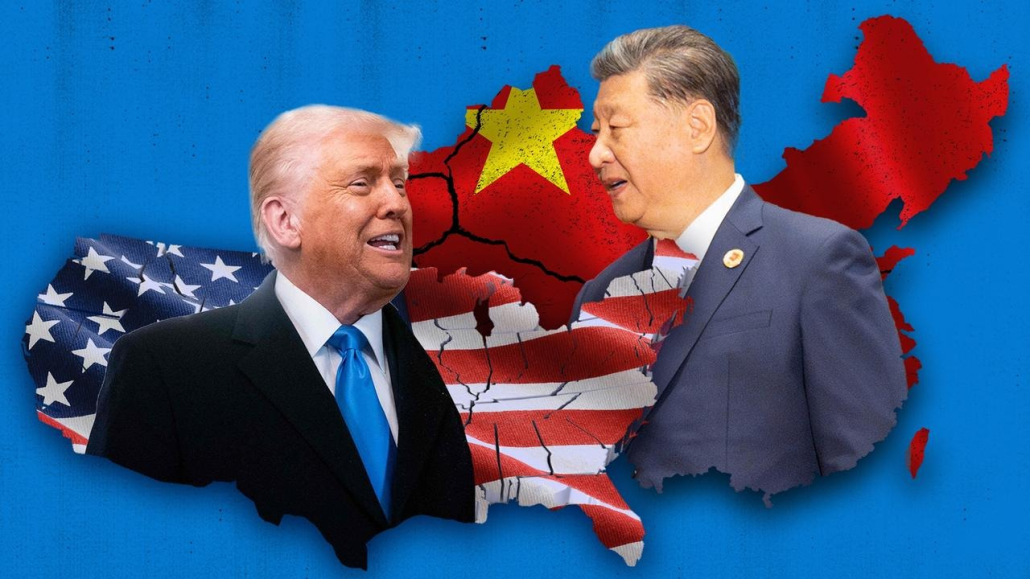
On October 30, 2025, Chinese President Xi Jinping and U.S. President Donald Trump met in Busan, South Korea, in what was their first face‑to‑face encounter since 2019. Despite its brevity, the meeting carried significant symbolic and strategic weight, signaling that China and the United States can, under certain circumstances, achieve mutual success and shared prosperity.

In recent years, Sino‑American relations have been marked by intense tensions — tariff disputes, technological conflicts, disagreements over Taiwan, Indo‑Pacific security issues, and vulnerabilities in global supply chains. The reunion between the two leaders was therefore interpreted as a gesture of détente and a high‑level political test to reassess the balance between the two largest powers in the international system.

Trade and Tariffs: A Temporary Truce

The main outcome of the meeting was the provisional reduction of trade tariffs. Trump announced that the United States would lower the average tariff on Chinese products from 57% to 47%, and that punitive tariffs on chemical precursors — linked to the fentanyl crisis — would be reduced from 20% to 10%.

In return, China committed to resuming large‑scale purchases of U.S. soybeans, corn, and other agricultural goods. Additionally, Beijing decided to suspend, for one year, restrictions on the export of rare earth elements — a resource essential to the global technology industry. This decision was interpreted as a gesture of stability and a demonstration of China’s strategic weight in that sector.

Trump described the meeting as “surprising and incredible,” even saying he would “rate it a 12 out of 10.” Xi Jinping, for his part, considered the frictions between China and the U.S. to be “normal phenomena,” emphasizing the importance of avoiding “vicious cycles of mutual retaliation.” Both leaders stressed the terms “communication,” “stability,” and “cooperation,” in contrast with the aggressive rhetoric of previous years. However, sensitive topics such as technology exports, social media, Taiwan, and regional security were mentioned only briefly, with no concrete progress.

Trade Truce, Not a Structural Solution

The agreement essentially represents a return to a previous point of stability rather than a qualitative breakthrough. Structural divergences persist, and Sino‑American relations may deteriorate before they improve. Trump’s strategy appears to consist of creating a problem first, then negotiating its resolution.

Chinese Strategic Initiative vs. U.S. Political Calculation

China demonstrated greater strategic initiative. Holding roughly 70% of the world’s rare‑earth reserves and dominating the technology for their processing, Beijing possesses strong negotiating leverage. Trump, on the other hand, seeks immediate political gains — tariff reductions and increased agricultural exports aim to consolidate support in rural states.

China, by contrast, adopts a long‑term perspective: stabilizing the external environment, strengthening its international image, and preparing the ground for internal adjustments. For Trump, tariffs serve as a tool of pressure — his logic is to provoke deadlock and then negotiate its solution.

Symbolic Value Greater Than Real Progress

Global markets reacted cautiously, interpreting the meeting as a symbolic gesture rather than a structural turning point. Chinese analysts believe a new phase of “competition on equal footing” is beginning — a G2 rivalry in which both sides acknowledge each other’s importance without abandoning strategic competition.

The tariff truce and the resumption of agricultural purchases generate immediate benefits: for the U.S., they relieve pressure on the farming sector and bring political gains; for China, they mitigate export impacts and help stabilize employment and consumption. Yet this is only a palliative measure. Industrial and technological competition continues, and structural imbalances remain. As economists put it, “this truce offers a breath, but not a cure.”

The issue of microchips and the export of sensitive technologies was mentioned, but no concrete agreement was reached. Washington maintains strict control over technology exports, while Beijing invests in self‑sufficiency. The temporary suspension of rare‑earth export restrictions is a strategic pause — if the geopolitical context shifts, China could reinstate such measures, directly affecting U.S. industry and its allies.

Geopolitics and Global Narratives

The meeting symbolizes both an attempt to ease tensions and a new stage of strategic competition. For third countries — such as South Korea, Japan, and Southeast Asian nations — the message is clear: rivalry remains, though momentarily under control.

Xi Jinping advocated for an “inclusive globalization” oriented toward the Global South. According to the Spanish newspaper El País, this narrative seeks to position China as an alternative to the U.S.‑led liberal order, reinforcing the trend toward multipolarity. Trump views diplomacy as a transaction — every deal must yield tangible benefits. Xi, on the other hand, acts with a state logic, portraying China as a rational, responsible, and confident power.

Structural Contradictions Persist

Despite the amicable tone, the fundamental contradictions in Sino‑American relations remain:

– Technology: The U.S. fears China’s scientific rise; China views autonomous innovation as a matter of national security.
– Supply chains: Washington seeks to “de‑risk,” while Beijing accelerates import substitution.
– Global governance: The U.S. defends the traditional liberal order; China proposes a more plural and inclusive model.
– Regional issues: Taiwan, the South China Sea, and Indo‑Pacific security continue to be flashpoints.

Future Outlook

Short Term:
Over the next 12 months, both sides are expected to prioritize stability and dialogue. China will use the truce to strengthen its technological and industrial base, while the U.S. will seek to avoid external shocks ahead of the midterm elections.

Medium Term:
If the temporary measures become institutionalized — through agreements on agricultural trade, strategic resource exports, and technology standards — a relationship of controlled competition may emerge. However, factors such as political polarization in the U.S. or economic slowdown in China could undermine this process.

Long Term:
Experts foresee three possible scenarios:

1. Limited cooperation: ongoing competition with stable areas of coordination;
2. Renewed confrontation: reactivation of tensions due to regional crisis or domestic politics;
3. Structural transformation: redefinition of the global order with a new division of power and complementary roles.

The most likely scenario is the first — competitive coexistence, marked by strategic rivalry but managed through permanent diplomatic channels.

Impacts on Third Parties and the Global Economy

United States:
Agricultural states and export sectors will benefit in the short term, though industrial and technological challenges persist.

China:
The meeting reinforces China’s image as a stable and dialogue‑oriented power, providing relief to its economy and restoring market confidence.

Global Economy:
The signal of détente helps stabilize supply chains, particularly in high‑tech and energy sectors. Still, middle‑tier countries remain vulnerable to fluctuations in Sino‑American rivalry.

Conclusion

The meeting between Xi Jinping and Donald Trump in Busan marks a significant milestone, but not a definitive turning point. It represents a gesture of strategic moderation — each side sought specific gains and avoided further escalation of tensions. Structural divergences — technological, economic, and ideological — continue to shape the backdrop of the relationship. Even so, the reestablishment of high‑level dialogue is, in itself, a meaningful institutional advancement.

In a world marked by growing uncertainty, the future of Sino‑American relations will depend on both countries’ ability to turn an inevitable rivalry into strategically managed cooperation. The so‑called “Busan Truce” may not resolve deep‑rooted contradictions, but it opens a new chapter — more cautious, more pragmatic, and perhaps more mature.

The stabilization of economic development in China and the United States has the potential to significantly boost the global economy. Conversely, a renewed escalation of tensions between these two powers would have deeply negative effects on the international system. As the African proverb says: “When two elephants fight, it’s the grass that suffers.”

An unstable economic partnership between China and the United States poses a systemic risk to the entire world. Yet China’s progress and revitalization are not incompatible with President Trump’s stated goal of “making America great again.” On the contrary, there is room for mutual success and shared prosperity.

China and the United States must be partners, not adversaries — a lesson taught by history and demanded by contemporary reality. China expresses full willingness to continue working with President Trump in building a solid foundation for bilateral relations, fostering an environment conducive to the sustainable development of both nations.

IV International Congress on Angolan Studies

June 18, 2025

Biblioteca Nacional de Lisboa

The IV International Congress on Angolan Studies was an academic success with more than 30 papers presented by scholars from Angola and around the world. It is a unique event in this field, bringing together a diverse group of people who conduct scientific research on Angola.

The papers were extremely varied and stimulating, ranging from constitutional and development issues to the use of TikTok in Angolan national languages. This diversity of topics and approaches should be understood as a contribution to the free competition of ideas, which is the genesis of a country’s development.

The IV International Congress of Angolan Studies is a vital space for promoting the plurality of ideas and respectful coexistence between diverse perspectives.

In a world where public debate is so often threatened by polarization and conflict, meetings such as this reinforce the importance of listening, dialoguing, and learning. The Congress creates an environment where the exchange of knowledge should take place based on empathy and reason, valuing critical thinking and rejecting any form of verbal abuse or coercion.

The opportunity to discuss relevant issues about Angola’s history, culture, and future in an environment free from intimidation encourages the construction of a more just and democratic society. Here, knowledge is not imposed, it is shared; and it is precisely this sharing that fuels collective progress.

The competition of different ideas—not the dominance of a single voice—is the engine of progress. The imposition of single directives and the attempt to standardize thoughts only produces stagnation and resentment.

The Congress, on the contrary, encourages the coexistence of differences and fosters the creation of consensus through understanding, not force.

In this context, the IV Congress of Angolan Studies is not just an academic event, but a symbolic political and cultural gesture: it demonstrates that the Angola of the future will be built with more listening, more reflection, and more diversity. Cultivating the art of peaceful dialogue is, after all, an investment in the very future of the country.

Angola: The withdrawal of fuel subsidies and the transformation of political legitimacy

Rui Verde

  1. The decrease in oil revenues in the State Budget and the need for state funding

Following the guidelines of the International Monetary Fund (IMF), the Angolan government is gradually withdrawing fuel subsidies. The IMF defends this position because it believes that this measure will generate significant savings for the government and improve the state’s fiscal sustainability, since fuel subsidies represent a high cost for the General State Budget (OGE), reaching 9.1 billion kwanzas between 2021 and 2024. In addition, there are concerns about fuel leaks to neighboring countries and distortions in the domestic market . [1]

In a recent interview with LUSA, Angola’s finance minister, Vera Daves, confirmed that further cuts in fuel subsidies will be made this year, assuming that this is a “path that must continue”, although the speed depends on various factors .[2]

The truth is that Angola’s State Budget is facing ever greater challenges due to its historical dependence on oil revenues, a factor that jeopardizes the country’s financial stability . For decades, oil represented the main source of revenue, financing investments in infrastructure, health, education and other key sectors. However, the volatility of international oil prices has highlighted the need to diversify public revenues, especially since 2014.

For this reason, in recent years, the Angolan government has adopted tax and fiscal reform measures, seeking to strengthen non-oil revenue. The creation of specific taxes, the modernization of collection systems and incentives to formalize companies have reflected an attempt to reduce dependence on the energy sector. Despite these efforts, the budget deficit and the pressure on public accounts continue to be worrying challenges, as demonstrated by the delays that sometimes occur in paying the salaries of state workers, and the widespread delays in paying for supplies and services .[3]

The practical result is that the state needs to tax the population and cut spending that is irrational from an economic point of view[4] , as is the case with the fuel subsidy. This changes the pre-existing relationship between the state and the people. In the past, the state didn’t need the people to finance itself, now it does.

 In fact, there are already around 5,205,380 individual taxpayers and 320,440 individual taxpayers with commercial activity in Angola, meaning that more than 5.5 million people are registered to pay taxes in the country[5] . While this is a remarkable number, it is also true that considering that there are around 14 million people with the potential to be taxpayers, there is still a lot of scope for broadening the tax base. At the same time, in 2022, Angola collected 4,638 billion kwanzas in non-oil taxes. Luanda province was responsible for 92.2% of this revenue. In the first quarter of 2023, non-oil revenue amounted to 976 billion kwanzas, an increase of 13% on the same period last year.[6][7] The key point is that non-oil revenue in Angola has shown significant growth in recent years . [8]

2-The need for taxes and subsidy cuts and the changing paradigm of political legitimacy

Since 2002, the political legitimacy of the Angolan system of government has rested on two factors: victory in the civil war and direct access to oil revenues.[9] In real terms, the people were not part of the equation for legitimizing power. José Eduardo dos Santos could govern without the people and without needing them. All he needed was military victory and oil money. The formal legitimizations of power, such as the 2008 elections or the 2010 Constitution, were just that, mere acts validating a previous reality that had been imposed.

Legally, the government was based on popular sovereignty and the Constitution, and all legal-formal acts were taken over time with a valid legal basis: elections, the Constitution, legislation, votes in parliament, etc. However, there was the notion that the constitutional and governmental system was based on a previous pact in which victory in the war and access to oil funds gave power to the government, which in return guaranteed the development of the country and the evolution of society. It is in this context that the political rationality of the fuel subsidy can be seen.

The point is that since 2014, when the price of oil fell enormously and Angola entered almost ten years of crisis, this political legitimacy has been destroyed. On the one hand, the generation and memories of the war have diminished. A large percentage of the Angolan population was born after the end of the civil war (2002). Around 65% of Angolans (more than two thirds) are under the age of 25, which means that 21 million Angolans are under this age group. This means that the legitimacy of the war already means little or nothing to them, as the victor has no right to exercise power.

In addition, the need to take revenue from the people and withdraw subsidies from them changes the 2002 social pact: if political power needs the people, then the people will participate in political power. There is no turning back from this equation that has been affirmed throughout history.

The payment of taxes has historically been a determining factor in the formation of political systems and the consolidation of democratic rights. In medieval England, the need to collect taxes led to the creation of institutions such as Parliament, where representatives of the nobility and the bourgeoisie discussed the king’s requests for money to pay for royal weddings or wars. The Magna Carta of 1215 was a milestone in establishing that taxation had to rely on some level of consent from the subjects, reinforcing the idea that government authority could not impose arbitrary taxes without representation. This principle evolved over the centuries, directly influencing the development of modern parliamentarianism .[10]

In the context of democracy, the concept of “no taxation without representation” became central. The Glorious Revolution of 1688 in England consolidated Parliament as a fundamental body in governance, restricting the absolute powers of the monarch and reinforcing the role of citizens in fiscal decision-making. The idea that taxes should be debated and legitimized by elected representatives helped shape democratic systems in Europe and North America. As nations sought greater popular participation, control over taxes became a crucial mechanism for defining citizens’ rights and strengthening representative democracy.

The relationship between taxation and independence became especially evident in the American Revolution (1775-1783). The British colonists in America rejected taxation without their direct participation in the decisions of the British Parliament. Legislation such as the Stamp Act of 1765 and the Tea Act of 1773 were seen as violations of colonial autonomy, leading to protests such as the Boston Tea Party. The refusal to accept taxation without representation resulted in the revolutionary movement that culminated in the independence of the United States, enshrining the idea that the legitimacy of a government depends on the participation of citizens in defining fiscal policies.

Thus, throughout history, the payment of taxes has not only been a means of financing states and governments, but also a catalyst for significant political transformations. Parliamentarianism, democracy and the independence of several countries were shaped by debates over who should have the power to define and collect taxes. The struggle for the right to influence tax policies contributed to the creation of institutions that ensured effective popular participation in government and the basis of its legitimacy.

3-Conclusion: the transformation of the political legitimacy paradigm in Angola

Political legitimacy in Angola is undergoing a significant transformation. The concept of the “right to govern”, previously associated with the MPLA, has lost its validity. This change reflects the growing awareness of the Angolan tax-paying population (and not recipients of fuel subsidies) of their role in sustaining the state, especially through the payment of taxes. The relationship between citizens’ tax contributions and the state’s ability to function has become a central element in the country’s political dynamics, transcending ideologies and public demonstrations.

This transformation marks a new phase in Angolan politics, where the power of the people is manifested in a more concrete way. The voice of citizens, based on their economic contribution, will redefine political arrangements and the structure of governance. This phenomenon highlights the importance of legitimacy that goes beyond mere legality, demanding a deeper connection between the rulers and the ruled.

The 2027 elections will represent a milestone in this context. For the first time, political legitimacy will be debated at the ballot box, transcending the legal sphere. This event promises to be a turning point in Angola’s political history, where the weight of social and economic transformation will have a direct impact on the choice of leaders and the definition of the country’s future.


[1] https://www.msn.com/pt-pt/pol%C3%ADtica/governo/governo-angolano-confirma-mais-cortes-nos-subs%C3%ADdios-aos-combust%C3%ADveis-este-ano/ar-AA1DGdmi

[2] https://www.angola24horas.com/sociedade/item/31715-governo-angolano-confirma-mais-cortes-nos-subsidios-aos-combustiveis

[3] https://observador.pt/2024/08/02/governo-angolano-diz-que-salarios-de-julho-dos-funcionarios-publicos-ja-foram-pagos/

[4] We have our doubts about this cut before the fuel market structure is reformed to make it a competitive market, but that’s a subject we won’t discuss here.  See:  https:

[5]https://www.ucm.minfin.gov.ao/cs/groups/public/documents/document/aw4x/mju4/~edisp/minfin1258130.pdf

[6] https://expansao.co.ao/angola/detalhe/luanda-arrecadou-922-do-total-da-receita-fiscal-nao-petrolifera-em-2022-60224.html

[7] https://forbesafricalusofona.com/impostos-arrecadados-pela-agt-em-angola-atingem-os-13-bilioes-kz-em-2022/

[8] https://www.opais.ao/economia/arrecadacao-nao-petrolifera-acima-dos-4-bilioes-de-kwanzas/

[9] Rui Verde, 2021, Angola at the Crossroads. Between Development and Kleptocracy, IB.Tauris. London.

[10] Rui Verde, 2000, The Harmonious Constitution. Judges and the Protection of Liberty. Newcastle upon Tyne.