This is a time of reinvention for Angola. Sonangol is no longer the engine of the Angolan economy and it is necessary to find a new driver. There are two reasons for the need to overcome the economic model based on a single product – oil.
The first reason is Sonangol itself. The results for 2019, presented by the Angolan oil company, are structurally discouraging. Although they show a profit, this profit derives from unrepeatable extraordinary results and the essential elements of the oil operation are stagnant: production does not increase, sales do not exceed the level of previous years. The company’s net income was USD 125 million. However, revenues remained stable compared to the previous year. Sonangol produced around 232 thousand barrels of crude oil per day, a number similar to the past and made sales of USD 10,231 million, which represents a 4% reduction compared to the 2018 financial year.
In short, oil exploration no longer adequately supports Sonangol. Not supporting Sonangol means not supporting the country.
In addition to this stagnation at Sonangol, there is the fact that oil is being increasingly viewed with skepticism, seeking to invest in alternative energies and moving away from the use of black gold. This is obviously not a short-term process, but it will have been accelerated with the Covid-19 pandemic. Oil will still have price rises, possibly peaks in higher demand, but everything indicates that the gluttonous years will be over, as other energy sources will emerge that will more or less gradually replace oil. Just note that in the last few months the price of the Brent barrel has fluctuated between USD 53 in October 2019, USD 60 in January 2020, USD 12.78 in April or USD 40.7 recently. However, he never returned to the 2014 figures where he was often above USD 100.
These two reasons mean that the Angolan economy has to reinvent itself, and more quickly than it thinks. It is not just a matter of restructuring Sonangol and focusing it on the oil business. It is not enough, because this business is stagnant. It is the economy itself that needs restructuring, which in the official jargon of the Angolan government is called diversification.
The problem is that diversification implies the creation of a new offer in the Angolan economy, of the production of goods and services that did not exist in the recent past. And for production to exist, investment is necessary. Investment requires, obviously, the contribution of capital.
And here we face another issue that affects the Angolan economy, which is the lack of capital and the recessive policies that intensify this scarcity. Following the parameters chosen by the International Monetary Fund (IMF) and the neoclassical orthodoxy of the economy, a program to contain / reduce public debt and reduce the deficit is being imposed on Angola.
We have many doubts as to whether such a program is justified in the case of the Angolan economy, especially considering the doctrinal contributions in Modern Monetary Theory, but the fact is that such a program to cut spending and increase taxes is being followed. However, the pursuit of such a policy ends up limiting the availability of capital for investment, whether public or private. Therefore, it prevents the so-called diversification that is so necessary to overcome Sonangol’s stagnation.
Thus, the outlook facing the Angolan economy at the moment is difficult. On the one hand, its engine – Sonangol – is stalled, on the other, the creation of capital to mobilize productive investment to diversify the economy is being strangled due to the recessionary policies adopted. This has obvious repercussions on the economy’s figures. GDP growth is negative – 3.6%. Unemployment assumes a staggering number of 32.7% and inflation of 22.8% (similar in August 2020). None of these numbers are encouraging.
The Angolan economy needs political courage to reverse this state of affairs.
Sonangol has to be restructured, but as an energy company and not merely an oil company. In reality, it is not enough to focus on oil, you will have to present yourself with a modern renewable energy company, taking advantage, for example, of the sun. If the United Kingdom recently announced that it wants to become Saudi Arabia by the wind, Angola may be Saudi Arabia by the sun. Therefore, an imaginative restructuring of Sonangol is necessary.
At the same time, recessionary economic policy must be abandoned. Although there should be budgetary discipline and not paying works twice or paying wages to phantom employees, as well as not contracting public debt to feed private pockets, the fact is that the policy of financial rigor must be complemented by a policy of fiscal stimulus that allows building a sufficient capital base to carry out the necessary reproductive investment. A public and private pro-investment tax policy is fundamental in reinventing the Angolan economy.
https://www.cedesa.pt/wp-content/uploads/2020/10/sonangol.png554924CEDESA-Editorhttps://www.cedesa.pt/wp-content/uploads/2020/01/logo-CEDESA-completo-W-curvas.svgCEDESA-Editor2021-05-10 20:14:122021-05-10 20:14:14Sonangol and the reinvention of the Angolan economy
On 22 September 2020, Sonangol presented its annual accounts with reference to 31 December 2019[1]. The net result was USD 125 million (one hundred and twenty-five million US dollars), equivalent to AOA 45 854 million (forty-five thousand, eight hundred and fifty-four million kwanzas), with EBITDA (Results before Interest, Taxes, Depreciation and Amortization) of USD 4,779 million, representing an increase of 10% in relation to the previous year.
Revenues were identical to 2018, while operating costs fell 11%.
Oil production was also similar to the previous year while gas production increased by 6% and LNG by 8%. The production of refined products grew 37%, after resuming operations at the Luanda Refinery.
This is the accounts’ summary as announced by the Company’s Board of Directors[2].
Fig. 1 – Summary of Sonangol 2019 Accounts according to the Board of Directors
ITEM
NET RESULTS
Net Profit
125 M USD
EBITDA
4,799M USD
Oil Revenue and Production
Similar 2018
Gas
+6%
LNG
+8%
Refined Products
+37%
The accounts make ample references to the ongoing Regeneration Plan, which has as essential goals to place the company’s focus on the activities of the oil industry value chain, that is: prospecting, research and production of crude oil and natural gas, refining, liquefaction natural gas, transportation, storage, distribution and marketing of derivative products[3].
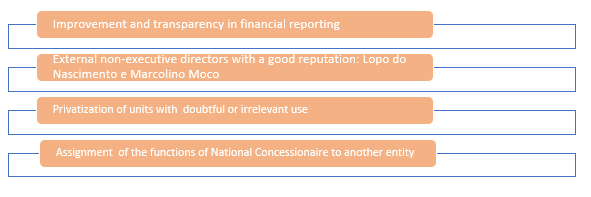
Combating corruption at Sonangol and strengthening the role of Non-Executive Directors
The key issue of these accounts begins to be formal, as, finally, accounting reserves that lasted for 15 years were eliminated and the financial reporting is endowed with enhanced transparency.
An effort to eliminate Sonangol’s role as an “epicenter of corruption” is visible[4], that is, as the main public financier of the business and private pleasures of the Angolan ruling elite.
This can be seen in the attempt to improve the transparency of financial reporting and in the appointment of non-executive directors such as Marcolino Moco and Lopo do Nascimento, two individuals with recognized integrity. These are moves to ensure that Sonangol’s revenues are not used for these private businesses.
To these measures are added the termination of Sonangol’s functions as a National Concessionaire and the privatization of several expensive units of the group, which in many cases were only vehicles for withdrawing public money for private purposes.
However, within this framework it would be important that the Non-Executive Directors, in addition to publicly signing the report and accounts, issued a declaration of verification that there was no significant and visible appropriation of public funds by private entities. Transparency has to go further.
Fig. No. 2- Measures to combat corruption at Sonangol
Sonangol’s weaknesses:
If the first task of the Government and of the Sonangol’s governing bodies is to eliminate corruption[5] within the company, the second and no less important task is to make the company profitable and with prospects for the future.
And here despite the implementation of the so-called Regeneration Plan, this is not enough. A full qualitative leap is needed at Sonangol.
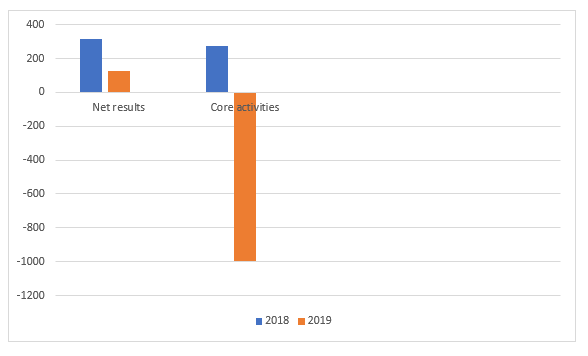
If we look at the company’s net profits, they dropped in 2019 to 46 billion kwanzas (about $ 125 million) compared to the 80 billion kwanzas ($ 316 million) in 2018. There are several reasons why this happened, from the low price of oil to the cessation of receiving supplies as a National Concessionaire. However, this number represents an additional weakness of the company.
In a study recently issued, Reuters[6] reported that Sonangol’s core activities in 2019 lost 351 billion kwanzas ($ 995 million), compared with a profit in 2018 of 69 billion kwanzas ($ 274 million) ). In 2019, debt payments were spent US $ 1.8 billion, while operating profits from oil production, sale and refining of US $ 1.570 million.
In addition, the total liabilities in 2019 were US $ 36 billion, referring to loans, risk provisions and accounts payable.
It should be noted, moreover, that the final net profit mentioned above is the result of unrepeatable extraordinary results such as cancellation of old debts and sales of some assets. They do not result from the central activity of the company.
KPGM points out that Sonangol’s liabilities or obligations exceed its assets, something that has not happened since 2016.
This means that the company’s core business is not competitive. Therefore, modeling the Regeneration Plan in a mere return to the core business isn’t the best solution.
This means that it is not enough for Sonangol to focus on its core business, as indicated by the Regeneration Plan. It is not enough and it cannot happen.
Fig. No. 3- Sonangol: Compared data between 2018 and 2019 (millions of dollars)
In addition, in 2019 Sonangol had sales of US $ 10 billion, 4% less than in 2018, which is understandable, as mentioned above, since in the middle of the year it stopped receiving earnings as a National Concessionaire. However, in addition to sales being stagnant, the production of barrels of oil is also stalled at 232 thousand barrels per day. In addition, it is feared that in the future oil will lose its importance in the world economy.
If we look at the amount of expenditure in the Angolan State Budget for 2020 in the revised version, it is US $ 23 billion. As only a part of Sonangol’s sales accrues to the State, we have a direct contribution from Sonangol to the national economy much lower than in the past. It should also be noted that the Angolan GDP is around US $ 105 billion. In this sense, Sonangol’s total sales do not reach 10% of GDP.
These elements lead us to two conclusions:
I) Sonangol’s oil activity is stagnant;
II) the company no longer has the magnitude to be the driving force of the Angolan economy.
These two conclusions have repercussions for the national economy and for Sonangol itself.
As far as the national economy is concerned, the solution is clear and is already beginning to be taken: broadening the national productive base, diversifying the sources of public income, promoting the creation of a strong agricultural and livestock support in the country, promoting the opening of companies, investment and competition in the market. It is a painful and difficult process, but a necessary one.
Harmonium Strategy. Going beyond the Regeneration Plan
Regarding Sonangol, it is understood that it is not enough and it is not the best idea to just focus on oil. The company’s reform has to be more ambitious and forward thinking.
On that matter we have already advocated in previous work[7] and it lays on the partial privatization of the company. The privatization of 100% of the company is not advocated, but the privatization of 33% of its capital in order to bring international investment, involvement of Angolan capital and motivation of its workers. These three objectives would be achieved through the following partial privatization model. Of the 33% of share capital to be privatized, 15% would be for foreign investors and would be the subject of an OFS (Public Offer for Sale) on an international reference exchange with abundant liquidity. The other 10% would be for national investors and would be subject to an OFS in Luanda. And finally, the remaining 8% would go to Sonangol workers, who would also become owners of the company for the ownership of their shares.
There would be new money, fresh ideas and people without connections to the past. This would allow a different approach to the problems and a renewed vision of the future.
However, in view of the negative evolution of the world and Angolan situation in recent months, partial privatization alone will not suffice, as the Regeneration Plan is not enough.
A new strategy for the company is vital.
The strategy no longer involves excessive attention to the oil focus. That which is not profitable and in which the company is not competitive must be sold. Free the company from its weaknesses. Decrease. But at the same time, increasing the company’s capacity and scale. Hence this option is designated as the Harmonium Strategy.
The remaining activities are expected to remain at Sonangol, while a renewal strategy is launched, based on developing a stronger downstream business, increased refining capacity, expansion for chemical products, and investing abundant renewable energy in Angola, such as sun and water, at the same time. time creating new technologies through its R&D efforts and developing new lines of business through investments and acquisitions. This means that there must be a transformational effort by Sonangol and not a mere reduction or dismantling.
It is necessary to follow what many large foreign oil companies, whether dominated by the state like Aramco (Saudi Arabia), or private like BP, are doing.
And this is turning the oil company into an integrated energy company driven by the production of resources focused on providing energy solutions to customers. Construction on a scale of investments in renewable energy and bioenergy, initial positions in hydrogen and creation of a global portfolio of gas customers; there are several options that Sonangol faces to become a modern and competitive company.
[5] We use the word corruption not in a technical sense, but in the current common sense in Angola, like all illicit private appropriation of public values, basically corresponding to what is criminally referred to as embezzlement, abuse of trust, economic participation in business, fraud, etc.
https://www.cedesa.pt/wp-content/uploads/2020/09/22126_artigo_Sonangol__Imagem-1024x474-1.png4741024CEDESA-Editorhttps://www.cedesa.pt/wp-content/uploads/2020/01/logo-CEDESA-completo-W-curvas.svgCEDESA-Editor2020-10-08 12:08:542021-05-19 09:24:04Sonangol: the need for a new strategic vision
Some studies by prestigious economic consultants have lately issued some reports on the Angolan economy that only report negative numbers and projections, without taking into account either the theoretical models on which some of the main economic policy decisions in Angola are based, or the actual reality of its economy.
One of the most intriguing cases is the permanent link between the rise in inflation and the devaluation of the Kwanza, presenting the two phenomena as cause and effect or effect and cause, as well as always giving a negative connotation to the term “devaluation”.
This article, which does not aim to make forecasts, which at this time of Covid-19 would be rash, offers alternative explanations behind the Kwanza`s devaluation, looking instead at the opportunity it offers foreign investors.
It is evident that the semi-rigid or controlled exchange rate regime that existed before the adoption of the flexible exchange rate last year, was partly responsible for the crash in the Angolan economy. In fact, pegging the Angolan currency at a high value in view of market conditions, caused unrestrained consumerism while domestic production was allowed to decline, since international prices were artificially made more competitive.
It was the time when Luanda became the most expensive city in the world with the Angolan elite making flagrant shows of wealth. This situation did not correspond to domestic production or development, but rather excessive spending of foreign currency earned from high oil prices which bolstered the inadequate value of the Kwanza. This was unsustainable.
The prolonged recession since 2014 demanded an end to the artificial appreciation of the Kwanza and the introduction of a flexible exchange rate.
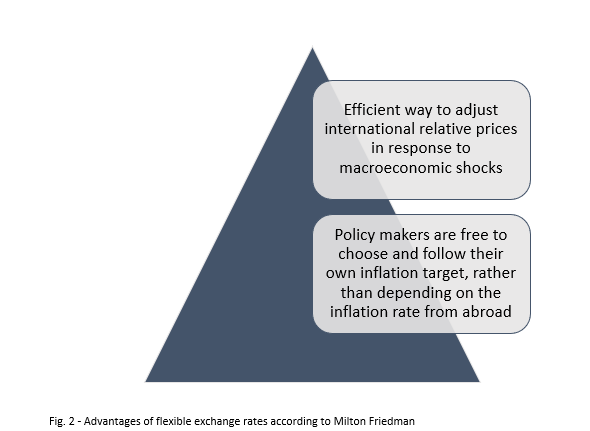
The model underlying the adoption of flexible exchange rates has clear goals. Since Milton Friedman’s seminal text in 1953[1] on flexible exchange rates, two arguments support this policy: first, free movements in exchange rates are an efficient way of adjusting international relative prices in response to macroeconomic shocks; second, with flexible exchange rates, policymakers are free to choose and follow their own inflation target, rather than depending on the inflation rate from abroad. This last factor should be emphasised. Milton Friedman stressed that exchange rates would help to insulate the domestic economy from external shocks and would give national political authorities the ability to meet domestic goals. Flexible exchange rates provide enough insulation to the domestic economy if the sources of the recessionary shock are abroad.
This means that with a flexible exchange rate, it is possible for the government / central bank to pursue an autonomous anti-inflationary policy on the external value of the currency. In fact, the devaluation of the Kwanza could mean that the prices of international goods become excessively expensive for Angola, and spark that, contrary to what happened previously, being cheaper to produce goods in Angola. That would be the opportunity to invest in Angola`s agriculture and industry, at they will have a market and low production costs due to the devaluation.
With national goods becoming more competitive than corresponding foreign goods, this will boost national production and encourage exports.
And provided that the central bank does not pint excess money, national production should increase and inflation should decrease if internal policies are adequately followed.
This does not mean that the transition from an economy artificially anchored by a high-value Kwanza supported by rising oil prices to a competitive and productive economy is easy. Angola is currently in deep crisis, made worse by the Covid-19 pandemic, and luck, either bad or good, has to be considered.
However, the exchange rate easing policy is right and there is no need to be afraid of devaluation. This is making the economy more competitive overseas and encouraging the manufacture and production of goods to sell both internally and abroad. Success depends more on government policies; policies that are coherent and consistent.
That is why the figures being released on devaluation and inflation are, on the surface, frightening, but they will only have a negative impact if the government implements the wrong policies.
Otherwise, they are not, by themselves, of any relevance. It is known that the Kwanza was overvalued and that this has greatly affected the Angolan economy. It is known that combating inflation, with flexible rates, does not depend on the outside world, but on the right decisions by the government.
There is awareness that Angola is in deep economic crisis, but some real encouraging indicators are beginning to emerge. One of them is that “Angola disbursed, in the first quarter of the year, 495 million dollars (436.5 million euros) on importing food products, a decrease of 31% compared to the 717 million dollars (632.3 million euros) ) for the last quarter of 2019.[2]”
The Angolan government attributed this evolution to a better organisation of its foreign exchange market and to an increase in the demand for national products. Official sources state: “We are verifying these two factors, we can say that we are on the right path, there is a demand for national production, there is a decrease in imports.” These facts seem to confirm the analysis we do. Obviously, in the end everything will depend on the right internal public policies.
[1] Friedman, M. (1953) “The Case for Flexible Exchange Rates.” In Essays in Positive Economics, 157–203. Chicago: University of Chicago Press.
https://www.cedesa.pt/wp-content/uploads/2020/07/kwanzas_photos_v2_x2-scaled.jpg12121920CEDESA-Editorhttps://www.cedesa.pt/wp-content/uploads/2020/01/logo-CEDESA-completo-W-curvas.svgCEDESA-Editor2020-07-27 09:47:322020-07-27 09:47:34The devaluation of Kwanza and inflation
The fight against corruption initiated by João Lourenço, President of the Republic of Angola, is finding several obstacles.
In order to be successful, a structural change is required that includes the creation of a new judiciary body focused on corruption, a specialized Court section on corruption and money laundering, and new legislation to allow plea-bargain and agreements between the parties.
It was in
February 2018, when the then Chairman of the Board of Directors of Sonangol,
Carlos Saturnino, presented at a public press conference facts that he
considered very serious and related to the management of Isabel dos Santos in
that company.
In May 2020,
after several reports about these and other facts, for example the Luanda Leaks[1], possibly
attributable to Isabel dos Santos, the truth is that, apparently, she has not
yet been notified to make statements in the judicial procedure which was opened
in Angola.
The reality is
that there is a risk of a sharp prolongation in this case, neither condemning
nor absolving herself, leaving a trail of injustice over all matter. The comic
episode about the passport with Bruce Lee’s signature that would be in one of
Isabel dos Santos’s cases is a first tenuous symptom of the hypothesis of
failure of this symbolic process of fighting corruption in Angola.
Also, in May
2020, very recent suspicions about acts of corruption were made public in the
Interministerial Commission to Combat the Coronavirus Pandemic, namely, the
unjustified chartering of Ethiopian Airlines planes and the purchase of goods
from private entities, all of them with large tax debts in Angola. Companies
that were hastily resuscitated to compete with the government’s biosafety
material supply program[2]. In the words
of the veteran Angolan journalist Graça Campos, we begin to see that the “PIIM
(Integrated Plan for Intervention in Municipalities) has become the official
free transit of access to public money[3].”
It is not for us
to evaluate or judge the claims made by Carlos Saturnino, the ICIJ or Graça Campos, but to conclude from
the factual point of view that the fight against corruption in Angola, despite
the very clear intentions expressed by the President of the Republic, João
Lourenço, isn’t having an immediate and permanent effect. Neither the processes
move quickly, nor the corrupt practices seem to have been eradicated, lasting
as a reality in the life of the country.
It is in this
context that it is essential to proceed with a structural change in the organic
and fundamental legislation regarding the fight against corruption.
We envision
three areas of intervention:
-The creation
of a judiciary body focused on combating corruption;
– New
judicial judicial with the competence to investigate and judge cases of
corruption and money laundering (specialized sections of courts, judges and
procedural law).
-The
introduction of legislation that provides for plea-bargain and the possibility
of procedural agreements ratified by judges between the parties to a criminal
case.
Fig. 1- Proposed measures to fight
corruption
These three
measures are essential to put the fight against corruption on the right path.
We will briefly go through each of the proposals.
Judiciary
body focused on combating corruption
A body with sweeping
legal powers, i.e. to investigate, search, seek, apprehend, listen, detain,
demand international cooperation, etc., specialized in combating corruption,
should be created. This body would centralize all the investigation regarding
major cases of corruption and money laundering, having its own structure and
statute equally separate from other bodies. It would be a focused body, capable
of investigating a case, accusing, filing or reaching an agreement, proceeding
to argue the case in court, and finally appealing to follow cases from
beginning to end.
An example that
can be followed and properly adapted is the Serious Fraud Office (SFO) in the
United Kingdom. Here we have an entity that investigates, prosecutes and
follwow several of the proceedings in cases of serious or complex fraud,
bribery and corruption[4].
Fig. 2- The British Serious Fraud
Office can be a reference for the body to be created in Angola in order to
fight corruption
Specialized
sections in the ordinary Courts with the competence to judge cases of
corruption and money laundering (Investigation and Judgment) and its own
procedural law
Concomitantly,
an investigating judge attached to this kind of criminality would be established, as
well as a specific section within the ordinary Courts. The procedure in this
section, both in the investigation phase and in the judgment phase, would be
the subject of a specific procedural law, albeit guaranteeing the defense will
allow an acceleration of the process, avoiding delays. Only the appeal would be
made to the usual criminal section of the Supreme Court.
Hence,
investigation and prosecution would have bodies specialized in corruption and
money laundering.
Fig. 3- New
judicial structure for fighting corruption
Legislation
that provides for plea-bargain and the possibility of procedural agreements
ratified by judges between the parties in a criminal case.
Finally, it is
urgent to pass legislation that enables and speeds up the fight against
corruption, allowing for the adoption of measures of premium law, as well as
the possibility of reaching agreements in the processes between the parties,
with such agreements subject to ratification by a judge.
We advocate the
existence of the plea-bargain, that is, of negotiations between the Public Prosecutor
and the defendants that lead to the return of assets, a lighter or nonexistent
penalty and the denunciation of other co-participants.
“Plea-bargain”
is a legal benefit granted to a defendant who agrees to collaborate in a criminal
investigation or explain the role of his or her co-participants in a crime.
This formula facilitates criminal investigation and, provided certain guarantees
are safeguarded, allows for quick convictions within the framework of the rule
of law.
It will be not enough for the defendant to confess a
crime and to indicate other culprits. He/She must provide evidence of what he/she is saying and cannot be repeating what is
already known. Therefore, the plea-bargain has to bring evidence and novelties,
and it is subject to a detailed menu of regulations that prevents abuse.
The approval of
a law on “negotiations” with defendants, should be an urgent objective, to substantiate
the activities of asset recovery through agreements.
https://www.cedesa.pt/wp-content/uploads/2020/05/corrupcao-combate.jpg523940CEDESA-Editorhttps://www.cedesa.pt/wp-content/uploads/2020/01/logo-CEDESA-completo-W-curvas.svgCEDESA-Editor2020-06-10 08:15:462020-06-10 08:15:48Angola: The need for a new legal framework to fight corruption
Although Angola is suffering
several economic shocks due to Covid-19 and the drop in oil prices, in addition
to the nominal increase in public external debt, the truth is that the
situation does not present the seriousness indicated in some studies.
Oil: The country is well prepared to benefit from the recovery that is already taking place in the oil price, and which is likely to accelerate with the global unlockdown.
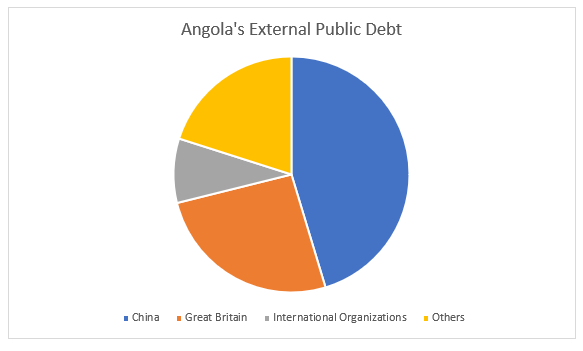
Debt: The debt problem results essentially from the depreciation of the currency and its solution lies in a political negotiation with China, which holds about half of the external public debt.
Diversification: The present difficulties are a real incentive, and not merely rhetorical, for the beginning of the diversification of the economy, made possible by the liberalization measures of the economy.
In recent times, a lot has been
written about the Angolan oil crisis, presenting catastrophic forecasts for the
country’s economy and the evolution of oil exploration. To the pressure of oil,
it has been added strain
on public debt, all in
the Covid-19 packaging.
The situation being serious, it
is not desperate, and several
data must be considered
analytically with sufficient distance.
The public debt
The issue of public debt, which
we have already addressed in a previous report with regard to China
(https://www.cedesa.pt/2020/05/05/porque-a-china-deve-reduza-a-divida-de
-angola /), does not have the danger that is attributed considering only a
formal analysis of the numbers.
If we look at the most recent
data from the BNA[1],
Angola’s big creditors are China, Great Britain and International
Organizations.
The sum of these creditors equals
approximately US $ 39.4 million and is equivalent to almost 80% of the external
public debt.
Figure No. 1-Stock of Angola’s public
external debt by countries. Source: BNA (bna.ao)
Obviously, the debt to China is
eminently political and cannot be seen as an ordinary debt. It should be noted
that the Angolan Foreign Minister is already in talks with his Chinese
counterpart on the subject[2].
Therefore, there is an effective development in this area.
In some ways, the same is true
for International Organizations. It is public that International Organizations,
led by the International Monetary Fund, are proposing several relief measures regarding the
debt burden of the most fragile economies and emerging markets[3].
However, there is still Britain’s debt. Part of this debt comes from companies based in London, but with privileged relations
with Angola and which have a long-term perspective, as is the case with Gemcorp[4],
so here too we will have to handle
with some caution the overly general statements about the severity of
the weight of the Angolan debt.
Furthermore, the International
Monetary Fund itself recognized in December 2019 that about four-fifths of the
nominal increase in Angolan debt was due to the depreciation of the kwanza and
not to new liabilities[5].
Hence, any analysis of
the Angolan public external debt that does not disaggregate its elements is
wrong.
Clearly the external public debt is
concentrated in a few creditors that have several considerations to take apart
from those strictly financial, and depends a lot on the attitude of China.
In short, unless an additional
extraordinary event occurs, the issue of Angolan foreign public debt is not as
serious as it might appear to be a mere nominal observation, and should not
become an obstacle to development. The key is in talks with China on the topic.
And obviously, China will not want to appear as a negative agent in Angola.
Oil
The same analytical exaggeration
has occurred with regard to oil and Angola. Obviously, Angola has an excessive
dependence on oil, and that, at this moment, the price of crude is subject to
two negative pressures: the fall in demand due to Covid-19 and an apparent
secular tendency to decrease oil consumption, replacing it by alternative
sources.
Two of the most renowned analysts
of these issues in relation to Angola, Agostinho Pereira de Miranda and Jaime
Nogueira Pinto[6],
have, however, devalued the excess of anguish in relation to this issue in what
concerns Angola. We tend to subscribe to this position.
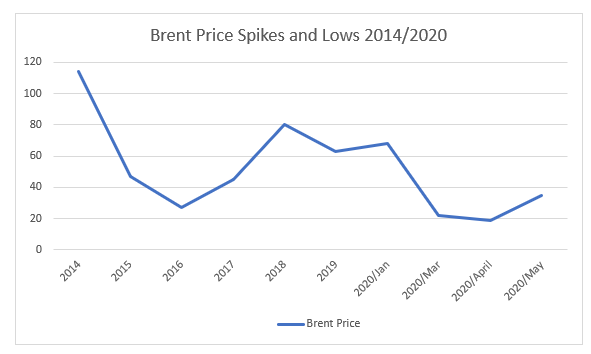
The shock of oil in the Angolan
economy has persisted since 2014 (see fig. No. 2) and is a problem for which
the government since 2018, has taken several measures that focus on two
strategies: i) modernization and opening of the oil sector and ii) promoting
the diversification of the economy.
Regarding the first element, it is worth
mentioning, among others, the creation of a regulatory agency different from
Sonangol, allowing this company to focus on its core business, the
privatization of Sonangol’s secondary subsidiaries and the signing of
agreements with several foreign companies to increase investment. In fact, the
big companies, including Total, Exxon, Chevron, BP, ENI, planned to operate
more drilling vessels in Angola than anywhere in the continent to explore new
discoveries. In relation to diversification, there has been more rhetoric than
practice, but the need, as we will see below, will force it to be put into
practice, provided that the government effectively liberalizes the economy.
Meanwhile, Covid-19 made oil
prices dip and foreign companies stopped their activity in Angola[7].
However, despite the immediate bad news, the situation will tend to stabilize
at a higher level. Moody´s at the end of May announced that it foresaw a future
generic level between USD 45-65. It is not a question of relying on the
accuracy of these figures, but only of noting that there will be an upward trend.
Consider the price of Brent. At the
moment, it stands at USD 36.6 (May 22nd, 2020[8]).
Therefore, it has already risen from the minimum number reached on April 21,
2020, USD 19.33. The value of USD 36, 6 is already above several levels reached
after the abrupt fall in 2014. For instance, in the beginning of 2016, the value ranged between USD
29 to 32. This means that the price of oil seems to enter, at the present moment, again in some
normality, besides that since 2014, the country is already used to dealing with
a great oscillation in the markets.
Figure No. 2- Brent USD Peak / Barrel
Price Peaks and Lows (Nasdaq and Oilprice.com source)
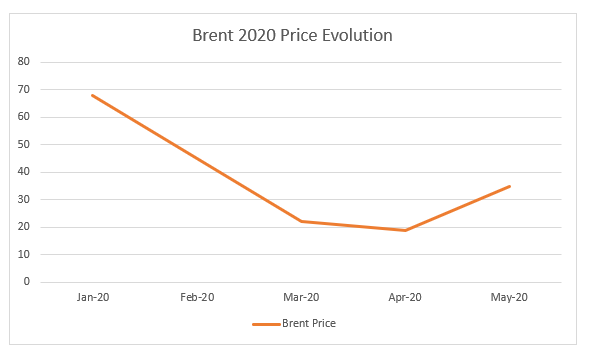
Figure no. 3 – Price evolution of
Brent 2020 (Sources in fig. No. 2)
It also should be pointed out
that a good part of Angolan contracting is reversed in long-term contracts, so
price fluctuations do not necessarily affect public treasury immediately.
In addition,
very soon, there will be a time when economies close when the demand for oil
has decreased substantially, to a relaunch of economies. Whether this recovery
in V, U, W or another letter, the truth is that it will imply an increase in
the demand for oil, which will probably increase the price of oil as long as
the “wars” between Russia or Saudi Arabia do not restart. or other similar
events.
In addition,
the low value of oil will be an incentive for its use in an economic recovery
phase in which concerns about clean but more expensive energies will, in the
short term, be replaced by the need to put companies to work and people with a
job.
Even if
concerns about the climate emergency persists in Europe, it is difficult to see that the major engines of the
world economy, such as the United States, China and India, do not prefer a
cheap source of energy that quickly gets plants up and running.
Angola has
already started to anticipate and still in the week of 25-29 May, the National
Agency of Petroleum, Gas and Biofuels (NAPGB) made available, a data package for oil exploration of the
terrestrial basins of the lower Congo and Kwanza, for nationals and
internationals companies.
These are the blocks CON1, CON5, CON6, KON5, KON6, KON8, KON9, KON17 and KON20,
whose official announcement, for the start of new bids, will be made in the
coming days.
In a nutshell, the
organizational reforms, of rationalization and increase of the oil market
underway in Angola, combined with the gradual recovery of oil prices, in the
context of the relaunch of the world economy in the post-Covid-19 period, allow
us to believe that the oil sector in Angola has good conditions for recovery,
and remove the most pessimistic scenarios.
Opportunity
for diversification
A final note on
the diversification policy that has been proclaimed constantly by Angolan leaders,
but without success.
There are now
two clear incentives to make it a reality. On the one hand, oil is no longer
the reliable source of revenue that the state can rely on, on the other, there
are measures to liberalize the economy and break the previous oligopolies.
Still shy, but there are.
These two facts
should make entrepreneurs feel more free and obliged to look for new areas of
investment. These areas should not be civil construction, but others linked to
natural resources, such as natural gas; agribusiness (Angola’s soils are some
of the most fertile in Africa and its climate is manifestly conducive to
agriculture. In the past, Angola was almost self-sufficient in agricultural
terms, with wheat being the only exception); the forest economy (forests cover
almost 18.4% of the country’s total area and form one of the country’s most
critical natural resources), high-quality minerals (iron ore, manganese and
tin) and solar energy, among others.
In this crisis,
Angola’s great challenge is to seize the opportunity to transform itself,
benefiting from its diversified
wealth.
[1] BNA, External Debt by countries (stock): 2012-2019. Available online at: https://www.bna.ao/Conteudos/Artigos/lista_artigos_medias.aspx?idc=15419&idsc=16458&idl=1
[8]
NASDAQ-Brent Crude (BZ: NMX).
Available online at https://www.nasdaq.com/market-activity/commodities/bz%3anmx.
See also https://oilprice.com/oil-price-charts/46. Note that these elements are
merely informative of trends and do not necessarily reflect the exact price of
Angolan oil transactions. However, they give an approximation to possible developments
and perspectives.
https://www.cedesa.pt/wp-content/uploads/2020/05/oil-angola-3.jpg5851500CEDESA-Editorhttps://www.cedesa.pt/wp-content/uploads/2020/01/logo-CEDESA-completo-W-curvas.svgCEDESA-Editor2020-06-09 09:17:062020-06-09 09:18:42Angola: Oil and Debt. Renewed opportunities
It is encouraging
the effort that the Angolan authorities are making to liberalize the economy
and make it competitive in the middle of the storm that hit the world, with
serious consequences for Angola.
A first measure
announced is of particular importance for the creation of a favourable and
stimulating business environment in Angola.
ABOLITION OF
COMMERCIAL PERMIT AND STATISTICAL REGISTRATION
According to
information made public, within the scope of measures to simplify business
bureaucracy and to deal with the economic slowdown eventually caused by Covid
19, the Government “intends to revoke the procedure for issuing the business
license for all economic activities and the obligation of companies to carry
out statistical registration in the act of incorporation.” Of course, some
exclusions from this free regime are foreseen, such as those related to the
trade in foodstuffs, live plant species, animals, birds and fishing, medicines,
car sales, fuels, lubricants and chemicals.
Apparently,
apart from these sectors, the need for issuing a business license by the
central administration is canceled.
This step, and
as long as it is not replaced by another, is very important and has a clear
relevance.
Do not forget
that, according to the World Bank Report “Doing Business 2020”, which analyzes
the position of countries in the world regarding the ease of doing business and
generating wealth, Angola ranks 177th out of 190 nations. Consequently, at the
end of the list.
It is clear that
there is an urgent need to facilitate business and entrepreneurial initiative
in Angola, so it is imperative that the State promotes the business environment
in the country. One of the problems detected by the World Bank Report was the
delay between 14 and 45 days to obtain a permit from the Ministry of Commerce
to start business activities in Angola. This requirement would have a
historical justification linked to the industrial conditioning policies of the
Portuguese Salazar colonial regime, carried on by the Soviet leaderships that
prevailed in the 1970s and 1980s. However, at present, the existence of Licences
is an obstacle to internal free trade and country empowerment business
education.
For this reason,
we must emphasize and applaud this decision to abolish the need for commercial
permits.
As for the
statistical registration, it is now carried out with the tax identification
number. Another positive simplification measure.
A second
positive fact to note is the continuation of the privatization process, despite
the shutdown of activities derived from Covid 19.
ACCOMPLISHED
PRIVATIZATIONS
Seven entities
belonging to the Angolan state have recently been privatized. This was the
Camaiangala Agro-industrial Farm, located in the province of Moxico, with an
area of 19 thousand hectares, with a grain processing factory and a structure
for livestock; the Longa (Cuando Cubango), Cuimba (Zaire) and Sanza Pombo
(Uíge) and Modular Slaughterhouses in Luanda, Camabatela and Porto Amboim, the
Catete Silos Complex, the Caxito Cold Warehouse and from the Caxito Tomato and
Banana Processing Factory.
In the case of
small or medium-sized structures, the important thing, in addition to the
revenue brought to the State, is that these sales demonstrate the Government’s
commitment to proceed with the privatization process in a crescendo until
reaching the large Angolan companies and Blue Chips. This procedure allows to
test the multiple privatization processes and methods in smaller series,
refining the administrative and decision-making machinery in order to
accelerating privatizations.
*
The relevance to
be retained from this information is the Government’s strong commitment to
pursue a policy of effective market implementation, promotion of
entrepreneurship and privatization. Thus, the country will lay down the roots
for the structural success of the economy in the medium term.
https://www.cedesa.pt/wp-content/uploads/2020/04/Good-News.png438775CEDESA-Editorhttps://www.cedesa.pt/wp-content/uploads/2020/01/logo-CEDESA-completo-W-curvas.svgCEDESA-Editor2020-04-20 09:10:572020-04-20 09:21:03An overview - Two good news for the Angolan economy: Abolition of the Business Permit and the materialisation of privatizations
For many years, most international investment in Angola ran into two virtually
insurmountable obstacles, which discouraged inversion acceleration.
These two obstacles were the need to count on Angolan partners for any
important economic activity in Angola and the difficulties of repatriating
investment profits. In practice this meant that the foreign investor risked
seeing his share in a business in Angola taken by the Angolan partner and / or
failing to recover the money he had invested, as well as the profits. It was a
disheartening picture, which only allowed large global companies with
sufficient leverage to make investments or encouraged obscure agreements
between Angolans and foreigners, which normally took place outside the law.
It is clear that the Angolan economic recovery will have to rely largely
on foreign reproductive investment. However, for foreign investment in Angola
to become a reality, measures are needed to strengthen the protection of
property rights and make financial movements more flexible.
An effort in this direction is being made by the present Government, which
must be recognized and encouraged.
New framework for private investment in Angola
We have argued that the Angolan economic model designed since 2002,
based on oil exploration and the extravagant stimulus of consumption, did not
work. Successful models are generally based on investment (public and private)
and exports. This is the path that the Angolan economy should pursue. However,
the latest figures have not been encouraging. The indicators of foreign direct
investment are bleak, as can be seen in the table below.
Figure 1- Foreign direct investment
in Angola. Million USD
In view of this scenario of an abrupt fall in investment that started in
2015, but was more pronounced in 2017, the new Angolan Government, which took
office at the end of that year, took several measures to stimulate investment,
and above all, remove the mentioned obstacles: weak protection of property
rights, mandatory local partner and difficulty in transferring profits.
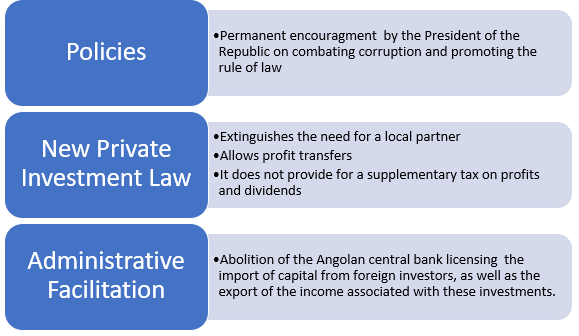
The measures taken were of a political, legal and administrative nature.
From a
political point of view, the President announced an effective policy to combat
corruption and increase the rule of law and thereby tried to promote confidence
in compliance with the Constitution and the Law, what was not occuring in the past.
In
legislative terms, the NEW PRIVATE INVESTMENT ACT (Law no. 10/18, 26th
of June), which no longer requires partnerships with Angolan citizens or
companies with Angolan capital, is of fundamental importance. Therefore, there
is no longer the antecedent danger in which the Angolan partner, at a certain
point, grabbed everything for him. In
addition, the NEW PRIVATE INVESTMENT ACT in its Article 14 guarantees that the
State respects and protects the private property rights of private investors;
Article 15 establishes that the Angolan State guarantees all private investors
access to Angolan courts for the defense of their interests, with due process,
protection and security being ensured.
Similarly,
the NEW PRIVATE INVESTMENT ACT guarantees the right to repatriate dividends and
related amounts without weighing objective criteria or time constraints. And as
an additional advantage, there is no provision for a supplementary capital tax
rate on dividends and profits.
In
administrative terms, it should be noted that in 2018, all requests for the
transfer of dividends in excess of five million dollars (4.3 million euros)
were granted to foreign companies operating in the country.
And, most
importantly, since 2020, the importation of capital from foreign investors who
want to invest in the country in companies or projects in the private sector,
as well as the exportation of the income associated with these investments, have
been exempted from licensing by the Angolan central bank.
There is a visible effort by the government to create more attractive conditions for foreign investment, this effort is reflected in the attempt to create a more favourable social and political climate, in the new legislation on private investment and in a greater liberalization of financial movements. The dangers of absorption by the local partner or the impossibility of transferring profits are thus mitigated.
Figure 2- New framework for
attracting private investment in Angola
New foreign investments announcements.
1st quarter of 2020
The United States Secretary of State Mike Pompeo confirmed in February
2020 that several US companies are willing to invest more than US $ 2 billion
in Angola.
The Africa-Korea Economic Development Association (AKEDA) will
contribute US $ 2 billion to finance the construction of a thermoelectric power
station in Benguela province, the institution’s secretary-general announced in
Luanda, also in February 2020. Siwoo Chung informed that the amount is part of
a global amount of US $ 5 billion that the association plans to invest in
several projects in partnership with the Angolan State.
The German chancellor, on a visit to Angola, also offered broad support
in the development of the country’s infrastructure, in unquantified values.
Swiss-based company Webcor is expanding the grinding company Grandes
Moagens de Angola and plans to invest US $ 250 million in five years. Among the
investments is a new factory, in the port of Luanda, which transforms 1200 tons
of wheat into flour and bran daily. The regional administrator in Angola for
the Webcor Group, says that the company has benefited from obtaining faster
visas for investors and workers, lower costs and easier rules for investment.
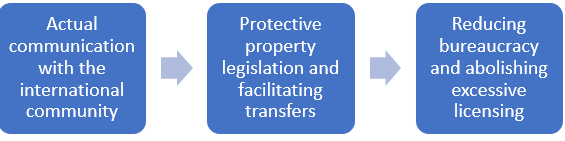
Additional measures needed
It appears that there is a clear focus on the Angolan Government in
creating a more attractive framework for foreign investment and that there are already
some positive signs. However, this is not enough and additional measures are
required, many of which are pragmatic.
The first
measure is communication / information. It is necessary to transmit to the
international business community, in a systematic and assertive manner, the new
framework for investment in Angola, above all, the positive changes that it has
undergone since 2018. This is a vital point, as there is a huge lack of
knowledge of what is happening now.
Secondly,
it is crucial to improve the legislation, namely, the one referring to property
rights and the land law, seeking to provide the country with clear and
effective rules that allow to know what belongs to each one and to avoid the
constant disputes over property. . It is also necessary to modify article 19 of
the NEW PRIVATE INVESTMENT ACT when it establishes that the transfer of
dividends and profits abroad can only be carried out after the complete
execution of the private investment project has been confirmed by the competent
authorities. A declaration from the private entity that fulfilled these duties
should be sufficient, which will be monitored later.
Finally,
initiatives in the area of des-bureaucratization and dematerialization are
important, as well as the definitive abolition of licenses by the central bank
for transfers related to investment.
Figure 3- Additional measures to
accelerate foreign investment
https://www.cedesa.pt/wp-content/uploads/2020/03/afr-cf-570x312-angola-luanda-panoramic-view-credit-imf-img-002v1.jpg304556CEDESA-Editorhttps://www.cedesa.pt/wp-content/uploads/2020/01/logo-CEDESA-completo-W-curvas.svgCEDESA-Editor2020-03-10 10:23:152020-03-10 15:11:11The new attractiveness for international investment in Angola
The privatization program currently underway in Angola has a scope never before outlined in the country and deserves extra attention by the international business community.
Legislation
The legal basis for the Angolan privatization program is found in the Privatization Act (Law No. 10/19, 14th of May) and ProPriv (Presidential Decree No. 250/19 5th of August). The Private Investment Act (Law 10/18, 26th of June) is also relevant.
Table 1- Basic legal regulations for privatizations
Privatization Act
Law No. 10/19, May 14th
ProPriv
Presidential Decree No. 250/19, August 5th
Private Investment Act
Law No. 10/18, June 26th
Terms of reference
Under ProPriv, 195
public entities will be privatized during a 4-year program (2019-2022). These
entities were grouped into four sectors: National Reference Companies,
Sonangol’s Participating and Active Companies, Industrial Units in the Special
Economic Zone (SEZ) and Other Companies and Assets to be Privatized. The
sectors of activity that refer to privatizations are diverse: mineral and oil
resources, telecommunications and information technologies, finance, transport,
economics and planning, hotels and tourism, industries, agriculture, fisheries.
In the list of to be privatized
companies, we have the country’s most important such as Sonangol (oil), Endiama
(diamonds), Unitel (telecommunications), TAAG (aviation), Banco Económico
(ex-Besa, bank), ENSA (insurance company)), CUCA (brewer) and also another type
of more modest entities such as Centro Infantil 1 de Junho, Pungo-Andongo Farm
or INDUPLAS (plastic bags industry). It is, therefore, a comprehensive and an extensive
program.
Table 2 – Core elements of privatization
195 entities to privatize
4 years (2019-2022)
Key companies such as Sonangol and Endiama
Achievements
To date, the
privatization program has been focused on small industries and entities. In
2019, Angola earned US $ 16 million due to the privatization of five factories,
which costed the State approximately US $ 30 million. For 2020, the 2nd
phase of privatization embraces 13
plants located in the Economic Zone Luanda / Bengo. The factories operate in sectors
such as metal packaging, concrete, carpentry, plastic bags, paints and
varnishes, metal towers, PVC tubes, metal tiles, PVC fittings manufactoring,
absorbents and cement bags.
Also in progress is the privatization of several agricultural projects, as well as some assets belonging to Sonangol.
Advantages and opportunities
This vast privatization program is extremely attractive to foreign investors due to several reasons, namely:
IFC / World Bank Quality Assurance. The privatization program is being carried out within the framework of the IFC-International Finance Corporation, which belongs to the World Bank, that provides investment, advisory and asset management services to encourage the performance of the private sector in less developed countries. IFC guarantees a global projection of the project and the World Bank warranty seal in the procedures followed, in addition to being an experienced partner and knowledgeable of the global rules. In this way, the Angolan privatization process comes with an appreciable quality certification that can reassure foreign investors.
Institutional strengthening and property protection in progress. The present government is committed with the consolidation of institutions, the transparency of due process and the adequate protection of property rights through the promotion of the rule of law. This is not immediate obtained allowing to quickly remove the risks associated with losing investments in Angola. However, it is a trend already in motion. In this context, it is important to highlight the new Private Investment Act (Law no. 10/18, 26th of June) that expressly provides legal guarantees to investors, regarding their rights, property and also legal guarantees (articles 14 , 15 and 16 of the Law metioned). In addition, the same Act drops the local investment partner exigence for any foreign investment, which was a source of the greatest abuses and fraud in the relationship with the non-national investor. And the investment is no longer preceded by permission, preventing or delaying registration.
Economic reform towards free markets.The executive led by João Lourenço, with the support of technicians from the International Monetary Fund, is developing an economic liberalization program for the economy that increases competition between companies and reduces barriers to entry into the markets. This becomes accentuated connecting to the fight against corruption, which has the immediate consequence, in economic terms, of the breaking of the existing monopolies and oligopolies in the country and which limited competition, besides imposing higher prices and abusing practices regarding taxation. Consequently, in addition to the legal reinforcement, the economic component seems more prepared for a functioning market economy.
Atractive companies to be privatized. To privatize are companies with great worldwide attraction such as Sonangol, Endiama or Unitel. They are what can be called the Blue Chips of Angola, that will offer a very high growth potential to the investor once they are submitted to a strict management discipline, rationalized investment and optimization of their values. At a time when the African economy due to demographics and the complementarities with Asia that act as determinants, has an increased growth potential, it becomes a good bet to invest in large companies linked to natural resources and communications in Angola .
Small and medium-sized companies with lucrative niche markets. The interesting thing about the program is that the universe of companies to be privatized is vast and diverse. In this context, several small and medium-sized companies can be the basis for small investors who want to explore niche markets in Angola or Southern Africa from a platform that tends to be business friendly and eager in infrastructure development. In Africa, the potential of small and medium-sized enterprises is very large. Some surveys carried out in specific South African provinces, encouragingly, conclude that 94% of small businesses surveyed are profitable, while 75% of small business owners believe they earn more money running their own businesses than in any other alternative. The areas covered by these companies are very diverse: travel, tourism and hospitality; agribusiness; brewers; etc.
Business problems are not structural. The companies to be privatized suffer essentially two types of problems: incompetent management and lack of capital. Any new investor who provides professional management and fresh money to the company will be able to successfully exploit its potential. The markets are yet to develop and far from being mature, consequently, there is a very broad and stimulating path for companies with capital and professional management.
High rate of return on investment. Given the needs that are still emerging in the Angolan market and the possibilities that integration with SADC (Southern African Development Community) bring, the prospects for obtaining high profit rates are high. In fact, there is a low-cost labor force and with a very large market extension. These two factors predict growth and a good return on capital.
Table 3 – Reasons for attracting privatizations in Angola
• IFC / World Bank Quality Assurance
• Ongoing institutional strengthening and property protection
• Liberalizing economic reform
• Desirable companies
• Small and medium-sized companies with attractive niche markets
• Business problems are not structural
• High rate of return on investment
Problems to solve
The problems envisaged
are of three types: bureaucratic-administrative and assessment of the real
situation of companies. There is also a lack of clarity of purpose in relation
to large companies and banks.
On the bureaucratic-administrative
issue, it is important to highlight the multitude of coordinating entities. The
President of the Republic appears as the leader and strategic coordinator, but
then we have the Minister of State for Economic Coordination as the general coordinator
of the program, the Secretary of State for Finance and Treasury under the
Ministry of Finance as the operational coordinator, each Sectorial Ministry
will have duties of sharing information and data of companies operating in the
sector. The State Assets and Participations Management Institute (SAPMI) as
manager and executor of the program, in addition to other institutions with
specific roles. Perhaps because of this, all schedules have been exceeded. By
mid-February 2020, around 50 companies were expected to be privatized. The
number as seen earlier is much smaller. In fact, the privatization program has
not reached an exciting dynamic phase, the so-called momentum.
“The Privatization
Czar”
It is essential to
give privatizations an accelerated dynamic. For this, the best solution is to
nominate what can be called a “Czar of Privatizations”. Someone the President
trusts who, under his command alone,
directs the privatizations with legal powers to instruct any minister or body
and to override them by deciding to concentrate the competencies and powers for
the privatizations.
Technical problems
The remaining types of
problems are of a more technical nature. For many companies, there is no clear
idea of their values or of any hidden losses that may exist. For example,
in relation to banking, the previous due dilligence has encountered several situations
in which unknown impairments are detected that require recapitalization or
levels of non-compliance with some indicators of financial balance, namely
excessive concentration of investments in low-profit properties.
No internal audit work
has been done on the companies to be privatized. This obviously implies that
investors are taking risks. The answer that cannot be given is that a thorough
internal audit will have to be carried out for each of the 195 companies. This
will be impossible and would require an endless delay in privatization.
Thus, it will be
necessary to provide for possible state compensation mechanisms if impairments
are found after a certain level, imputing liability below that level to buyers.
At the same time, in doubtful cases, the State will have to sell at a sharp
discount. And trust that appropriate private management will make it possible
to solve most cases.
In fact, the essential
point of the privatization program, more than obtaining revenues for the State,
is to create professional management based on investment that contributes to
the structuring of flourishing markets, so it is justified to sell at a
discount or to support any previously undetected impairments. It is a risk that
the State must accept in order to achieve the eagerly-awaited objective of
creating a competitive free market economy.
Finally, in relation to large companies, the total privatization program must be defined and publicly disclosed with reference to the percentage amounts to be offered to the market, the dates and other qualifying conditions. There is still a lot of ignorance in the national and international markets about the privatization of these companies.
INVESTOR RECOMMENDATIONS: ◈ For large investors, the Angolan Blue Chips that are going to be subjected to privatization have vast potential for growth and rationalization of costs and organization, so they can provide very high rates of return on investment; ◈ For small and medium entrepreneurs there is a range of companies that can serve as a platform for launching moderate sized businesses; ◈ In general, given the positive Schumpeterian social climate that is being created, there is a strong recommendation to participate and buy in the privatization process in Angola.
RECOMMENDATIONS TO THE ANGOLAN STATE: ◈ To avoid delays and some administrative and decision confusion, a “Czar of Privatizations” should be instituted, managed directly by the President of the Republic and with delegated legal powers that will allow him/her to carry out the privatizations; ◈There must be mechanisms to compensate for the lack of internal audit by companies; ◈ Capital repatriation mechanisms for investors must be clarified; ◈ Clarification is required with dates, percentages and specific conditions for privatizations to take place in major reference companies (Blue Chips).
https://www.cedesa.pt/wp-content/uploads/2020/02/emmanuel-zua-ynwdolH6yik-unsplash2.jpg8201280cedesaADMNhttps://www.cedesa.pt/wp-content/uploads/2020/01/logo-CEDESA-completo-W-curvas.svgcedesaADMN2020-03-06 15:00:302020-03-06 16:50:20The opportunity for privatizations in Angola. 2020 analysis
We may request cookies to be set on your device. We use cookies to let us know when you visit our websites, how you interact with us, to enrich your user experience, and to customize your relationship with our website.
Click on the different category headings to find out more. You can also change some of your preferences. Note that blocking some types of cookies may impact your experience on our websites and the services we are able to offer.
Essential Website Cookies
These cookies are strictly necessary to provide you with services available through our website and to use some of its features.
Because these cookies are strictly necessary to deliver the website, refuseing them will have impact how our site functions. You always can block or delete cookies by changing your browser settings and force blocking all cookies on this website. But this will always prompt you to accept/refuse cookies when revisiting our site.
We fully respect if you want to refuse cookies but to avoid asking you again and again kindly allow us to store a cookie for that. You are free to opt out any time or opt in for other cookies to get a better experience. If you refuse cookies we will remove all set cookies in our domain.
We provide you with a list of stored cookies on your computer in our domain so you can check what we stored. Due to security reasons we are not able to show or modify cookies from other domains. You can check these in your browser security settings.
Other external services
We also use different external services like Google Webfonts, Google Maps, and external Video providers. Since these providers may collect personal data like your IP address we allow you to block them here. Please be aware that this might heavily reduce the functionality and appearance of our site. Changes will take effect once you reload the page.
Google Webfont Settings:
Google Map Settings:
Google reCaptcha Settings:
Vimeo and Youtube video embeds:
Privacy Policy
You can read about our cookies and privacy settings in detail on our Privacy Policy Page.