Structural combat against drought in southern Angola: the case of Cunene

The drought in Cunene

The drought in southern Angola is a phenomenon that plagues the region over and over again, causing hunger among broad strata of the population.

As of the end of 2020, the region faced the worst drought in 40 years. According to the spokesman for the World Food Program (WFP) Tomson Phiri, “the country has been experiencing a period of drought since last December, with rainfall below average”[1].

This scenario, which has been repeated, and will likely worsen due to global warming, as the World Bank warns, writing that, “natural hazards in the form of floods, erosion, droughts and epidemics (…) prevent development and are expected to worsen as the climate changes”[2], implies a structuring intervention by public authorities.

The objective of this study is to investigate the structural measures that the Angolan government is developing to present sustainable solutions to the drought problem. We focus on the province of Cunene located in the southern interior of Angola, which has been one of the most affected by drought.

In fact, since Angola became independent, it is only recently that the problem of drought has been taken more seriously by the authorities. Before these projects, the situation was somehow alleviated with water holes, however the suffering of the population remained or gradually worsened. The provincial governor of Cunene, Gerdina Didalelwa, on one occasion confessed that “these drillings have been done empirically and are only spending money”[3]. In other words, drillings can even be carried out, but only when there is professionalism behind it; only after an in-depth study was carried out by companies that have technical skills and a thorough knowledge of the waters.

Structuring projects

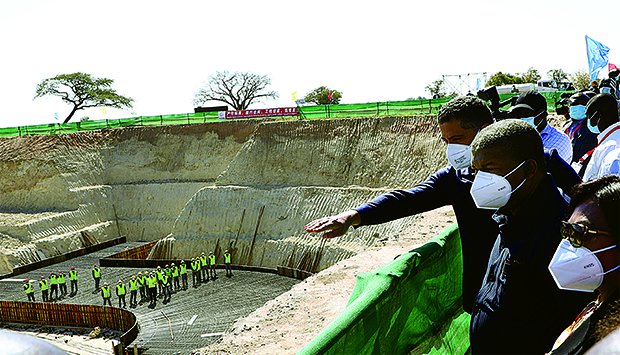
In mid-2021, the Angolan government announced the planning and execution of several projects in the province of Cunene, which aim to structurally combat the chronic drought that ravages the south of the country.

Project 1

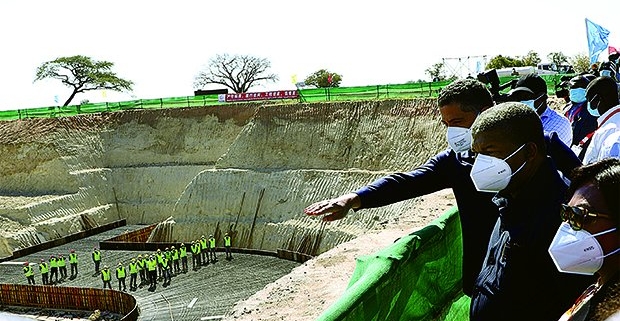
The first of the projects we are going to mention is the construction of the water transfer system for the Cunene River, starting from the Cafu region.

This project is divided into two batches, the first of which aims to build a pumping system in the Cunene River, pressurized pipeline, open channel from the locality of Cafu to Cuamato and 10 chimpacas[4] (water reservoirs).

With regard to the second batch, the purpose is to build two water channels, from Cuamato, one (west conductor) going to Ndombondola, with 55 kilometers and the other (east conductor) to the municipality of Namacunde with 53 kilometers[5]

The construction work are being carried out by the company Sinohydro Angola, with an estimated budget of more than 44 billion kwanzas, if we include the two batches.

The start of the execution of this project has already taken place and counts on an environmental pact study that includes a protocol of the Southern African Development Community (SADC), as well as the sharing of information with Namibia.

The Cafu project is expected to be completed in the first quarter of next year, and it will benefit approximately 200,000 inhabitants and 250,000 head of cattle.

Project 2

The second project that deserves mention is the construction of the Calucuve dam, located in the municipality of Cuvelai. This earthen dam is 19 meters high and has a storage volume of 100 million m3 of water.

The project’s budget is around 177 million dollars, with the company Omatapalo-Mota-Engil as the responsible contractor, and the construction period is 20 months.

The main purpose of the construction of this work is to supply water to the populations, and it is planned to satisfy the needs of more than 80,000 people, as well as meet the needs of approximately 182,000 heads of cattle.

On the other slopes, it will supply water that will allow irrigation throughout the year in an area estimated at 2,600 ha.;

It will ensure the sustainability of economic and social activities in the project area. It will reduce the problem of seasonal water scarcity in the northwestern part of the Cuvelai basin. And finally, to mitigate or prevent damage caused by floods to assets and activities in the local economy in cities located downstream of the dam (Cuvelai Delta area – Evale).

The lead time is 20 months.

Project 3

As for the third project, the construction of the Ndué dam, it is an undertaking also led by Synohidro Angola, with a construction period of 30 months, and an estimated budget of around 192 million dollars.

It will be a 26 m high earthen dam with a storage volume of 145 million m3 of water, on the Caúndo River upstream of the Ndué.

The main purposes of this project aim to satisfy the domestic needs of approximately 55,000 people, as well as to guarantee the quality of water supply to the population. In addition, it aims to satisfy the needs of approximately 60,000 heads of cattle.

Other equally essential goals are also highlighted, such as:

Provide water to allow year-round irrigation of an estimated 9,200 ha area and ensure the sustainability of economic and social activities in the project area and reduce the problem of water scarcity in the central area of ​​the Cuvelai basin.

Finally, the dam could become an important source of water supply for the province of Cunene.

The execution period is 30 months.

***

A final note also for the recovery of existing dikes and weirs in the municipality of Curoca, which is 334 kilometers from the city of Ondjiva[6].

Table 1- General quantifiable benefits of construction work against drought in Cunene

ProjectsPopulationCattleValue
Project 1200.000250.00044 M USD
Project 280.000182.000177 M USD
Project 355.00060.000192 M USD
TOTAL335.000492.000413 M USD

It appears that in addition to providing irrigation and providing increased possibilities for water distribution, these works will directly benefit 335,000 people and 492,000 heads of cattle, costing around 400 million dollars.

Portuguese participation

The Portuguese participation in these important construction work is relevant. Mota-Engil has a relevant stake (50%) in the consortium that builds the Calucuve dam (Project 1), having won the respective tender. COBA, also based in Portugal, is the supervisor of the Ndúe dam (Project 3). There is thus a significant intervention of Portuguese engineering in these structural projects.

Over the past two years, Mota-Engil has undergone a vigorous restructuring that has been reflected not only in Portugal, but also in Mozambique and Angola. It should be remembered that in mid-2020, the company established a partnership with the Chinese CCCC, which defines its participation of more than 30% in the construction company controlled by the António Mota family[7].

Shortly thereafter, Mota-Engil obtained a contract in partnership for road rehabilitation and construction in the Lundas with its subsidiary, with a value of around 280 million euros. On that occasion, the company underlined that it would reinforce its order book in the market, seeking to maximize the use of the assets that the group has in the country.


[1] https://www.rfi.fr/br/%C3%A1frica/20210326-onu-alerta-sobre-fome-causada-pela-pior-seca-em-angola-em-40-anos

[2] https://climateknowledgeportal.worldbank.org/country/angola

[3] https://www.jornaldeangola.ao/ao/noticias/consequencias-da-seca-no-cunene-com-dias-contados/

[4] https://www.angop.ao/noticias/entrevistas/construcao-da-barragem-do-cafu-a-bom-ritmo-manuel-quintino/

[5] Idem

[6] https://www.angop.ao/noticias/sociedade/barragens-de-caluve-e-ndue-vao-beneficiar-136-mil-pessoas/

[7] https://www.jornaldenegocios.pt/empresas/construcao/detalhe/mota-engil-ganha-contrato-de-280-milhoes-em-angola

Angola’s new strategic partners and Portugal’s position

Angola’s new strategic partners: Spain and Turkey

Two recent intense diplomatic exchanges at the highest level point to the emergence of new strategic partnerships for Angola. In a previous report, we warned of realignments in Angola’s foreign policy[1]. Now, what happens is that this realignment continues, and at an intense pace. The President of the Republic João Lourenço is clearly giving a new dynamic to Angola’s foreign affairs, which is not seen to be affected by some internal unrest on the way to the 2022 electoral process.

The most recent examples of the President’s diplomatic activity are Spain and Turkey. The important thing in relations with these countries, is not whether or not there is a visit at the highest level, it is about having an intensity of visits by both parties and clear objectives designed. It can be said that from a mutual perspective, Spain and Turkey are becoming Angola’s strategic partners.

Let’s start with Spain. Last April, the prime minister of Spain, Pedro Sanchez, who barely left the country during the Covid-19 pandemic, visited Angola. The visit was seen as marking a new era in bilateral cooperation between the two countries and led to the signing of four memoranda on Agriculture and Fisheries, Transport, Industry and Trade. The agreement regarding the development of agribusiness was particularly relevant, in order to build an industry that transforms raw material into finished product in the future, relying on the experience of Spanish businessmen. As is well known, agriculture is one of the Angolan government’s areas of investment in relaunching and diversifying the economy[2]. Therefore, this agreement is dedicated to a fundamental vector of Angolan economic policy.

More recently, at the end of September 2021, the President of the Republic of Angola visited Spain where he was received by the King and the Prime Minister. On that visit, João Lourenço clearly stated that he was in Spain in search of a “strategic partnership” that went beyond the merely economic and business sphere[3]. In turn, the Spanish authorities consider Angola as a “priority country”[4].

Now it will be seen how these broad intentions will materialize in practice, but what is certain is that both countries are clearly betting on an increase in both economic and political relations and their declarations and goals seem to have a direction and meaning.

The same kind of intensified relationship is being established with Turkey. Last July, João Lourenço visited Turkey, where he was extremely well received. From then on, it was agreed that Turkish Airlines would fly twice a week from Turkey to Luanda. It was also announced that Turkey has opened a credit line on its Exxim Bank to boost bilateral economic relationship. This means that the Turkish financial system will finance Turkish businessmen to invest in Angola. As early as October 2021, Turkish President Erdogan visited Angola. This visit was surrounded by all the pomp and circumstance and expressed an excellent relationship between the two countries. Like Spain, Turkey has an aggressive strategy for Africa, where it wants to gain space for its economy and political influence. The agreements signed by Erdogan and João Lourenço were seven, namely, an agreement on mutual assistance in customs matters; a cooperation agreement in the field of agriculture; an agreement for cooperation in the field of industry; a joint declaration for the establishment of the joint economic and trade commission; a memorandum of understanding in the field of tourism and a cooperation protocol between the National Radio of Angola and the Radio and Television Corporation of Turkey[5].

The approach with Turkey, like that of Spain, has as an immediate and structuring objective “that [the Turks] bring above all know-how that allows us to quickly and efficiently diversify and increase our internal production of goods and services”, using the words of João Lourenço[6].

In these two challenges by João Lourenço there is an obvious determination, or rather two.

First, seek new sources of investment that support the fundamental diversification of the Angolan economy. This is extremely important, and the Turkish and Spanish economies are properly diverse to be able to correspond to the model intended by Angola.

The second aspect refers to the need Lourenço feels to detach Angola from an excessive relationship with China and Russia, without harassing them, but looking for new partners. The geopolitical weight of the Cold War and the subsequent implementation of the Chinese model in Africa, with which Angola is identified, weigh heavily in the evaluations of foreign ministries and investors. Thus, Angola is looking for new openings and a “detachment” from that previous brand, not least because Russia does not have the financial muscle to make large investments in Angola, and China is in the middle of an economic turmoil. As we already know, “the Chinese economy grew 4.9% in the third quarter of this year, the lowest rate in a year, reflecting not only the problems it is facing with the indebtedness of the real estate sector, but also the effects of the energy crisis.”[7] This means that China needs a lot of Angolan oil, but it will not have financial resources for large investments in Angola.

In fact, the relations between China and Angola and the need for a reassessment of the same, especially in terms of oil supply and the opacity of the arrangements, will have to be a theme for an autonomous report that we will produce in the near future.

Portugal’s position. The ongoing deberlinization

Having established that the importance of the intensification of Angola’s relations with Spain and Turkey is established, an obvious question arises: and Portugal?

Portugal has tried to be Angola’s partner par excellence, and for this it has accommodated itself, in the past, to the several impulses of Angolan governance.

Currently, there are good political relations between Angola and Portugal. Just recently, João Lourenço said: “I was fortunate that during my first term in office we were able to maintain a very high level of friendship and cooperation between our two countries.” He also added that “personal relationships also help. Therefore, over the years, we have been able to build that same relationship with President Marcelo Rebelo de Sousa and Prime Minister António Costa”.[8] There is no doubt that favorable relations are established between Angola and Portugal. It also helps that Portugal has three ties that are felt every day; historical ties, cultural ties, especially linguistic ties, and emotional ties.

However, despite the satisfaction expressed by the Angolan President regarding the good relations between the two countries, there are structural issues that cast shadows on the relationship and make Portugal’s position less relevant to Angola than in the past, generating some caution on the part of Angola in relation to excessive involvement with Portugal. Actually, there is a decline in the Portuguese position in Angola, vis-à-vis Spain or Turkey, or Germany, France or the United Kingdom. There is an ongoing de-Berlinization of Angola’s foreign policy. João Lourenço sees Portugal as an ally in the CPLP, but not as a gateway or platform to Europe. There, he wants to relate directly to each of the specific European countries. The old idea that pervaded in some European chancelleries that Angolan topics were specific to Portugal and should be dealt with from, or at least, with the Lisbon competition (which we call Berlinization), ended. Each of the European countries now deals with Angola without Portuguese intermediation and vice versa.

This fact results essentially from three factors. One of an economic nature, and two of a political nature.

In the first place, Angola seeks, in its foray around the world, countries with the potential and capital to invest. It is searching for capital to develop its economy. Now Portugal, jumping from crisis to crisis and having a clear lack of capital for its development, will have much less means to move to Angola. And in the famous Portuguese Recovery and Resilience Plan there is nothing specific for investment in Africa or Angola in particular. Consequently, with no provisions highlighted for Angola in the Portuguese Plan, it is clear that the African country will have to go looking for massive investments elsewhere.

However, we believe that this is not the main cause for the relative decline of the Portuguese position in Angolan foreign policy priorities. There are two other reasons, which are interlinked.

In this sense, there is na element that has caused the disquiet of the current Angolan leadership towards Portugal. This element entails in the fact that in the near past, Portugal constituted what the Financial Times of October 19th[9] described as the place where Angola’s rich (and corrupt) elite collected trophies in assets, a kind of playground for the President’s sons José Eduardo dos Santos and other members of the oligarchy. Now, the Angolan government, apparently, looks with some suspicion at Portugal because of this, specially considering the intervention that banks, lawyers, consultants and a whole myriad of Portuguese service providers had in the laundering and concealment of assets acquired with illicitly withdrawn money of Angola. There is a danger that all these entities are making efforts to undermine the famous fight against corruption launched by João Lourenço.

What happened during the years of inspiring growth in Angola, between 2004 and 2014, significantly, is that Portugal acted as a magnet for Angolans’ savings and income. The Angolan ruling elites, instead of investing the money in their country, went to invest it, or merely park it in Portugal, with disastrous consequences for Angola, which found itself without the necessary capital to make its growth sustainable. The reasoning that can be attributed to the Angolan government is that Portugal allowed the Angolan money obtained illicitly to be laundered in its economic and financial system with such depth that it is now very difficult to recover. Ana Gomes, wisely, always warned about this. In fact, if we look at the assets recovered by Angola, with great significance, there has not yet been public news that any of them came from Portugal. There was the 500 million dollars that came from England, but in Portugal, EFACEC was nationalized by the Portuguese government – and that’s okay from the Lisbon’s national interest point of view- but it was realized that Angola would not receive anything from there, as well as one can’t regard a clear path of receiving from other situations.

To this phenomenon is added a second that is presently noted. Lisbon is serving as a platform for the more or less concealed articulation of strong opposition attacks on the Angolan government. Whether through consultants, press or law firms. In this case, unlike possibly in the case of investments and possible money laundering, these activities will take place in accordance with the law and adequate protections of fundamental rights. However, it will create discomfort in the Angolan leadership, which will possibly see a link between the two phenomena, that is, between the fact that Portugal was a safe heaven for Angolan assets obtained illicitly in the past, and now it has become a local of opposition and conspiracy, above all, to the so-called fight against corruption. It is noticed that many of the movements take place in Portugal and its elites continue to help those who were dubbed by João Lourenço as “hornets”, either judicially or in the search for new places to hide their money.

In concrete terms, the episode of EFACEC nationalization combined with the recent judicial decision to “unfreeze” the accounts of Tchizé dos Santos in Portugal, and the generalization of an anti João Lourenço current in large spaces of the Portuguese media, although they constitute decisions or attitudes that are justified in political, legal or ethical terms in Portugal, they are events that reinforce some Angolan distrust of the Portuguese attitude, which can see the former colonial power in a kind of shadow play.

These situations, which have broadened in recent months, are causing some discomfort in Angola, which may consider Portugal as a kind of safe haven for activities that harm the country. Gradually, conspiracies from Portuguese territory abound, such as meetings and other events

It is precisely the reasons mentioned above that lead us to identify some attempt at political distance between the Angolan government and Portugal. There are no easy answers to these equations, although its enunciation has to be made for reflection by all those involved.


[1] CEDESA, 2021, https://www.cedesa.pt/2021/05/18/os-realinhamentos-da-politica-externa-de-angola/

[2] See report CEDESA, 2020, https://www.cedesa.pt/2020/06/15/plano-agro-pecuario-de-angola-diversificar-para-o-novo-petroleo-de-angola/

[3] Deutsche Welle, 2021, https://www.dw.com/pt-002/jo%C3%A3o-louren%C3%A7o-em-espanha-em-busca-de-parceria-estrat%C3%A9gica/a-59344760

[4] Idem note 3.

[5] Presidência da República de Angola, 2021, https://www.facebook.com/PresidedaRepublica

[6] Idem, note 5.

[7] Helena Garrido, 2021, https://observador.pt/opiniao/o-choque-energetico-e-o-orcamento-em-duodecimos/

[8] Observador, 2021, https://observador.pt/2021/10/22/pr-de-angola-ve-relacoes-de-amizade-e-cooperacao-com-portugal-em-nivel-bastante-alto/

[9] Financial Times, 2021, https://www.ft.com/content/4652e15a-f7ba-4d21-9788-41db251c5a76

2022 Angolan elections and the United States

Recently, rumors have circulated in Luanda and received echo in generally well-informed portals[1] about a possible increased interest of the United States in the Angolan elections, which would lead the Western power to demand that the elections have impartial international observers to guarantee the electoral truth, as well as the threat of possible sanctions against the João Lourenço government if it did not comply with these American recommendations. Specifically, it is announced that the Biden Administration has been threatening the application of financial sanctions, visa restrictions and travel bans against government officials who undermine elections in their countries[2]. From there it is extrapolated that it will be doing the same in relation to Angola.

This apparent position represents a break with the relative passivity with which the United States of America in the past has faced the general elections in Angola, at least since 2008, it is necessary to try to understand if this change in US policy verifiably exists and in what terms.

Firstly, the sources we consulted state that they are not aware of any reversal of US foreign policy towards Angola, noting that the rumors essentially originate from documents sent by Angolan Non-Governmental Organizations to the State Department, which has always happened and will happen and also in the usual inquiries that the American Embassy in Luanda carried out, but which it has always carried out in the past and will carry out in the future. Therefore, nothing new.

Secondly, and this is the object of our study, it is interesting to investigate whether the structural conditions of US foreign policy imply a more accentuated intervention/concern with the elections and the situation in Angola, which could lead to serious misunderstandings between the Biden Administration. and the executive of João Lourenço.

The Biden Administration’s foreign policy, curiously, in its broad lines follows the policy adopted by Donald Trump, breaking only in specific aspects, such as the weather emergency or some multilateralism. Thus, Biden’s foreign policy is based on a commitment to dealing with the relationship with China, a pragmatism in most relations and a lack of interest in Africa.

The withdrawal, as it took place, from Afghanistan is a typical example of this approach, in which Americans do not want to get involved in “nation building” projects or actively promoting values ​​in other countries. They now prefer a strategy that benefits them commercially, guarantees stability and helps control China.

The idealism of the neoconservatives who embraced George Bush Jr., in his attempt to build democracies and the rule of law in Iraq and Afghanistan, is no longer part of the American foreign policy guide. So don’t expect this idealism to come to Africa. There will be no interventions in Africa to promote any kind of American values, not even muscular interventions of any kind.

What exists on the North American side is a desire for the African continent to be as stable as possible and the supply of essential raw materials ensured in the most adequate way possible.

This October, in the prestigious Foreign Affairs magazine, they wrote “President Joe Biden’s administration has been similarly slow out of the blocks on Africa. Aside from its focused diplomatic response to the horrific civil war in Ethiopia and a few hints about other areas of emphasis, such as trade and investment, Biden has not articulated a strategy for the continent.[3]

Consequently, in terms of the structural lines of American foreign policy, it appears that with the withdrawal from Afghanistan, any wish for “Nation building” or intervention in a third country that does not directly threaten the national interest has been abandoned.

Additionally, the focus was placed on China and its control and more generally on Asia.

The US State Department’s statement from May this year is very clear on the importance of China and the role it plays in the American approach: “Strategic competition is the frame through which the United States views its relationship with the People’s Republic of China (PRC). The United States will address its relationship with the PRC from a position of strength in which we work closely with our allies and partners to defend our interests and values.  We will advance our economic interests, counter Beijing’s aggressive and coercive actions, sustain key military advantages and vital security partnerships, re-engage robustly in the UN system, and stand up to Beijing when PRC authorities are violating human rights and fundamental freedoms. When it is in our interest, the United States will conduct results-oriented diplomacy with China on shared challenges such as climate change and global public health crises[4]”.

If the structuring lines of American foreign policy are those mentioned above, and Africa does not occupy a relevant place, it is worth pointing out, however, what the United States wants or expects from Africa. Essentially, it can be summed up in a colloquial phrase: The US wants Africa not to bother them and provide some economic profits.

Following this strategy, the US has handed over a good part of the anti-terrorist fight to France and counts on African countries to guarantee local stability, pursuing strong alliances with some of them. Only if US national interests and security are affected by Islamic terrorism will the United States intervene strongly. It should be noted that the US also has its trauma here, which occurred in Somalia, and so well portrayed in the beautiful film Black Hawk Down[5], masterfully directed by Ridley Scott. There is no US willingness to get inside any imbroglio in Africa. This idea is reinforced by the donwsizing proposals regarding its Africom (United States Command for Africa).

To this extent, the US has a very practical view of the balance of power and needs for Africa. And in reality its history with Angola demonstrates this. In fact, even when in the 1980s they reportedly supported Jonas Savimbi’s UNITA against José Eduardo dos Santos’ MPLA, they were careful that such support did not disrupt the activities of their oil companies operating in territory dominated by the MPLA government. At the time, Cuba sent an additional 2,000 soldiers to protect Chevron’s oil rigs (in Cabinda). In 1986 Savimbi called Chevron’s presence in Angola, already protected by Cuban troops, as a UNITA “target”. So, we had Savimbi backed by the Americans to invective an American company protected by the Cubans[6]. Later, it was rumored that a company linked to the conservative Dick Cheney, future vice president of George Bush Jr., had a role in the location and death of Jonas Savimbi[7].

This means that the US attitude towards Angola has always been ambivalent, and it will not be now that it will embark on a path of confrontation, when Angola became an important ally for two very realistic reasons.

Firstly, Angola, specially under the leadership of João Lourenço, has played a role of pacification in its area of ​​influence. Remember that Angola helped a peaceful and electoral broadcast in the Democratic Republic of Congo (DRC), tries to establish some peacefulness between the triangle DRC, Uganda and Rwanda, besides having contributed decisively to the recent peace in the Central African Republic (CAR). In fact, in the latter country, President Touadéra highlighted the crucial role played by the Angolan state in achieving peace. Angola is an ally of US peace in Africa and obviously the Americans will not neglect Angola’s diplomatic and military support and collaboration for African tranquility.

It is also a strong bulwark against any penetration of Islamic terrorism.

Secondly, it is clear that Angola is currently pursuing a new foreign policy, intending to “detach itself” from the excessive dependence on China. Now, given its experience with China, which pioneered intervention in Africa and the current attempt to a more Western foreign policy, Angola constitutes an experimental platform par excellence for US policy towards China, where the true implications of this policy will be tested and how far the US effort to counterbalance China will go.

To that extent, an American failure with Angola will be a global failure of its strategic approach to China. Here, as in the Cold War in relation to the Soviet Union, the reality of American action in relation to China will be measured.

Thus, it does not seem that the Biden Administration embarks on any hostility or change in relation to the João Lourenço government, as this does not correspond to American interests in relation to Africa and even in relation to China. All rumors in another sense should be seen as part of the Angolan infighting and not any muscular American positioning.


[1] CLUB-K, 2021,  https://club-k.net/index.php?option=com_content&view=article&id=46062:eua-ameacam-sancoes-contra-regimes-africanos-que-recorrem-a-fraude-eleitoral&catid=11:foco-do-dia&lang=pt&Itemid=1072

[2] idem

[3] Foreign Affairs, 2021, https://www.foreignaffairs.com/articles/africa/2021-10-08/africa-changing-and-usstrategynotkeeping?utm_medium=promo_email&utm_source=lo_flows&utm_campaign=registered_user_welcome&utm_term=email_1&utm_content=20211026

[4] USA State Department, 2021, https://www.state.gov/u-s-relations-with-china/

[5] Black Hawk Down, 2001, https://www.imdb.com/title/tt0265086/

[6] Franklyn, J. (1997), Cuba and the United States: a chronological history

[7] Madsen, W. (2013). National Security Agency surveillance: Reflections and revelations 2001-2013

The question of capital in Angola

1- Introduction: IMF, sound economic policies and capital accumulation

Contrary to what some economic studies and forecasts currently carried out by some more or less unknown consultants, the current Angolan economic policy has solid foundations. This is demonstrated by the recent assessment by the International Monetary Fund regarding the agreement between the fund and Angola. The IMF administration is clear in declaring[1]: “The authorities [from Angola government] have supported the [economic] recovery through sound policies that aim to further stabilize the economy, create opportunities for inclusive growth and protect the most vulnerable in Angolan society.”

It would be difficult to have a better endorsement of government economic policy.

However, macroeconomic stabilization and the resumption of economic growth are different realities. There is need of a certain engine to ensure economic growth. It is known that the essential growth model was presented by Robert Solow (Nobel Prize for Economics in 1987), that explains that growth depends essentially on the accumulation of capital, with the increase in GDP resulting from the increase in the capital stock[2].

It is known that the latest Angolan GDP figures for the first quarter of 2021 are negative by 3.4%. So the question that now arises is: how to transform sound economic policies into capital accumulation and promote GDP growth?

2-Capital in the Angolan economy

The essential growth model of the Angolan economy, at least from 2021 onwards, was not a model based primarily on investment, but on consumption derived from imports and on the direct benefit of capital gains from the high price of oil. This meant that the investment that existed was induced by oil and not extended to the economy as a whole[3]. It should also be noted that a good part of the savings gains at that time was not transformed into domestic investment, having been transferred abroad from Angola. In a colloquial way, there was a sharp flight of capital from Angola to overseas countries, namely Portugal or off-shore tax havens[4].

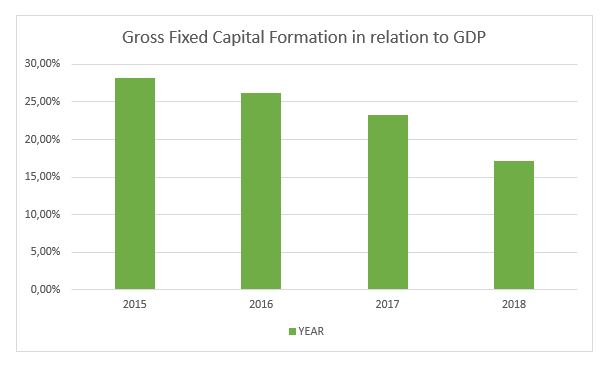
It is public that this model went bankrupt as of 2014, and led to sharp years of recession after 2015. At the same time, it was found that the contribution of gross fixed capital formation (GFCF) to GDP began to decrease from that point on. year (2015). If we look at each year the FCF/GDP was respectively 28.21 %, 26.21 %, 23.24 %, 17.19%. The 2018 number (17.9%) is frightening and makes the discussion about the need to capitalize the Angolan economy more relevant.

Figure 1: Gross Fixed Capital Formation in relation to GDP

“The country has a capital deficit”[5] and this problem has to be resolved so that growth can occur. This aspect has to be one of the guides for future economic policy. A goal must be set to raise the GFCF/GDP rate to higher levels, possibly to the 25/26% that happened in 2007 or 2012, which ensure GDP growth levels (albeit based on oil) of 14% and 8%.  Now a new capitalization not only based on oil has to be carried out.

It’s easy to diagnose. Angola lacks capital and needs strong investment. The answers will be the most costly.

3- Increase capital in Angola

What to do to accumulate and increase capital in Angola?

Our answer is divided into two perspectives, the short-term and the medium-term. Let’s focus on the short term, then make a brief reference to the medium term, although it is clear that there is a continuum, as what is done now has repercussions over time.

The executive has already taken some measures, which we have reported in previous reports[6], such as the Private Investment Law (LIP)-Law no. 10/18, of June 26, which no longer requires partnerships with Angolan citizens or companies from Angolan capital and in its article 14, it guarantees that the State respects and protects the property right of private investors; Article 15 establishes that the Angolan State guarantees all private investors access to the Angolan courts for the defense of their interests, being guaranteed due legal process, protection and security. The range of possibilities for transferring dividends were also expanded. Moreover, in administrative terms, it should be noted that in 2018, all requests for the transfer of dividends above five million dollars (4.3 million euros) were granted to foreign companies operating in the country. And, most importantly, since 2020, the capital import from foreign investors who want to invest in the country in companies or projects in the private sector, as well as the export of income associated with these investments, have been exempted from licensing by the Angolan central bank.

However, this is still not enough, and foreign private investment will take a long time, either because a very turbulent electoral period is starting, or because there is a worldwide distraction with Covid-19. In addition, the executive has not yet communicated with all the worldwide amplification, the opening of Angola for business. Even so, it is essential that the executive maintain the political orientation of openness to foreign direct investment.

More needs to be done in the short term to increase investment in Angola and subsequent economic growth. Below is a list of suggestions.

• The initial suggestion is obvious and is based on strengthening public investment. It is essential that the government becomes an inductor of investment and that the capital gains arising from the rise in oil prices and possible apprehensions in the fight against corruption are applied in reproductive investments with short-term results.

The next two suggestions might be more innovative.

 Let us address the first of the most unorthodox suggestions. As mentioned, a good part of the savings obtained by Angolans in Angola was remitted abroad, decapitalizing the country. Now we have to reverse this.

In this sense, the government should, in the first place, sell the dormant shares and assets or in which there is no very relevant strategic interest, which it has abroad. With the result of this sale, it would constitute an investment fund to be invested within Angola. Thus, the first heterodox proposal to increase the capital available in Angola is to sell what there is abroad that belongs to the State (directly or indirectly) and place it in the Angolan economy. Certainly, Sonangol’s position in Millennium BCP should be sold and transformed into investment capital in Angola, and possibly an indirect stake in Galp, if it is not possible to reach a strategic agreement with the Amorim family to better monetize the Angolan position.

• The second suggestion refers to fighting corruption. It is necessary to get out of a certain delay that entered into and boost the capital recovery.

Thus, the government should directly approach those it calls “hornets” and propose a negotiated solution to their situation. Either they deliver the assets that are abroad for investment in Angola, or they will face long prison terms. In relation to these assets, the method outlined above would be followed: Provided market prices were acceptable, everything would be sold and the capital returned to Angola for investment according to a formula agreed between both parties.

This “negotiation” would not be carried out by common means, but by a special force to be set up in Angola and would have short deadlines, not judicial deadlines.

There will have to be a radicalization in both directions in the fight against corruption. More effective punishment or forgiveness with repatriation. Unlike what happened in the previous repatriation law, there would be no waiting, but there would be a proactive attitude on the part of the executive.

By way of an illustration, the participation of Isabel dos Santos in NOS, that of General Kopelipa in the BIG bank and in several hotel developments, the apartments that the former figures have in Estoril, etc., could be sold. The result of these sales would return to Angola where it would be invested in terms to be agreed between the State and the former owners.

These listed measures could give some boost to the Angolan economy and thus promote economic growth immediately.

At the medium-term level, the essential thing is that there is no rampant corruption,  good communication infrastructures are created, an investor-friendly legal apparatus and fast, non-corrupt courts, an educated workforce (this does not mean having degree courses but the necessary skills) and reasonable taxes. In short, an inviting political and social climate for investment.


[1] IMF, Fifth review under the extended arrangement under the extended fund facility and request for modifications of performance criteria— press release; staff report, and statement by the executive director for Angola, June 2021, available in  https://www.imf.org/en/Publications/CR/Issues/2021/06/30/Angola-Fifth-Review-Under-the-Extended-Arrangement-Under-the-Extended-Fund-Facility-and-461318

[2] Cfr. Recent reassessment and description in Philippe Aghion, Céline Antonin e Simon Bunel (2021), The Power of Creative Destruction

[3] Cfr. Rui Verde (2021), Angola at the Crossroads. Between Kleptocracy and Development

[4] Cfr. For example: Isabel Costa Bordalo, Angola com 60 mil milhões USD é terceiro em África na fuga de capitais,  https://www.expansao.co.ao/angola/interior/angola-com-60-mil-milhoes-usd-e-terceiro-em-africa-na-fuga-de-capitais-94979.html

[5] Jonuel Gonçalves (2021), Angola: Não é a Covid que está a provocar a crise económica, https://www.dw.com/pt-002/angola-n%C3%A3o-%C3%A9-a-covid-que-est%C3%A1-a-provocar-a-crise-econ%C3%B3mica/a-58859385

[6] CEDESA, (2020), A nova atractividade para o investimento internacional em Angola https://www.cedesa.pt/2020/03/09/a-nova-atractividade-para-o-investimento-internacional-em-angola/

Press freedom, law and common sense

The recent events resulting from the demonstration promoted by the UNITA party last Saturday, in which television elements were allegedly prevented from carrying out their work and attacked, must be seen from an institutional perspective and with common sense, distinguishing several plans.
From the personal and criminal responsibility point of view, it is up to potential victims and their employers to activate the legal mechanisms available for compensation for damages and possible punishments. This accountability is carried out through the Public Ministry and the Courts and must take place there.
A different plan is the institutional one. In this context, common sense must work.
On the one hand, the party organizing the demonstration, confirming what happened, must apologize to the victims and their employers, guaranteeing that in the future it will ensure the free exercise of press freedom in its activities.
On the other hand, televisions, namely, TPA and TV Zimbo, must reaffirm their commitment to press freedom and pluralism, refraining from behavior that violates these constitutional principles, leaving any complaints and afflictions to the Courts, not exercising private justice in the form of retaliation. Common sense and reasonableness must prevail.

Lisbon, September 14th, 2021

Indications and Summer Forecasts for the Angolan Economy

Indications

The latest figures available from the National Institute of Statistics on the Angolan economy point to a decrease in GDP in the 1st quarter of 2021 in the order of -3.4%, an unemployment rate in the same quarter of 30.5%, and a annual inflation rate for the month of July 2021 of 25.72%[1]. None of these figures that reflect macroeconomic magnitudes are encouraging in the short term.

However, there are other economic and financial realities to consider in order to have a global view of the movement underway in the Angolan economy, and which allow for a more optimistic perspective.

To begin with, in terms of the budget balance and public debt, essential elements of the support program of the International Monetary Fund (IMF), the expectation is that the 2021 budget balance will be positive, possibly above 2% of GDP (further on we will present our prediction). In relation to public debt, as we had predicted in previous reports, its sustainability is consolidated, as recognized by the IMF representative in Angola very recently (see our forecast below)[2].

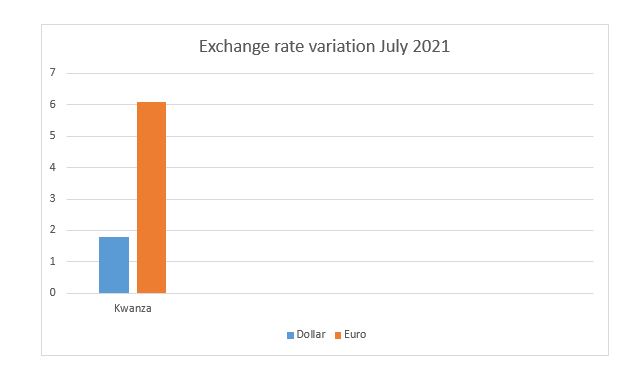
In terms of exchange rate with reference to the month of July 2021, the Kwanza has already appreciated 1.8% against the dollar and 6.1% against the euro, since January 2021, breaking a strong period of strong devaluation started in 2018. Furthermore, 3.5 years after exchange rate flexibility, the gap between formal and informal market rates is below the 20% target announced by the central bank at the time of liberalization, between 7% and 8% for the dollar and euro respectively. Note that at the time prior to liberalization, the same gap was 159% and 167%.

Figure 1 – Kwanza Exchange Rate Variation against the Dollar and Euro (July 2021)

Currently, some sectors are already announcing an increase in the profitability of exports due to the favorable exchange rate policy. This is the case of cement, where Pedro Pinto CEO of Nova Cimangola assures that “To boost exports, the devaluation of the currency helped, because all the costs that the company has in national currency, in dollars, were lower and, in this way, the competitiveness of the company to place products on the international market. In other words, all those products that we continue to buy in Kzs and that have not suffered large price variations in dollars were lower and, therefore, allowed the company to have greater profitability with exports.[3]

Also a reference to PRODESI (Program to Support Production, Diversification of Exports and Substitution of Imports), which has generated more than USD 29 million since the beginning of the year. As the main exported products, emphasis is placed on cement, beer, glass packaging, bananas, juices and soft drinks and sugar[4].

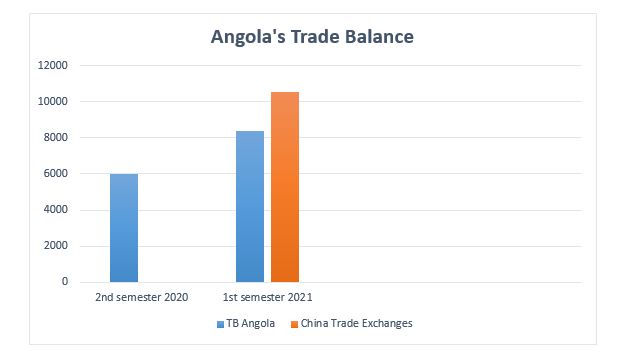
These movements are reflected in the trade balance. Angola’s trade balance recorded, in the 1st half of 2021, a surplus of USD 8,381.9 million[5], an increase of 40.2 % compared to the results recorded in the 2nd half of 2020 (USD 5,978.8 million)[6]. Within this framework, there was an increase in exports of 25%, naturally still influenced by the increase in exports from the oil sector of 28.4%.

Figure 2 – Angola’s Trade Balance and Trade Relations with China

But there is also a significant increase in trade with one of Angola’s main trading partners, China. “Trade between Angola and China increased 23.9% in the first half of 2021, to US$10,550 million (€8,985 million), compared to the same period last year”[7]. According to Gong Tao, Chinese ambassador to Angola, despite the adverse effects caused by the covid-19 pandemic, Chinese companies remain interested in investing in Angola, highlighting the recent construction of factories, one dedicated to the production of tiles and another qualified for the production of energy and water meters.

2021 Summer Forecasts

In modeling the perspectives we present here, several factors are taken into account, among which we highlight the main ones. The first element is the calculation of the oil price (always a determining factor in the Angolan economy). We assume that the price of Brent will maintain a slight upward trend, standing at a level between USD 65 to USD 75 per barrel. A relative stabilization or possible appreciation of the Kwanza against the dollar and the euro is also part of our model, which makes it possible to reverse some of the falls in the past that were merely nominal due to the more flexible exchange rate. We anticipate that the post-Covid-19 world recovery will boost the Angolan economy’s exports, as is already happening with China. Finally, we anticipate that the environment for foreign investment will gradually improve as a result of legislative reforms and the commitment of political power. We have as a recent example the several advertisements coming from Turkey. At the end of July 2021, Angola and Turkey signed 10 cooperation agreements, in the fields of economy, trade, mineral resources and transport, having already announced an increase in the trade balance with Angola to a value of around USD 500 million[8].

From the point of view of obstacles, it is worth mentioning the immense lack of capital. This is the main element for any sustained recovery, and also the inexistence of economic diversification[9] and the persistence of administrative bureaucracy.

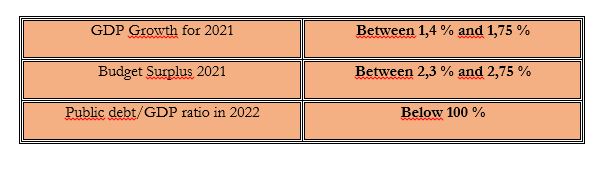
All things considered, our model predicts that by the year 2021 the Angolan economy will come out of recession, and GDP growth will reach between 1.4% and 1.75%.

Our model points to a budget surplus between 2.3% and 2.75%, depending on the evolution of the oil price until the end of the year. And considering the evolution of the Kwanza exchange rate, our forecast is that in 2022, the public debt/Gross Domestic Product (GDP) ratio will be below 100%, achieving greater consolidation.

Figure 3 – CEDESA Model – Forecasts for the Angolan Economy

Consequently, the initial period of strong adjustment and contraction of the Angolan economy is expected to come to an end this year, with no more shocks and global control of the Covid-19 pandemic.

The special case of Unemployment

We understand that unemployment is a special case that should be treated differently, both statistically and in terms of public policies. In terms of statistics, it should be better ascertained who is occupied with informal productive paid activities and who cannot effectively obtain any paid work they want. We should avoid statistical biases that disturb the proper understanding of reality.

On the other hand, it is clear that it will not be the market or the private economy that will solve the problem of lack of employment in the short term, especially for young people. To that extent, the authorities are urged to develop a Keynesian-type employment promotion program, if necessary using available capital from the fight against corruption, as we have advocated in other reports. The state has to spend money on job creation.


[1] Cfr. https://www.ine.gov.ao/

[2] Cfr. https://www.sapo.pt/noticias/atualidade/representante-do-fmi-em-angola-afirma-que_611bf099d1bccf29fd83b48c

[3] https://mercado.co.ao/grandes-entrevistas/a-desvalorizacao-da-moeda-permitiu-que-a-empresa-tivesse-maior-rentabilidade-com-as-exportacoes-XJ1038347

[4] https://www.angonoticias.com/Artigos/item/68811/prodesi-rende-mais-de-usd-29-milhoes-em-exportacoe

[5] https://www.bna.ao/Conteudos/Artigos/lista_artigos_medias.aspx?idc=15419&idsc=15428&idl=1

[6] https://www.angonoticias.com/Artigos/item/68824/balanca-comercial-regista-superavit-de-usd-83819-milhoes

[7] https://www.rtp.pt/noticias/economia/comercio-entre-china-e-angola-recupera-24-no-1o-semestre-apos-forte-quebra-em-2020_n1343994

[8] https://www.angop.ao/noticias/economia/angola-e-turquia-reforcam-balanca-comercial/

[9] Cfr, the most recent elements on the sectoral participation in the GDP that demonstrate the immense and reinforced weight of the oil sector. https://www.bna.ao/Conteudos/Artigos/lista_artigos_medias.aspx?idc=15907&idsc=15909&idl=1

An Investment Bank for Portuguese Speaking Countries Community

Introduction: The Investment Bank for Portuguese Speaking Countries Community

João Lourenço, President of the Republic of Angola, presented in the inauguration speech of his mandate as acting president of the Speaking Countries Community (CPLP), at the XIII Conference of Heads of State and Government, held in Luanda in July 2021, the “challenge of start thinking about the pertinence and feasibility, even if remote, of creating a CPLP Investment Bank[1]”.

The President of the Portuguese Republic, Marcelo Rebelo de Sousa, in turn, admitted that the Angolan head of State’s proposal for the creation of an investment bank in the Community of Portuguese Language Countries (CPLP) could advance, if there were significant investments of several parties. And he added that this could become a reality if “significant investments from Brazil, from African economies emerging from the CPLP, from Portugal, but also with the contribution of European funds are combined[2]”.

Although the details of this idea are not known, only knowing that it corresponds to the implementation of an Economic Pillar of the Community of Portuguese Language Countries (CPLP), it is interesting to see how such a proposal could become a reality, which is more important, since doubts have arisen from reputable Angolan experts about its feasibility[3].

***

Our conclusion is that it is possible to envisage the creation of an investment bank and development of CPLP with mixed capital and a reasonably independent and efficient structure, with diverse and plural sources of financing.

Vision, goals and strategic axes of the investment bank of lusophony

What we will call the Banco de Investimento de Fomento da Lusofonia (BIFEL) would be an investment and development bank that would materialize the CPLP Economic Pillar. The CPLP Economic Pillar, as understood from the several statements of the Angolan government, corresponds to a need to transform the collaboration potential of member countries into real wealth and would translate into the creation of common financing mechanisms and large free market areas and freedom of movement.

BIFEL would, therefore, be an instrument for financing the development of the PALOPS and the integration of the corresponding markets.

It would have three basic goals:

i) the financing of large works and infrastructures that bring the PALOPs closer together and make them more competitive in economic terms;

ii) the development of the corresponding economies and common access markets;

iii) the survey of the quality of life of the neediest populations (levelling up).

Thus, there would be a triple concern with economic integration, development and what is currently called levelling up regions and populations[4]. Economic and social aspects would have to be combined.

These goals would have to be operationalized in the creation of three major strategic axes that would, in practice, be transformed into three consigned credit lines.

• The first axis would be dedicated to infrastructure for common benefit: digital structures and networks, ports, airports, means of communication, roads, energies, especially renewable energies, etc.

• The second axis would be aimed at economic growth projects, the formerly called economic development. Here we would have factories, companies, and growth-promoting economic activities.

• Finally, a third axis dedicated to the aforementioned levelling up, with characteristics of economic and social development, would include support for building hospitals, schools, training human resources in education and health, environmental and climate protection.

BIFEL Share Capital

BIFEL would be a mixed financial institution, with share capital from several sources. One could point to an initial share capital of one billion, seven hundred and fifty thousand euros [1, 750 billion euros] (the reference point is that the development bank recreated in Portugal has 255 million euros as social capital and is fully public). In this case, the share capital would be much larger (1.75 billion euros) and the ownership not fully public.

A mixed ownership system for BIFEL is envisioned.

• First, 1000 million euros would be earmarked for the subscription of CPLP Member States: Angola, Cape Verde, Guinea-Bissau, Equatorial Guinea, Mozambique, Portugal, São Tomé and Príncipe and East Timor. Each State would participate in capital according to an equitable formula that considered its absolute GDP and GDP per capita, which allowed considering the real wealth of each one, its competitiveness and productivity, and the well-being of its populations.

• Afterwards, 500 million euros would be allocated to observer countries associated with the CPLP: Mauritius, Senegal, Georgia, Japan, Namibia, Turkey, Slovakia, Hungary, Czech Republic, Uruguay, Andorra, Argentina, Chile, France, Italy, Luxembourg, United Kingdom , Serbia as well as the European Union. Each of these countries and the European Union would make the proposals for capital subscription up to the amount it considered within the threshold of 500 million euros.

• A third group of share capital worth 250 million euros would be open to private investors from any country in the world.

Naturally, BIFEL would produce dividends from its borrowing activities in order to compensate its shareholders and would only finance projects in countries subscribing to share capital.

Organic structure of BIFEL

The bank’s structure would be based on three type bodies.

The direction would be ensured by a Board of Directors with a five-year term composed of 7 members, 4 appointed by the Member States, 2 by the Associate Observers and 1 by the Private Investors, the Chairman of the Board being appointed under the prerogative of the Member States, while acting as Vice -Presidents, there would be an element designated by the associated observers and another by the private investors.

The supervision would be incumbent upon a Supervisory Board composed of 5 members, 3 of which were chosen by the Courts of Auditors of the Member States on a rotating basis for three-year terms. Another member would be appointed by the Courts of Auditors of the associated observer countries in the same rotating scheme and finally the fifth member would belong to an international auditor of global reputation, resulting from the co-option of the remaining four members. Finally, there would be a General Assembly where each representative would act according to their share capital.

This structure would allow, on the one hand, the representation of States and shareholders, but would also BIFEL effectively independent corporate body with fiduciary duties and economic efficiency in relation to its shareholders and taxpayers of each State, given the diversity of its organic structure.

The head office would be established in CPLP’s most important financial market, according to the volume of business, with two operational sub-headquarters in the subsequent relevant financial centers.

Conclusion

This could be the outline of a financial  institution dedicated to the PALOPs, combining the advantages of public and private ownership at the same time, deriving from various sources of financing, allowing for a better integration of Portuguese-speaking markets, making each country grow and improve the living conditions of Portuguese-speaking populations, in the end, the ultimate goal of this initiative.


[1] https://www.jornaldeangola.ao/ao/noticias/angola-propoe-criacao-de-banco-de-investimento/

[2] https://www.jornaldenegocios.pt/economia/detalhe/banco-de-investimentos-da-cplp-pode-ter-virtualidades-diz-marcelo

[3] https://visao.sapo.pt/atualidade/mundo/2021-07-20-cplp-economista-angolano-diz-que-banco-de-investimentos-nao-tem-pernas-para-andar/

[4] About the concept as it is being developed in the UK, see: https://www.centreforcities.org/levelling-up/

The importance of the new article 37, paragraphs 4 and 5 of the Angolan Constitution: Non-conviction-based (NCB) asset forfeiture

1Introduction. The Angolan constitutional review, the limits to the right to property and the fight against corruption

One of the main themes of the Angolan constitutional review underway was the delimitation of the right to property, a issue that has become controversial in light of the developments in the processes of combating corruption.

Recently, as an example, we listed the following concrete measures that in some way put the property right of private entities in question. Regarding the “freezing” of assets, assets of Manuel Vicente and Generals Dino and Kopelipa, Jaoquim Sebastião, Manuel Rabelais, among others, were seized or handed over. About Generals Dino and Kopelipa, it is noted that, as representatives of the companies China International Fund Angola — CIF and Cochan, SA, they handed over the shares they held in the company Biocom-Companhia de Bionergia de Angoala, Lda., in the network from Kero Supermarkets and at Damer Gráficas-Sociedade Industrial de Artes Gráficas SA. In relation to Manuel Vicente, the President of the Republic determined the nationalization of 60% of the shareholdings of the commercial company Miramar Empreendimentos, SA”, which covers “43% of the shares belonging to Sociedade Suninvest — Investimentos, Participações e Empreendimentos, SA” and “17% of shares owned by Sommis, SGPS. These shares will belong to Manuel Vicente. Obviously, it is also worth mentioning the restraint of assets referring to Isabel dos Santos and her associates in civil proceedings in Luanda and in criminal proceedings in Lisbon, in addition to the nationalization of Efacec in Portugal[1].

The legal formulas for the seizure of assets were diverse, generally provisional, although in some cases definitive and with the apparent acquiescence of the interested parties. Here the exception is Efacec, whose nationalization in Portugal was equally definitive, but without agreement from the interested party, Isabel dos Santos.

In one way or another, in Angola the procedures have become somewhat confusing, not realizing exactly the global legal effect of the voluntary delivery of goods and its legal stability, and in cases of provisionally seizure, problems arise in the management and maintenance of assets. It is also essential not to let these temporary situations prolong for too long, especially when the fundamental interests of the economy are at stake or jobs at risk.

In view of these events, a clear definition of the constitutional and legal regime for public seizures in Angola became urgent, to provide legal and economic security to the several movements for the recovery of assets described and in progress. This is the meaning of the text that eventually emerged in the constitutional review and that we are going to describe, adding the legal possibilities that this new text opens in terms of legislation with a view to making the asset recovery process faster, more understandable and solid.

2-Article 37 of the Angolan Constitution (ARC)

The 2010 version of the ARC, still in force, guaranteed the property right and defined the conditions for requisition and expropriation in its article 37.º. There, it was established in nº. 1 that: “Everyone is guaranteed the right to private property and its transmission, under the terms of the Constitution and the law.”. Nº. 2 stated that “The State respects and protects the property and other real rights of individuals, legal entities and local communities, only temporary civil requisition and expropriation for public utility being allowed, upon fair and prompt compensation, in the terms of the Constitution and the law.” And number 3 tightened the loop, demanding that “The payment of the compensation referred to in the previous number is a condition of effective expropriation.”

This was an article clearly framed in a liberal and absolute vision of property, not even foreseeing the possibility of nationalization or confiscation, admitting only the expropriation for public utility subject to the payment of compensation, to be effective. On paper, it would be difficult to have a more absolute guarantee of the right to property, and so the current activities of Angola’s National Asset Recovery Service (ANARS) could often touch the constitutional margins, with many of the seizures carried out lacking constitutional validity. Naturally, this fact must have been alerted to the President of the Republic, who took charge in his proposal for a constitutional review to remedy this grey area that was being created by the action of the ANARS. Thus, the President proposed the addition to article 37 of the Constitution of paragraph 4, which would have the following wording:

4. A specific law defines the conditions under which the nationalization of private assets may occur for ponderous reasons of national interest and confiscation for serious offense against laws that protect the economic interests of the State.

This version expressly established the possibility of nationalization or confiscation when there were fundamental reasons for this to happen. It would be up to the law to define the reasons. Thus, the constitutional regularity of asset recovery activities that had previously raised doubts was enshrined.

However, several Angolan jurists raised the problem that this presidential formulation could frighten potential foreign (and national) investors, so necessary for economic recovery by allowing a broad and indeterminate basis for proceeding with the nationalization and confiscation of assets. This possibility would be overstated and without adequate safeguards. That must have been why article 37, after analysis and deliberation in the National Assembly (NA), ended up with two more numbers, the 4th and 5th. Thus, the following wording was defined:

Article 37

(Right and limits of private property)

1. […].

2. […].

3. […].

4. Movable and immovable goods and shareholdings of private individual and corporate persons, in whole or in part, may be subject to public appropriation, when, for reasons of national interest, national security, food safety, public health, the economic and financial system, the supply of goods or the provision of essential services are at stake.

5. Proper law regulates the regime of public appropriation, under the terms of the previous number.

We are not going to enter into a doctrinal discussion about what is meant by “movable and immovable goods and shareholdings” and whether all the possible assets are included, although a clearer formulation that would not raise any kind of doubts would have been better.

What is clear from this article is that there may be public appropriation, ie, a “situation that (…) allows an action on the ownership of the means of production, which will lead to a coercive transfer of these goods to the public sector[2]” and that this appropriation must be justified by reasons of national interest, which the Constitution exemplifies as national security, food security, public health, economic and financial system, supply of goods or provision of essential services. Note that these are mere illustrations that the constitutional norm gives us. In fact, any motive in the national interest will be grounds for public appropriation. From the entry into force of this text, there will be, without any doubt, a general constitutional framework for asset recovery. Let’s see in what terms and what perspectives unfold.

3-The concept of public appropriation

In the absence of any other reference, it seems that the Angolan legislator was inspired by article 83 of the Portuguese Constitution (PC) to introduce the concept of public appropriation instead of nationalization and confiscation. Article 83 of the PC states: “The law determines the means and forms of intervention and public appropriation of the means of production, as well as the criteria for setting the corresponding compensation.”

From the outset, a clear difference between the Angolan and Portuguese norms regarding public appropriation can be seen. In Portugal, any form of public appropriation implies compensation, This is not the case in Angola.

We will detail the regime that appears to be established in the ARC, after the review. Public appropriation will be any coercive transfer of ownership of a good or private participation to the sphere of the State. Public appropriation encompasses nationalization, confiscation, expropriation and all other possibilities of empowerment. In the specific case of expropriation for public utility, the Constitution requires that compensation be made. In other cases, there is no such constitutional requirement. That is, for reasons of national interest the State can withdraw a property from the private sphere without compensation. The fact that the ARC admits this possibility should oblige the ordinary legislator to quickly draw up a law on the basis of public appropriation to guarantee the legal certainty of these situations, as far as possible.

4- The constitutionalization of non-conviction-based (NCB) asset forfeiture

Non-conviction-based (NCB) asset forfeiture is a critical tool for recovering assets arising from corruption when a criminal conviction is not possible[3]. Examples are when the offender has died, has fled jurisdiction, is immune from prosecution or the criminal process is anticipated to be too long rendering it ineffective. The United Nations Convention against Corruption (UNCAC) and the Financial Action Task Force (FATF) support its use.

The confiscation of NCB assets is a critical tool to recover the proceeds and instruments of corruption. It is a legal mechanism that provides for the containment, seizure and confiscation of embezzled assets without the need for criminal conviction. A growing number of jurisdictions have established NCB asset forfeiture regimes and such regimes have been recommended at the regional and multilateral level by a number of organizations, notably the World Bank through the StAR Initiative and the aforementioned FATF.

Globally, there are two types of confiscation used to recover illicitly obtained assets: NCB asset confiscation and criminal confiscation. Where criminal asset forfeiture and the NCB differ is in the procedure used to confiscate assets. The main distinction between the two is that criminal confiscation requires a criminal trial and conviction, while confiscation of NCB assets does not. In fact, it can be done through a quick civil or even administrative procedure. This is the possibility that the review of the Constitution has just admitted.

5-Conclusions. Non-conviction-based (NCB) asset forfeiture and the need for a basic law

What is essential from this constitutional modification provided for in article 37 of the ARC is the opening of dynamic possibilities for the implementation in civil or administrative proceedings of the confiscation of assets obtained illegally without the need for criminal proceedings and without compensation, therefore, we have here a large and positive step in the fight against corruption.

However, the constitutional provision immediately requires, for reasons of legal security and guarantee of the right to property, the approval of a basic law on the public appropriation of assets, specifically containing specific provisions on confiscation without criminal conviction. Consequently, after the constitutional review comes into force, it will be time for a basic law on confiscation of assets without criminal conviction and compensation.


[1] https://www.cedesa.pt/2021/05/13/radiografia-do-combate-a-corrupcao-em-angola/

[2] DIOGO SARAMAGO FERREIRA, A nacionalização do Banco Português de Negócios – Análise da Lei n.° 62-A/2008, de 11 de Novembro, Revista de Direito das Sociedades, 2011-1 (169-186), 176

[3] Theodore S. Greenberg, Linda M. Samuel, Wingate Grant, Larissa Gray (2009), Stolen Asset Recovery A Good Practices Guide for Non-Conviction Based Asset Forfeiture, The World Bank, Washington DC.

https://star.worldbank.org/sites/star/files/Non%20Conviction%20Based%20Asset%20Forfeiture.pdf

Angola wants new direction for CPLP

The Community of Portuguese Language Countries (CPLP), whose rotating presidency will be assumed by Angola until 2023, has so far been a mix of an imperial farewell, like its British counterpart Commonwealth, and a club of sympathies and photographic opportunities, not showing being a structure capable of leveraging the political or economic progress of its members.

The current intention of Angola and of the presidency that is starting now seems to be to change this apparent lethargy and to endow the CPLP with instruments, or at least concrete and practical goals, that promote the interest and prosperity of the countries that belong to it.

In this sense, there is a clear commitment to making the CPLP an economic organization that promotes economic and financial collaboration among its several members, possibly creating in the future an integrated market or at least a tax-free free trade area between members.

This strand (free trade area) will likely be added with some structuring funds that allow the richest CPLP countries to support development or create strategic partnerships with the poorest countries in the community. It must not be forgotten that within the CPLP there are oil powers such as Brazil, Angola, Equatorial Guinea and even Timor-Leste, there is a member of the European Union, such as Portugal, there is enormous potential population and natural resources. So, it is normal that economic integration and strategic financial cooperation between the CPLP countries are promoted and reinforced.

Thus, Angola will certainly bet on emphasizing the economic dimension of the CPLP, pointing out goals linked to a free market with reinforcement of economic cohesion and strategic partnership among its members.

A second point is linked to the free mobility of people. Once the Covid-19 crisis is overcome, it makes perfect sense beginning to deepen in practice a project for the free movement of people residing in the CPLP. Obviously, this project has to be combined with the free movement that already exists in Portugal in relation to the European Union, as well as greater economic integration, and also dispelling fears of intercontinental demographic pressures. However, it will be the most practical and tangible example that the CPLP is an organization with a future and that it says something to the population.

Do not doubt that at a time when peoples yearn for the improvement of living conditions, any organization only has a future if it embraces these aspirations, which are reflected in the goals we have stated:

 i) free market in CPLP,

ii) cooperation for economic cohesion and

iii) population mobility.

These will be the pillars that will allow the CPLP development beyond its post-imperial imagination and that seem to guide the Angolan policy for its CPLP presidency, as is clear from our reading of the notes released by Angola regarding the XIII Conference that Luanda will host under the motto “Building and Strengthening a Common and Sustainable Future”, having significantly scheduled for 15 July, a Round Table on Economic and Business Cooperation, in a hybrid format (face-to-face and virtual meeting).

Angola seems to bet on a CPLP that goes beyond post-imperial nostalgia and that stands as an engine of economic growth and improvement in the quality of life of populations belonging to the Community.

Sonangol. Oil or energy company?

1- Introduction. Sonangol’s privatization and the oil market

On June 15, 2021, at 16.00, the sale price of Brent oil (which serves as a reference for Angola) was USD 73, 45[1] . A month and a half ago, the price was around USD 66.00, and in recent times there has been a sustained rise in the price, as we had predicted in a previous report[2]. If we notice, when we made this forecast (June 2020), the price of oil was situated at USD 36.6. In practice, in one year the price doubled.

However, the government has put forward more details on Sonangol’s partial privatization. The Minister of Mineral Resources, Oil and Gas, Diamantino Azevedo, repeated[3] his promise to approve the schedule for the sale of 30% of Sonangol’s capital on the stock exchange during the current presidential term, explaining that it will be a staggered process, and that there will be several available tranches: “stocks for Sonangol workers, stocks for Angolans who are interested and for strategic partners who later want to become partners”, a model that we defend in due course[4].

A third element to consider when analyzing Sonangol’s is the energy transition. In the United States and Western Europe, at least, this has become something of a recurring mantra forcing oil companies to modify their strategies so that they are less dependent on oil and contribute to a “green” economy. Sonangol finds itself at this crossroads between the need to recover its old aura, to be privatized, but not just relying on oil.

This report will analyze the possible solutions that the Angolan oil company has and point out some strategic paths.

2-The two determining forces in Sonangol’s strategy

There are two somewhat opposing forces regarding the strategy Sonangol may adopt in the future.

The first force “glues” the company to the oil price and aims to keep it as an oil company. In this view, what Sonangol must do is focus on its “core business” – oil – and then become efficient. Therefore, in this context, Sonangol’s restructuring is focused on achieving profits in the oil business, making profitable investments in the area and increasing as much as possible, at the lowest cost, in oil production. The essential measures taken by the current government with a view to reorganizing the company are in this direction. As Minister Azevedo said: “The first measure we took was to free (Sonangol) from the concessionary function, which could create conflicts of interest. We could not take a company with a concessionary, regulatory and business function to the stock exchange”, and another measure was create an “attractive” company that “encourages investment”, which involved reducing the number of subsidiaries and selling non-nuclear oil companies[5].

The other, somewhat opposite force is the energy transition (the green economy). Here it is argued that Sonangol should not be overly dependent on oil, and that Sonangol should become, as happens with other companies, for example, BP, Aramco or Galp, a global energy company and not an oil company. To this is added the potential of non-oil natural energy resources that the country has, such as sun, water, etc.

3-China, India and the OPEC gap

Contrary to what one might think in a Eurocentric analysis, the answer to Sonangol’s future characterization is not obvious. Much depends on the markets to which Sonangol wanted to allocate its production and on the country’s development needs. If you look at it, the recent rise in the price of oil was essentially “pulled” by China’s renewed oil appetite. According to the Bloomberg[6] financial agency, it was the strong demand for gasoline in China that boosted the need for crude oil. The truth is that China is among the biggest drivers of fluctuations in oil prices and China has been buying oil like there is no tomorrow, as a result, prices have gone up. The question is whether China will continue to drive this rise in the medium term in a way that allows for a sustainable oil strategy in relation to Sonangol.

There are two broad lines to consider in trying to anticipate China’s future behavior. The first is its economic level, while the second is its commitment to the energy transition.

China is not yet at an economic level that corresponds to a rich and developed country. According to data from the World Bank, in 2019, the Chinese GDP per capita is in the order of USD 10,000. For comparison, Portugal, one of the poorest of the rich countries, has a GDP per capita on the same date of USD 23,000 and the United States is at USD 65,000[7]. Countries with GDP per capita identical to the Chinese are Argentina, Lebanon, Bulgaria, Kazakhstan, Turkey or Equatorial Guinea. It is easy to see that China still has a long way to go and will need a lot of energy, especially oil.

China’s oil demand has nearly tripled over the past two decades, accounting on average for a third of global oil demand growth each year. From what we have just exposed, China will continue to lead the demand for oil in the coming decades. However, the pace of the country’s oil consumption will not grow as fast, although it will continue to grow. Over the past two decades, China’s oil consumption has grown by more than 9 million barrels per day (mb / d) from 4.7 mb / d in 2000 to 14.1 mb / d in 2019. China’s oil use should continue to grow, albeit at a slower pace, as China is also investing heavily in renewable energy.

China is the world leader in electricity production from renewable energy sources, with more than twice the generation of the second country, the United States. At the end of 2019, the country had a total capacity of 790 GW of renewable energy, mainly hydroelectric, solar and wind power. China’s renewable energy sector is growing faster than that of fossil fuels, as is its nuclear power capacity. China has pledged to achieve carbon neutrality before 2060 and peak emissions before 2030. By 2030, China aims to reduce carbon dioxide emissions per unit of GDP by more than 65% from the level of 2005, increase the share of non-fossil energy in primary energy use to about 25 percent, and bring the total installed capacity of wind and solar electricity to over 1200 GW. Furthermore, China sees renewable energies as a source of energy security and not just a means of reducing carbon emissions[8][9].

In India, another of the world’s great countries in a process of growth, the situation is as follows: trade relations between Angola and India amount to US$4 billion, of which US$3.7 million correspond to exports from Angola to the Asian country, being 90% related to oil. Angola is currently the third most important African exporter to India, when in 2005 it was not relevant. In 2017, the Ambassador of India issued a statement in which he highlighted: “Trade between Angola and India increased by 100% in 2017.” The thing to remember is that India is becoming a significant partner of Angola through its oil needs.

In terms of GDP per capita, India in 2019 was around USD 2000.00. It is easy to see that the growth that India expects is enormous, even if it does not have China’s ambitions of world leadership, just to reach its current level, it has to multiply its GDP by five. Obviously, this implies a growing need for oil. India was the world’s third largest crude oil importer in 2018, and has an estimated oil import dependency of 82%. India’s economic growth is closely related to its demand for energy, so the need for oil and gas is expected to grow even further, making the sector very investment-friendly. At the same time, India is one of the countries with a large production of energy from renewable sources. As of November 27, 2020, 38% of India’s installed electricity generation capacity came from renewable sources. In the Paris Agreement, India committed to a target of achieving 40% of its total electricity generation from non-fossil fuel sources by 2030. The country is aiming for an even more ambitious target of 57% of total electricity capacity from renewable sources by 2027.

Official data indicate that Angola’s oil production reached, in May 2021, only 34 million 887 thousand 890 barrels, less about one million compared to April. In that month, a daily average of one million 125 thousand 416 barrels of oil was obtained, when the forecast was one million 184 thousand 813. This means that Angola is below the target set by the Organization of Petroleum Exporting Countries (OPEC). ), which was 1 million 283 thousand barrels per day, in May, with subsequent increases.

4- Conclusion: Sonangol’s challenges

Considering all of the above, it is evident, first of all, that there is a large margin for Sonangol to continue to focus on oil, either because not even the quotas defined by OPEC for Angola are met, ie, Angola is producing less than it should in a tight market situation, either because the large potential oil futures markets such as China and India will need plentiful oil shipments.

To that extent, Sonangol should not make the mistake – as some oil companies are doing – of underestimating the potential for growth in the oil market. In the Western world with mature economies, the demand for oil may not feel as strong as in the past, but in fast-growing economies, more oil will be needed, albeit often not as exponentially as before.

There is space and market for Sonangol, as an oil company, to grow. Therefore, Sonangol’s ongoing strategic structuring should focus on producing more oil more efficiently, both in terms of costs and in terms of the environment.

However, this model focused on oil efficiency has to be matched with the enormous potential that is opening up in renewable energies and the company has to take advantage of energy synergies, as many of its counterparts are doing and also China and India.

At the present time, when the intention is to privatize Sonangol from a global perspective, it seems sensible to commit Sonangol to tasks in the area of ​​renewable energies. In fact, to be an attractive company for the international stock market, Sonangol must present itself as adopting the latest trends in oil companies, i.e., also following the needs of the energy transition.

Not abandoning or belittling oil, Sonangol must boldly explore the combined possibilities brought by renewable energies.

This exploration of renewable energies by Sonangol should not start from scratch, but rather seek some sustainability and economies of scale. One hypothesis, which we have already touched upon in a previous report[10], would be a strategic partnership with Galp for this purpose. As is known, Galp accelerated its energy transition process.

As this hypothesis was not adopted, Sonangol should review the rationality of its permanence at Galp. In fact, at this moment, the Angolan position in Galp is “sandwiched” between Isabel dos Santos and the Amorim family, corresponding to a mere financial investment. This doesn’t make much sense anymore. Either Galp becomes a strategic partner for Sonangol’s energy transition, or a position review becomes required.

The alternative would be for Sonangol to acquire a company that is minimally established in the field and develop its activities based on this new platform. At this time, partnerships have already been announced with ENI and TOTAL to develop projects in renewable energy that will be operational in 2022. Perhaps a strategic focus in this area is more interesting, which would translate into an internal commitment by Sonangol and, as mentioned above, it would go through the purchase or merger with a company operating in the renewable energy sector, to provide initial support for Sonangol.

In short, Sonangol must become a bi-focused company: on oil and renewable energies.


[1] https://www.ifcmarkets.com/pt/market-data/commodities-prices/brent

[2] https://www.cedesa.pt/2020/06/03/angola-petroleo-e-divida-oportunidades-renovadas-2/

[3] https://www.dw.com/pt-002/governo-angolano-admite-privatiza%C3%A7%C3%A3o-gradual-de-30-da-sonangol/a-57879593

[4] https://www.cedesa.pt/2020/01/29/um-modelo-de-privatizacao-da-sonangol/

[5] Idem note 3

[6] https://oilprice.com/Latest-Energy-News/World-News/Chinese-Gasoline-Demand-Is-Driving-Oil-Prices-Higher.html

[7] https://data.worldbank.org/indicator/NY.GDP.PCAP.CD?locations=US

8 Cfr. https://www.oxfordenergy.org/publications/chinas-oil-demand-in-the-wake-of-covid-19/ and

[9] Deng, Haifeng and Farah, Paolo Davide and Wang, Anna, China’s Role and Contribution in the Global Governance of Climate Change: Institutional Adjustments for Carbon Tax Introduction, Collection and Management in China (24 November 2015). Journal of World Energy Law and Business, Oxford University Press, Volume 8, Issue 6, December 2015.

[10] https://www.cedesa.pt/2021/02/10/sonangol-galp-que-futuro-conjunto/