Many countries don’t need a robust youth policy, either because the youth population is not significant, with most socio-economic problems being in the elderly, or because they have healthy economies and societies that easily encourage and incorporate young people.
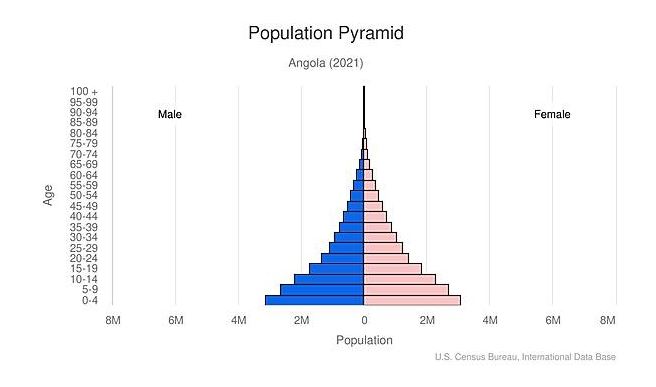
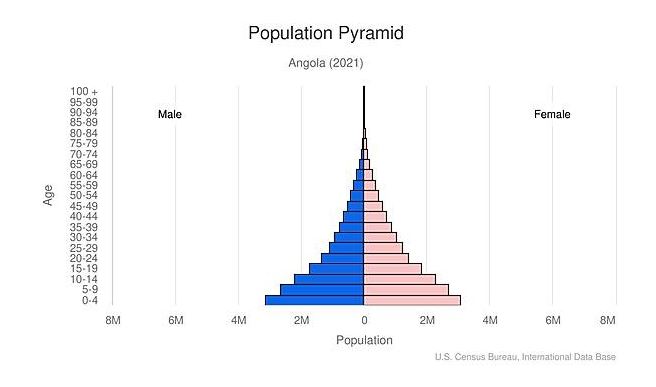
This is not the case in Angola. The numbers on Angolan youth demand special attention from the political power to this age group. With reference to July 2021, it is estimated that 47.83% of the Angolan population is between 0-14 years old and 18.64% between 15-24 years old; therefore, 66.47% of the population is up to 24 years old, or in other words, about 2/3 of the Angolan population is young. It is an immense and impressive mass of babies, teenagers and young adults that constitute the immensity of the Angolan people.[1]
Fig. 1- Angola population pyramid (2021)
This impressive demographic is joined by unemployment figures. According to the most recent data available, unemployment affects 59.2% of the young population (here considered to be aged 15-24) in the third quarter of 2021, with a year-on-year increase in this situation of 2.8%. It is clear that this number does not reflect those who were somehow absorbed by the informal economy, however, its magnitude will always be remarkable[2].
In fact, from a sociopolitical point of view, it has been verified that the demonstrations against the government policy in Angola, and the activism in social networks, is carried out, in large part, by young people.
Youth is, therefore, a huge force in the Angolan economy and societies, which is on the boil.
These various factors: extremely relevant number of young people in the total population, youth unemployment and socio-political discontent that force the consideration of a transversal and encompassing youth policy for Angola.
***
Youth policy is defined as the government’s commitment and practice to guarantee good living conditions and opportunities for a country’s young population[3]. Youth policy is a strategy implemented by public authorities to provide young people with opportunities and experiences that support their successful integration into society and allow them to be active and responsible members of society and agents of change[4].
In these terms, a youth policy seeks to create opportunities for young people, promoting their participation, inclusion, autonomy, solidarity, in addition to well-being, learning, leisure, employment.
The government’s role will be to launch policies with these goals in relation to youth and to work together with the various actors involved in the information, development and implementation of youth policies, such as: youth councils, youth NGOs, interest groups, groups of young people, young workers, researchers, schools, teachers, employers, medical personnel, social workers, religious groups, media[5].
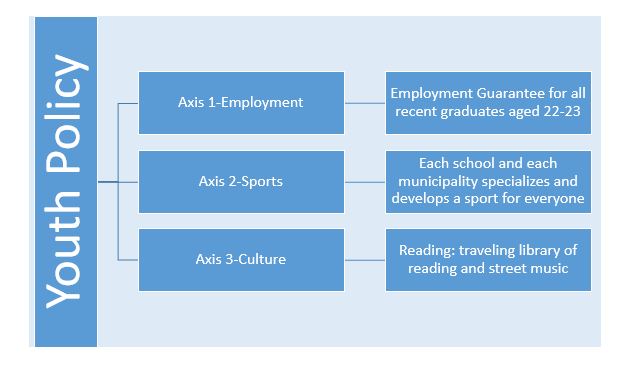
The model we developed attributes three axes to youth policies:
a) The axis of employment;
b) The axis of sport and leisure;
c) The axis of culture and training.
We understand that a youth policy must translate into measures in these three axes in order to provide young people with an integral and complete personal development.
In Angola there is a Ministry of Youth and Sports (Minjud) whose main function is to assist the President of the Republic in the elaboration and execution of the State’s youth policy (Article 2 of the Organic Statute of the Ministry of Youth and Sports, Presidential Decree no. 228/20, of September 7th).
However, in addition to advertisements or programs with a rhetorical value, there is no vision of a transversal and active youth policy such as is needed in Angola. And such a policy is essential. The relevant news that is noted about the activity of Minjud focus essentially on football and football stadiums.
It is therefore urgent to go further and launch a youth policy that will necessarily cover several ministries and will have to be coherent and consistent. As we mentioned, this youth policy would unfold along three axes, paying attention to employment, sports and culture.
***
It is proposed to adopt a youth policy for Angola described in the following terms.
The youth policy would be transversal to several ministries, not dependent only on one ministry, and therefore necessarily coordinated directly by the President of the Republic. As mentioned, it would have three axes that would complement each other.
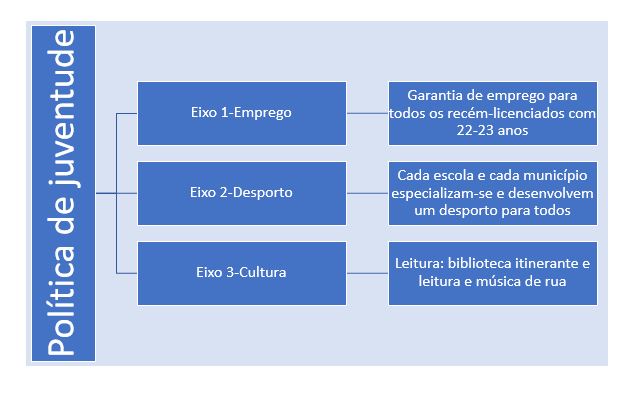
• In the first axis, referring to employment, a program to guarantee full employment would be launched for all those aged between 22 and 23 years old and having completed a degree. The State would assume the responsibility to employ them in its structure or to subsidize for a period of time not less than 2 years a workplace in the private sector[6]. Therefore, the State would either ensure employment in its several administrations, institutes or public companies, or it would subsidize private companies for the creation and hiring of jobs for young people. All young graduates aged 22-23, in addition to receiving training and assistance to find work, would have guaranteed paid work, with the State having to pay 100% of their salary in a private company or employ participants in the public sector or support creation of a microenterprise. All participants would receive at least a minimum wage fixed in accordance with the Presidential Decree that regulates the subject adequate to a life with dignity[7]. In a second phase, the guarantee of employment for all young people aged 22-23, regardless of their qualification, would also be studied, although those without formal qualifications should attend training to acquire some ability in art or craft.
• In the second axis referring to sports, an integrated sports project in school and in the community would be promoted. In this context, a proposal should not be developed to do everything everywhere, or as referred to in connection with a previous plan “to involve sport modalities of handball, athletics, basketball, football, volleyball, gymnastics and chess” in all schools[8].
The plan would aim at the rational use of scarce resources and with the search for specialization. Thus, each school would be required to dedicate itself to only one sport and to develop it freely within its midst. They would not aim for national championships, nor for large structures, but they would bet on focus and specialization. Each school with its sport. Only one, but open to all young people. At the same time and in competition with schools, each municipality would also promote a sport open to all young people. We would thus have a sport project for everyone with a specialization from each institution and with no other initial ambition other than to put young people in sport.
• Finally, the third axis dedicated to culture would also have to be based on specialization. Here, efforts would be made to concentrate resources on promoting reading by young people. We would start by adopting a project launched by the Gulbenkian Foundation in Portugal in the middle of the last century and already sporadically adopted in Angola in provincial initiatives, such as the “Giro do Saber” promoted by the Provincial Library of Malanje[9].
Reading for youth based on traveling libraries and street readings would be a project aimed at encouraging young people’s taste and reading habits. The traveling libraries will consist of vans that would travel across the country with volunteers and books offered and would stop at each location allowing the reading of these books and explaining some of them. At the same time, these volunteers would perform street readings of books appealing to youth in a mixed spectacle of reading and music, thus attracting target audiences.
One would look for this reading project to be financed by the penal system. That is, it would give rise to a change in the law that would allow all prison sentences of up to two years for economic and financial crimes to be exchanged for donations of vans, books and volunteer support.
Fig. 2- Description of a transversal youth policy
With these measures in the field of employment, sport sand culture, a youth policy that is so necessary for Angola would be launched.
There is nothing like taking advantage of the present party Congresses to promote and discuss these proposals.
https://www.cedesa.pt/wp-content/uploads/2021/12/juventude-angolana.jpg6081080CEDESA-Editorhttps://www.cedesa.pt/wp-content/uploads/2020/01/logo-CEDESA-completo-W-curvas.svgCEDESA-Editor2021-12-08 12:00:002021-12-02 17:25:39Proposal for a transversal youth policy in Angola
Muitos países não necessitam de uma política robusta de juventude, ou porque a população jovem não é significativa, situando-se a maior parte dos problemas socioeconómicos nas faixas mais idosas, ou porque têm economias e sociedades saudáveis que estimulam e incorporam facilmente os jovens.
Não é o caso de Angola. Os números sobre a juventude angolana exigem uma especial atenção por parte do poder político a esta faixa etária. Com referência a julho de 2021, estima-se que 47.83% da população angolana tenha entre 0-14 anos e 18.64% entre 15-24 anos; logo 66,47% da população tem até 24 anos, ou dito de outro modo, cerca da 2/3 da população angolana é jovem. É uma massa imensa e impressionante de bebés, adolescentes e jovens adultos que constituem a imensidão do povo angolano.[1]
Fig. n.º 1- Pirâmide populacional de Angola (2021)
A esta demografia impressiva juntam-se os números do desemprego. De acordo, com os dados disponíveis mais recentes, o desemprego afeta 59,2% da população jovem (aqui considerada dos 15-24 anos) no terceiro trimestre de 2021, estando a haver um acréscimo anual homólogo desta situação em 2,8%.[2] É evidente que este número não reflete aqueles que de alguma forma foram absorvidos pela economia informal, no entanto, a sua magnitude será sempre assinalável.
Aliás, do ponto de vista sociopolítico tem-se verificado que as manifestações contra a política governamental em Angola, e o ativismo nas redes sociais é levado a cabo, em larga expressão, por jovens.
A juventude é, portanto, uma força enorme na economia e sociedades angolanas, que está em ebulição.
São estes vários fatores: número extremamente relevante de jovens no total da população, desemprego juvenil e descontentamento sociopolítico que obrigam à consideração de uma política transversal e englobante de juventude para Angola.
***
A política de juventude define-se como o compromisso e prática do governo para garantir boas condições de vida e oportunidades para a população jovem de um país.[3] A política de juventude corresponde a uma estratégia implementada pelas autoridades públicas para proporcionar aos jovens oportunidades e experiências que apoiem a sua integração bem-sucedida na sociedade e que lhes permita ser membros ativos e responsáveis da sociedade e agentes de mudança.[4]
Nestes termos, uma política de juventude procura criar oportunidades para os jovens, promover a sua participação, inclusão, autonomia, solidariedade, além do bem-estar, aprendizagem, lazer, emprego.
O papel do governo será lançar políticas com estes objetivos em relação à juventude e trabalhar em conjunto com os vários atores envolvidos na informação, desenvolvimento e implementação de políticas de juventude, tais como: conselhos de jovens, ONGs de juventude, grupos de interesse, grupos de jovens, trabalhadores jovens, investigadores, escolas, professores, empregadores, pessoal médico, assistentes sociais, grupos religiosos, comunicação social[5].
O modelo que desenvolvemos atribui às políticas de juventude três eixos:
O eixo do emprego;
O eixo do desporto e tempos livres;
O eixo da cultura e formação.
Entendemos que uma política de juventude se deve traduzir em medidas nestes três eixos de modo a proporcionar aos jovens um desenvolvimento pessoal integral e completo.
Em Angola existe um Ministério da Juventude e Desportos (Minjud) cuja principal função é auxiliar o Presidente da República na elaboração e execução da política juvenil do Estado (artigo 2.º do Estatuto Orgânico do Ministério da Juventude e Desportos, Decreto-presidencial n.º 228/20, de 7 de setembro).
Contudo, para além de anúncios ou programas com valor retórico, não se vislumbra uma política de juventude transversal e atuante como a que é necessária em Angola. E tal política é fundamental. As notícias com relevo que se anotam sobre a atividade do Minjud debruçam-se essencialmente sobre futebol e estádios de futebol.
Torna-se por isso urgente ir mais além e lançar uma política de juventude que forçosamente abrangerá vários ministérios e terá de ser coerente e consistente. Como referimos essa política de juventude desdobrar-se-ia por três eixos, prestando atenção ao emprego, desporto e cultura.
***
Propõe-se a adoção de uma política de juventude para Angola descrita nos termos seguintes.
A política de juventude seria transversal aos vários ministérios, não dependente apenas dum ministério, e por isso forçosamente coordenada diretamente pelo Presidente da República. Como mencionado teria três eixos que se complementariam.
No primeiro eixo referente ao emprego seria lançado um programa de garantia de pleno emprego para todos aqueles que tivessem entre 22 e 23 anos e terminassem uma licenciatura. O Estado assumiria a responsabilidade de lhes dar emprego na sua estrutura ou de subsidiar durante um período de tempo não inferior a 2 anos um local de trabalho no setor privado.[6] Portanto, o Estado ou asseguraria emprego nas suas diversas administrações, institutos ou empresas públicas, ou subsidiaria as empresas privadas para a criação e contratação de postos de trabalho para jovens. Todos os jovens recém-licenciados com 22-23 anos, além de receber formação e assistência para conseguir trabalho, teriam garantido o trabalho remunerado, devendo o Estado pagar 100% do salário numa empresa privada ou empregar participantes no setor público ou ainda apoiar a criação de uma microempresa. Todos os participantes receberiam pelo menos um salário mínimo fixado de acordo com o Decreto Presidencial que regula a matéria adequado a uma vida com dignidade[7]. Numa segunda fase, estudar-se-ia também a garantia de emprego para todos os jovens de 22-23 independentemente da sua habilitação, embora, aqueles sem habilitações formais devessem frequentar uma formação de aquisição de alguma capacidade em arte ou ofício.
No segundo eixo referente ao desporto, promover-se-ia um projeto integrado de desporto na escola e na comunidade. Neste âmbito não se deveria desenvolver uma proposta de fazer tudo em todo o lado, ou como se referia a propósito de um anterior plano “envolver modalidades de andebol, atletismo, basquetebol, futebol, voleibol, ginástica e xadrez” em todas as escolas[8].
O plano apontaria para a utilização racional de meios escassos e com a procura de especialização. Assim, exigir-se-ia que cada escola se dedicasse a um desporto apenas e o desenvolvesse livremente no seu seio. Não se apontariam para campeonatos nacionais, nem grandes estruturas, mas apostar-se-ia no foco e na especialização. Cada escola com o seu desporto. Apenas um, mas aberto a todos os jovens. Ao mesmo tempo e em concorrência com as escolas, cada município também promoveria um desporto aberto a todos os jovens. Teríamos assim um projeto de desporto para todos com uma especialização de cada instituição e sem outra ambição inicial que não fosse colocar os jovens no desporto.
Finalmente, o terceiro eixo dedicado à cultura, teria também que assentar na especialização. Aqui procurar-se-ia concentrar recursos na promoção da leitura por parte dos jovens. Começar-se-ia por adotar um projeto lançado pela Fundação Gulbenkian em Portugal em meados do século passado e já por vezes esporadicamente adotado em Angola em iniciativas provinciais, como é o caso do “Giro do Saber” promovido pela Biblioteca Provincial de Malanje.[9]
A leitura para a juventude assente em bibliotecas itinerantes e leituras de rua seria um projeto destinado a incentivar o gosto e os hábitos de leitura por parte da juventude. As bibliotecas itinerantes serão constituídas por carrinhas que se deslocariam pelo país fora com voluntários e livros oferecidos e parariam em cada localidade permitindo a leitura desses livros e explicando alguns deles. Ao mesmo tempo esses voluntários realizariam leituras de rua de livros apelativos para a juventude num espetáculo misto de leitura e música, atraindo assim os públicos-alvo.
Procurar-se-ia que este projeto de leitura fosse financiado pelo sistema penal. Isto é, originasse uma modificação da lei que permitisse que todas as penas de prisão até dois anos em crimes económico-financeiros fossem trocadas por doações de carrinhas, livros e suporte ao voluntariado.
Fig. n.º 2- Descrição de uma política de juventude transversal
Com estas várias medidas, no âmbito do emprego, do desporto e da cultura estaria lançada uma política de juventude que tão necessária é para Angola.
Nada como aproveitar os presentes Congressos partidários para a promoção e discussão destas propostas.
https://www.cedesa.pt/wp-content/uploads/2021/12/juventude-angolana.jpg6081080CEDESA-Editorhttps://www.cedesa.pt/wp-content/uploads/2020/01/logo-CEDESA-completo-W-curvas.svgCEDESA-Editor2021-12-08 09:05:002021-12-01 18:56:04Proposta de uma política transversal de juventude em Angola
Two recent intense diplomatic exchanges at the highest level point to the emergence of new strategic partnerships for Angola. In a previous report, we warned of realignments in Angola’s foreign policy[1]. Now, what happens is that this realignment continues, and at an intense pace. The President of the Republic João Lourenço is clearly giving a new dynamic to Angola’s foreign affairs, which is not seen to be affected by some internal unrest on the way to the 2022 electoral process.
The most recent examples of the President’s diplomatic activity are Spain and Turkey. The important thing in relations with these countries, is not whether or not there is a visit at the highest level, it is about having an intensity of visits by both parties and clear objectives designed. It can be said that from a mutual perspective, Spain and Turkey are becoming Angola’s strategic partners.
Let’s start with Spain. Last April, the prime minister of Spain, Pedro Sanchez, who barely left the country during the Covid-19 pandemic, visited Angola. The visit was seen as marking a new era in bilateral cooperation between the two countries and led to the signing of four memoranda on Agriculture and Fisheries, Transport, Industry and Trade. The agreement regarding the development of agribusiness was particularly relevant, in order to build an industry that transforms raw material into finished product in the future, relying on the experience of Spanish businessmen. As is well known, agriculture is one of the Angolan government’s areas of investment in relaunching and diversifying the economy[2]. Therefore, this agreement is dedicated to a fundamental vector of Angolan economic policy.
More recently, at the end of September 2021, the President of the Republic of Angola visited Spain where he was received by the King and the Prime Minister. On that visit, João Lourenço clearly stated that he was in Spain in search of a “strategic partnership” that went beyond the merely economic and business sphere[3]. In turn, the Spanish authorities consider Angola as a “priority country”[4].
Now it will be seen how these broad intentions will materialize in practice, but what is certain is that both countries are clearly betting on an increase in both economic and political relations and their declarations and goals seem to have a direction and meaning.
The same kind of intensified relationship is being established with Turkey. Last July, João Lourenço visited Turkey, where he was extremely well received. From then on, it was agreed that Turkish Airlines would fly twice a week from Turkey to Luanda. It was also announced that Turkey has opened a credit line on its Exxim Bank to boost bilateral economic relationship. This means that the Turkish financial system will finance Turkish businessmen to invest in Angola. As early as October 2021, Turkish President Erdogan visited Angola. This visit was surrounded by all the pomp and circumstance and expressed an excellent relationship between the two countries. Like Spain, Turkey has an aggressive strategy for Africa, where it wants to gain space for its economy and political influence. The agreements signed by Erdogan and João Lourenço were seven, namely, an agreement on mutual assistance in customs matters; a cooperation agreement in the field of agriculture; an agreement for cooperation in the field of industry; a joint declaration for the establishment of the joint economic and trade commission; a memorandum of understanding in the field of tourism and a cooperation protocol between the National Radio of Angola and the Radio and Television Corporation of Turkey[5].
The approach with Turkey, like that of Spain, has as an immediate and structuring objective “that [the Turks] bring above all know-how that allows us to quickly and efficiently diversify and increase our internal production of goods and services”, using the words of João Lourenço[6].
In these two challenges by João Lourenço there is an obvious determination, or rather two.
First, seek new sources of investment that support the fundamental diversification of the Angolan economy. This is extremely important, and the Turkish and Spanish economies are properly diverse to be able to correspond to the model intended by Angola.
The second aspect refers to the need Lourenço feels to detach Angola from an excessive relationship with China and Russia, without harassing them, but looking for new partners. The geopolitical weight of the Cold War and the subsequent implementation of the Chinese model in Africa, with which Angola is identified, weigh heavily in the evaluations of foreign ministries and investors. Thus, Angola is looking for new openings and a “detachment” from that previous brand, not least because Russia does not have the financial muscle to make large investments in Angola, and China is in the middle of an economic turmoil. As we already know, “the Chinese economy grew 4.9% in the third quarter of this year, the lowest rate in a year, reflecting not only the problems it is facing with the indebtedness of the real estate sector, but also the effects of the energy crisis.”[7] This means that China needs a lot of Angolan oil, but it will not have financial resources for large investments in Angola.
In fact, the relations between China and Angola and the need for a reassessment of the same, especially in terms of oil supply and the opacity of the arrangements, will have to be a theme for an autonomous report that we will produce in the near future.
Portugal’s position. The ongoing deberlinization
Having established that the importance of the intensification of Angola’s relations with Spain and Turkey is established, an obvious question arises: and Portugal?
Portugal has tried to be Angola’s partner par excellence, and for this it has accommodated itself, in the past, to the several impulses of Angolan governance.
Currently, there are good political relations between Angola and Portugal. Just recently, João Lourenço said: “I was fortunate that during my first term in office we were able to maintain a very high level of friendship and cooperation between our two countries.” He also added that “personal relationships also help. Therefore, over the years, we have been able to build that same relationship with President Marcelo Rebelo de Sousa and Prime Minister António Costa”.[8] There is no doubt that favorable relations are established between Angola and Portugal. It also helps that Portugal has three ties that are felt every day; historical ties, cultural ties, especially linguistic ties, and emotional ties.
However, despite the satisfaction expressed by the Angolan President regarding the good relations between the two countries, there are structural issues that cast shadows on the relationship and make Portugal’s position less relevant to Angola than in the past, generating some caution on the part of Angola in relation to excessive involvement with Portugal. Actually, there is a decline in the Portuguese position in Angola, vis-à-vis Spain or Turkey, or Germany, France or the United Kingdom. There is an ongoing de-Berlinization of Angola’s foreign policy. João Lourenço sees Portugal as an ally in the CPLP, but not as a gateway or platform to Europe. There, he wants to relate directly to each of the specific European countries. The old idea that pervaded in some European chancelleries that Angolan topics were specific to Portugal and should be dealt with from, or at least, with the Lisbon competition (which we call Berlinization), ended. Each of the European countries now deals with Angola without Portuguese intermediation and vice versa.
This fact results essentially from three factors. One of an economic nature, and two of a political nature.
In the first place, Angola seeks, in its foray around the world, countries with the potential and capital to invest. It is searching for capital to develop its economy. Now Portugal, jumping from crisis to crisis and having a clear lack of capital for its development, will have much less means to move to Angola. And in the famous Portuguese Recovery and Resilience Plan there is nothing specific for investment in Africa or Angola in particular. Consequently, with no provisions highlighted for Angola in the Portuguese Plan, it is clear that the African country will have to go looking for massive investments elsewhere.
However, we believe that this is not the main cause for the relative decline of the Portuguese position in Angolan foreign policy priorities. There are two other reasons, which are interlinked.
In this sense, there is na element that has caused the disquiet of the current Angolan leadership towards Portugal. This element entails in the fact that in the near past, Portugal constituted what the Financial Times of October 19th[9] described as the place where Angola’s rich (and corrupt) elite collected trophies in assets, a kind of playground for the President’s sons José Eduardo dos Santos and other members of the oligarchy. Now, the Angolan government, apparently, looks with some suspicion at Portugal because of this, specially considering the intervention that banks, lawyers, consultants and a whole myriad of Portuguese service providers had in the laundering and concealment of assets acquired with illicitly withdrawn money of Angola. There is a danger that all these entities are making efforts to undermine the famous fight against corruption launched by João Lourenço.
What happened during the years of inspiring growth in Angola, between 2004 and 2014, significantly, is that Portugal acted as a magnet for Angolans’ savings and income. The Angolan ruling elites, instead of investing the money in their country, went to invest it, or merely park it in Portugal, with disastrous consequences for Angola, which found itself without the necessary capital to make its growth sustainable. The reasoning that can be attributed to the Angolan government is that Portugal allowed the Angolan money obtained illicitly to be laundered in its economic and financial system with such depth that it is now very difficult to recover. Ana Gomes, wisely, always warned about this. In fact, if we look at the assets recovered by Angola, with great significance, there has not yet been public news that any of them came from Portugal. There was the 500 million dollars that came from England, but in Portugal, EFACEC was nationalized by the Portuguese government – and that’s okay from the Lisbon’s national interest point of view- but it was realized that Angola would not receive anything from there, as well as one can’t regard a clear path of receiving from other situations.
To this phenomenon is added a second that is presently noted. Lisbon is serving as a platform for the more or less concealed articulation of strong opposition attacks on the Angolan government. Whether through consultants, press or law firms. In this case, unlike possibly in the case of investments and possible money laundering, these activities will take place in accordance with the law and adequate protections of fundamental rights. However, it will create discomfort in the Angolan leadership, which will possibly see a link between the two phenomena, that is, between the fact that Portugal was a safe heaven for Angolan assets obtained illicitly in the past, and now it has become a local of opposition and conspiracy, above all, to the so-called fight against corruption. It is noticed that many of the movements take place in Portugal and its elites continue to help those who were dubbed by João Lourenço as “hornets”, either judicially or in the search for new places to hide their money.
In concrete terms, the episode of EFACEC nationalization combined with the recent judicial decision to “unfreeze” the accounts of Tchizé dos Santos in Portugal, and the generalization of an anti João Lourenço current in large spaces of the Portuguese media, although they constitute decisions or attitudes that are justified in political, legal or ethical terms in Portugal, they are events that reinforce some Angolan distrust of the Portuguese attitude, which can see the former colonial power in a kind of shadow play.
These situations, which have broadened in recent months, are causing some discomfort in Angola, which may consider Portugal as a kind of safe haven for activities that harm the country. Gradually, conspiracies from Portuguese territory abound, such as meetings and other events
It is precisely the reasons mentioned above that lead us to identify some attempt at political distance between the Angolan government and Portugal. There are no easy answers to these equations, although its enunciation has to be made for reflection by all those involved.
https://www.cedesa.pt/wp-content/uploads/2021/10/parceiros-angola.jpg497921CEDESA-Editorhttps://www.cedesa.pt/wp-content/uploads/2020/01/logo-CEDESA-completo-W-curvas.svgCEDESA-Editor2021-10-29 17:30:002021-10-26 11:28:35Angola's new strategic partners and Portugal's position
Os novos parceiros estratégicos de Angola: Espanha e Turquia
Duas recentes intensas trocas diplomáticas ao mais alto nível fazem despontar o surgimento de novas parcerias estratégicas para Angola. Já em anterior relatório alertámos para os realinhamentos da política externa angolana.[1] Ora, o que se verifica é que esse realinhamento continua, e a um ritmo intenso. O Presidente da República João Lourenço está claramente a imprimir uma nova dinâmica aos negócios estrangeiros de Angola, que não se vê que esteja a ser afetada por alguma agitação interna que se verifica no caminho para o processo eleitoral de 2022.
Os exemplos mais recentes da atividade diplomática do Presidente são a Espanha e a Turquia. O importante nas relações com estes países não é haver ou não uma visita ao mais alto nível, é haver uma intensidade de visitas de parte a parte e objetivos claros desenhados. Pode-se dizer que na perspetiva mútua, Espanha e Turquia estão a tornar-se parceiros estratégicos de Angola.
Comecemos por Espanha. Em abril último, o primeiro-ministro de Espanha, Pedro Sanchez, que pouco abandonou o país durante a pandemia Covid-19, visitou Angola. A visita foi encarada como marcando uma nova era na cooperação bilateral entre os dois países e originou a assinatura de quatro memorandos sobre Agricultura e Pescas, Transportes, Indústria e Comércio. Teve especial relevância o acordo referente ao desenvolvimento do agro-negócio, para futuramente montar uma indústria que transforme a matéria-prima em produto acabado, contando com a experiência dos empresários espanhóis. Como se sabe, a agropecuária é uma das áreas de aposta do governo angolano para o relançamento e diversificação da economia.[2] Portanto, este acordo dedica-se a um vetor fundamental da política económica angolana.
Mais recentemente, em finais de setembro de 2021, o Presidente da República de Angola visitou Espanha onde foi recebido pelo Rei e pelo primeiro-ministro. Nessa visita, João Lourenço afirmou claramente que estava em Espanha em busca duma “parceria estratégica” que ultrapassasse a esfera meramente económica e empresarial. [3] Por sua vez, as autoridades espanholas consideram Angola como “país prioritário[4]“.
Agora ver-se-á como estas intenções alargadas se concretizarão na prática, mas o certo é que ambos os países estão a apostar manifestamente num incremento das relações quer económicas, quer políticas e as suas declarações e objetivos parecem ter um rumo e um sentido.
O mesmo tipo de relação intensificada se está a estabelecer com a Turquia. Em julho passado, João Lourenço visitou a Turquia, onde foi extremamente bem-recebido. Aí desde logo ficou acordado que companhia aérea Turkish Airlines iria voar duas vezes por semana da Turquia para Luanda. Também foi anunciado que a Turquia abriu uma linha de crédito no seu Exxim Bank impulsionar a relação económica bilateral. Isto quer dizer que o sistema financeiro turco vai financiar os empresários turcos para investir em Angola. Já em outubro de 2021, o Presidente turco Erdogan visitou Angola. Essa visita foi rodeada de toda a pompa e circunstância e manifestou uma excelente relação entre os dois países. Tal como a Espanha a Turquia tem uma estratégia agressiva para África, onde pretende obter espaço para a sua economia e influência política. Os acordos assinados por Erdogan e João Lourenço foram sete, nomeadamente, um acordo de assistência mútua em matéria aduaneira; um acordo de cooperação no domínio da agricultura; um acordo de cooperação no domínio da indústria; uma declaração conjunta para o estabelecimento da comissão económica e comercial conjunta; um memorando de entendimento no domínio do turismo e um protocolo de cooperação entre a Rádio Nacional de Angola e a Corporação de Rádio e Televisão da Turquia[5].
A abordagem com a Turquia, tal como a de Espanha, tem como objetivo imediato e estruturante “que [os Turcos] tragam sobretudo know-how que nos permita diversificar e aumentar com rapidez e eficiência a nossa produção interna de bens e serviços”, usando as palavas de João Lourenço[6].
Nestas duas apostas de João Lourenço há uma determinação óbvia, ou melhor duas.
Em primeiro lugar buscar novas fontes de investimento que amparem a fundamental diversificação da economia angolana. Tal é de extremo relevo, e as economias turca e espanhola são devidamente diversas para puderem corresponder ao modelo pretendido por Angola.
O segundo aspeto da aposta refere-se à necessidade que Lourenço sente de descolar Angola de uma excessiva relação com a China e a Rússia, sem as hostilizar, mas procurando novos parceiros. O peso geopolítico da Guerra Fria e a sequente implementação do modelo chinês em África, com o qual Angola está identificado pesam muito nas avaliações das chancelarias e investidores. Assim, Angola procura novas aberturas e uma “descolagem” dessa marca anterior, até porque a Rússia não tem músculo financeiro para realizar grandes investimentos em Angola, e a China está no meio dum turbilhão económico. Como é público, a “economia chinesa cresceu 4,9% no terceiro trimestre deste ano, a mais baixa taxa num ano, reflectindo não apenas os problemas que está a enfrentar com o endividamento do sector imobiliário, mas também, e já, os efeitos da crise energética.”[7] Isto quer dizer que a China precisa e muito do petróleo angolano, mas não terá disponibilidades financeiras para avultados investimentos em Angola.
Na verdade, as relações entre a China e Angola e a necessidade de uma reavaliação da mesma, sobretudo ao nível do fornecimento de petróleo e da opacidade dos arranjos terá que ser um tema para um relatório autónomo que iremos produzir no futuro próximo.
A posição de Portugal. A desberlinização em curso
Estabelecida que está a relevância da intensificação das relações de Angola com Espanha e a Turquia, coloca-se uma questão óbvia: e Portugal?
Portugal tem tentado ser o parceiro por excelência de Angola, e para isso tem-se acomodado, no passado, aos vários ímpetos da governação angolana.
Atualmente, existem boas relações políticas entre Angola e Portugal. Ainda recentemente, João Lourenço afirmou o seguinte: “Tive a felicidade de durante este meu primeiro mandato termos sabido manter a um nível bastante alto as relações de amizade e cooperação entre os nossos dois países[8].” Acrescentando ainda que as “relações pessoais também ajudam. Portanto, nós soubemos construir ao longo dos anos essa mesma relação com o Presidente Marcelo Rebelo de Sousa e com o primeiro-ministro António Costa.” Não existem dúvidas que estão estabelecidas relações favoráveis entre Angola e Portugal. A isso ajuda também que Portugal conta com três laços que se fazem sentir todos os dias; os laços históricos, os laços culturais, sobretudo linguísticos, e os laços emotivos.
Contudo, e apesar do contentamento expresso pelo Presidente angolano naquilo que diz respeito às boas relações entre os dois países, há questões estruturais que lançam sombras no relacionamento e tornam a posição de Portugal menos relevante para Angola do que no passado, gerando alguma cautela da parte angolana em relação a demasiados envolvimentos com Portugal. Efetivamente, há um declínio da posição portuguesa em Angola, face a Espanha ou a Turquia, ou a Alemanha, França ou Reino Unido. Há uma desberlinização em curso da política externa angolana. João Lourenço verá Portugal como aliado na CPLP, mas não como porta de entrada ou plataforma para a Europa. Aí quer relacionar-se diretamente a cada um dos países europeus em concreto. A velha ideia que perpassava nalgumas chancelarias europeias que os assuntos angolanos eram específicos de Portugal e deviam ser tratados a partir, ou pelo menos, com o concurso de Lisboa (que chamamos berlinização), terminou. Cada um dos países europeus lida agora com Angola sem a intermediação portuguesa e vice-versa.
Este facto resulta essencialmente de três fatores. Um de natureza económica, e dois de natureza política.
Em primeiro lugar, Angola procura nesta sua incursão pelo mundo países com potencialidade e capital para investir. Está à procura de capital para desenvolver a sua economia. Ora Portugal, saltando de crise em crise e tendo uma manifesta falta de capital para o seu desenvolvimento, muito menos terá meios para deslocar para Angola. E no famoso Plano de Recuperação e Resiliência português não se encontra nada específico para investimento em África ou Angola em concreto. Consequentemente, não havendo provisões destacadas para Angola no Plano português, bem se percebe que o país africano terá de ir procurar massivos investimentos noutras paragens.
No entanto, acreditamos que este não é a principal causa para o declínio relativo da posição portuguesa nas prioridades da política externa angolana. Existem outras duas razões, aliás interligadas.
Neste sentido, existe um fator que tem causado a inquietação da atual liderança angolana face a Portugal. Este fator reside no facto de no passado próximo, Portugal ter constituído aquilo a que o Financial Times de 19 de outubro[9] qualifica como o local onde a elite rica (e corrupta) de Angola colecionou troféus em ativos, uma espécie de recreio dos filhos do Presidente José Eduardo dos Santos e de outros membros da oligarquia. Ora, a governação angolana, aparentemente, olha com alguma desconfiança para Portugal devido a isso, sobretudo, considerando a intervenção que bancos, advogados, consultores e toda uma panóplia de prestadores de serviços portugueses tiveram no branqueamento e ocultação de ativos adquiridos com dinheiro ilicitamente saído de Angola. Há o perigo de todas estas entidades estarem a desenvolver esforços para prejudicar o famoso combate contra a corrupção encetado por João Lourenço.
O que se verificou durante os anos de crescimento feérico de Angola, entre 2004 e 2014, sensivelmente, é que Portugal funcionou como íman para as poupanças e rendimentos dos angolanos. As elites dirigentes angolanas em vez de investir o dinheiro no seu país foram investi-lo, ou meramente parqueá-lo em Portugal, com consequências desastrosas para Angola, que se viu sem o capital necessário para tornar sustentável o seu crescimento. O raciocínio que se poderá atribuir ao governo angolano é que Portugal deixou que o dinheiro angolano obtido ilicitamente fosse branqueado no seu sistema económico e financeiro com tal profundidade que agora é de recuperação muito difícil. Ana Gomes, sensatamente, sempre alertou sobre isto. Na verdade, se repararmos em relação a ativos recuperados por Angola com grande significado ainda não houve notícia pública que algum deles proviesse de Portugal. Houve os 500 milhões de dólares que vieram de Inglaterra, mas em Portugal, a EFACEC foi nacionalizada pelo governo português- e bem do ponto de vista do interesse nacional de Lisboa- mas percebeu-se que Angola não receberia nada daí, como também não se vê um caminho claro de recebimento de outras situações.
A este fenómeno adiciona-se um segundo que se nota presentemente. Lisboa está a servir como plataforma para a articulação mais ou menos dissimulada de fortes ataques da oposição ao governo angolano. Seja através de consultoras, imprensa ou escritórios de advogados. Neste caso, ao contrário eventualmente, do caso dos investimentos e possíveis branqueamentos, essas atividades decorrerão de acordo com a lei e as proteções adequadas dos direitos fundamentais. No entanto, criará um mal-estar na liderança angolana, que possivelmente verá uma ligação entre os dois fenómenos, isto é, entre o facto de Portugal ter sido um safe heaven para ativos angolanos obtidos ilicitamente, no passado, e agora se tornar um local de encontro e conspiração da oposição, sobretudo, à chamada luta contra a corrupção. Percebe-se que muitos dos movimentos ocorrem em Portugal e as suas elites continuam a ajudar aqueles que foram apelidados por João Lourenço como “marimbondos”, seja em termos judiciais, seja na procura de novos locais para esconderem o seu dinheiro.
Em termos concretos, o episódio da nacionalização EFACEC aliado à recente decisão judicial de “descongelar” as contas de Tchizé dos Santos em Portugal, e à generalização de uma corrente anti João Lourenço em largos espaços da comunicação social portuguesa, embora constituam decisões ou atitudes que se justificam em termos políticos, legais ou éticos em Portugal, são eventos que fazem reforçar alguma desconfiança angolana face à atitude portuguesa, que podem ver a antiga potência colonial numa espécie de jogo de sombras.
Estas situações que se têm alargado nos últimos meses, estão a provocar algum desconforto em Angola, que poderão considerar Portugal como uma espécie de porto seguro para atividades que prejudicam o país. Paulatinamente, as conspirações oriundas de território português abundam, como as reuniões, encontros e demais eventos
São precisamente os motivos acima referidos que nos levam a identificar alguma tentativa de distanciamento político do governo de Angola face a Portugal. Não há respostas fáceis a estas equações, embora a sua enunciação tenha de ser feita para reflexão de todos os intervenientes.
https://www.cedesa.pt/wp-content/uploads/2021/10/parceiros-angola.jpg497921CEDESA-Editorhttps://www.cedesa.pt/wp-content/uploads/2020/01/logo-CEDESA-completo-W-curvas.svgCEDESA-Editor2021-10-29 09:19:002021-10-26 11:37:57Os novos parceiros estratégicos de Angola e a posição de Portugal
Recently, rumors have circulated in Luanda and received echo in generally well-informed portals[1] about a possible increased interest of the United States in the Angolan elections, which would lead the Western power to demand that the elections have impartial international observers to guarantee the electoral truth, as well as the threat of possible sanctions against the João Lourenço government if it did not comply with these American recommendations. Specifically, it is announced that the Biden Administration has been threatening the application of financial sanctions, visa restrictions and travel bans against government officials who undermine elections in their countries[2]. From there it is extrapolated that it will be doing the same in relation to Angola.
This apparent position represents a break with the relative passivity with which the United States of America in the past has faced the general elections in Angola, at least since 2008, it is necessary to try to understand if this change in US policy verifiably exists and in what terms.
Firstly, the sources we consulted state that they are not aware of any reversal of US foreign policy towards Angola, noting that the rumors essentially originate from documents sent by Angolan Non-Governmental Organizations to the State Department, which has always happened and will happen and also in the usual inquiries that the American Embassy in Luanda carried out, but which it has always carried out in the past and will carry out in the future. Therefore, nothing new.
Secondly, and this is the object of our study, it is interesting to investigate whether the structural conditions of US foreign policy imply a more accentuated intervention/concern with the elections and the situation in Angola, which could lead to serious misunderstandings between the Biden Administration. and the executive of João Lourenço.
The Biden Administration’s foreign policy, curiously, in its broad lines follows the policy adopted by Donald Trump, breaking only in specific aspects, such as the weather emergency or some multilateralism. Thus, Biden’s foreign policy is based on a commitment to dealing with the relationship with China, a pragmatism in most relations and a lack of interest in Africa.
The withdrawal, as it took place, from Afghanistan is a typical example of this approach, in which Americans do not want to get involved in “nation building” projects or actively promoting values in other countries. They now prefer a strategy that benefits them commercially, guarantees stability and helps control China.
The idealism of the neoconservatives who embraced George Bush Jr., in his attempt to build democracies and the rule of law in Iraq and Afghanistan, is no longer part of the American foreign policy guide. So don’t expect this idealism to come to Africa. There will be no interventions in Africa to promote any kind of American values, not even muscular interventions of any kind.
What exists on the North American side is a desire for the African continent to be as stable as possible and the supply of essential raw materials ensured in the most adequate way possible.
This October, in the prestigious Foreign Affairs magazine, they wrote “President Joe Biden’s administration has been similarly slow out of the blocks on Africa. Aside from its focused diplomatic response to the horrific civil war in Ethiopia and a few hints about other areas of emphasis, such as trade and investment, Biden has not articulated a strategy for the continent.[3]”
Consequently, in terms of the structural lines of American foreign policy, it appears that with the withdrawal from Afghanistan, any wish for “Nation building” or intervention in a third country that does not directly threaten the national interest has been abandoned.
Additionally, the focus was placed on China and its control and more generally on Asia.
The US State Department’s statement from May this year is very clear on the importance of China and the role it plays in the American approach: “Strategic competition is the frame through which the United States views its relationship with the People’s Republic of China (PRC). The United States will address its relationship with the PRC from a position of strength in which we work closely with our allies and partners to defend our interests and values. We will advance our economic interests, counter Beijing’s aggressive and coercive actions, sustain key military advantages and vital security partnerships, re-engage robustly in the UN system, and stand up to Beijing when PRC authorities are violating human rights and fundamental freedoms. When it is in our interest, the United States will conduct results-oriented diplomacy with China on shared challenges such as climate change and global public health crises[4]”.
If the structuring lines of American foreign policy are those mentioned above, and Africa does not occupy a relevant place, it is worth pointing out, however, what the United States wants or expects from Africa. Essentially, it can be summed up in a colloquial phrase: The US wants Africa not to bother them and provide some economic profits.
Following this strategy, the US has handed over a good part of the anti-terrorist fight to France and counts on African countries to guarantee local stability, pursuing strong alliances with some of them. Only if US national interests and security are affected by Islamic terrorism will the United States intervene strongly. It should be noted that the US also has its trauma here, which occurred in Somalia, and so well portrayed in the beautiful film Black Hawk Down[5], masterfully directed by Ridley Scott. There is no US willingness to get inside any imbroglio in Africa. This idea is reinforced by the donwsizing proposals regarding its Africom (United States Command for Africa).
To this extent, the US has a very practical view of the balance of power and needs for Africa. And in reality its history with Angola demonstrates this. In fact, even when in the 1980s they reportedly supported Jonas Savimbi’s UNITA against José Eduardo dos Santos’ MPLA, they were careful that such support did not disrupt the activities of their oil companies operating in territory dominated by the MPLA government. At the time, Cuba sent an additional 2,000 soldiers to protect Chevron’s oil rigs (in Cabinda). In 1986 Savimbi called Chevron’s presence in Angola, already protected by Cuban troops, as a UNITA “target”. So, we had Savimbi backed by the Americans to invective an American company protected by the Cubans[6]. Later, it was rumored that a company linked to the conservative Dick Cheney, future vice president of George Bush Jr., had a role in the location and death of Jonas Savimbi[7].
This means that the US attitude towards Angola has always been ambivalent, and it will not be now that it will embark on a path of confrontation, when Angola became an important ally for two very realistic reasons.
Firstly, Angola, specially under the leadership of João Lourenço, has played a role of pacification in its area of influence. Remember that Angola helped a peaceful and electoral broadcast in the Democratic Republic of Congo (DRC), tries to establish some peacefulness between the triangle DRC, Uganda and Rwanda, besides having contributed decisively to the recent peace in the Central African Republic (CAR). In fact, in the latter country, President Touadéra highlighted the crucial role played by the Angolan state in achieving peace. Angola is an ally of US peace in Africa and obviously the Americans will not neglect Angola’s diplomatic and military support and collaboration for African tranquility.
It is also a strong bulwark against any penetration of Islamic terrorism.
Secondly, it is clear that Angola is currently pursuing a new foreign policy, intending to “detach itself” from the excessive dependence on China. Now, given its experience with China, which pioneered intervention in Africa and the current attempt to a more Western foreign policy, Angola constitutes an experimental platform par excellence for US policy towards China, where the true implications of this policy will be tested and how far the US effort to counterbalance China will go.
To that extent, an American failure with Angola will be a global failure of its strategic approach to China. Here, as in the Cold War in relation to the Soviet Union, the reality of American action in relation to China will be measured.
Thus, it does not seem that the Biden Administration embarks on any hostility or change in relation to the João Lourenço government, as this does not correspond to American interests in relation to Africa and even in relation to China. All rumors in another sense should be seen as part of the Angolan infighting and not any muscular American positioning.
[6] Franklyn, J. (1997), Cuba and the United States: a chronological history
[7] Madsen, W. (2013). National Security Agency surveillance: Reflections and revelations 2001-2013
https://www.cedesa.pt/wp-content/uploads/2021/10/angola-eua.png380750CEDESA-Editorhttps://www.cedesa.pt/wp-content/uploads/2020/01/logo-CEDESA-completo-W-curvas.svgCEDESA-Editor2021-10-27 14:00:002021-10-26 19:00:452022 Angolan elections and the United States
Recentemente, têm circulado por Luanda e obtido o devido eco em portais geralmente bem-informados[1]rumores acerca dum possível interesse acrescido dos Estados Unidos nas eleições angolanas, que levariam a potência ocidental a exigir que as eleições tivessem observadores internacionais imparciais que garantissem a verdade eleitoral, bem como a ameaça de possíveis sanções ao governo de João Lourenço se não acatasse essas recomendações americanas. Em concreto, anuncia-se que a Administração Biden tem estado a ameaçar com a aplicação de sanções financeiras, restrições de vistos e proibições de viagens contra governantes que prejudiquem as eleições nos seus países.[2] Daí extrapola-se que estará a fazer o mesmo em relação a Angola.
Representando esta aparente postura uma rutura com a relativa passividade com que os Estados Unidos da América no passado têm encarado as eleições gerais em Angola, pelo menos desde 2008, é mister tentar perceber se existe verificavelmente essa mudança de política dos EUA e em que termos.
Em primeiro lugar, as fontes que consultamos afirmam desconhecer qualquer inversão da política externa norte-americana relativa a Angola, anotando que os rumores têm origem, essencialmente, em documentos enviados por Organizações Não Governamentais angolanas ao Departamento de Estado, o que sempre aconteceu e acontecerá e também nas auscultações habituais que a Embaixada americana em Luanda efetuou, mas que sempre realizou no passado e realizará no futuro. Nada de novo, portanto.
Em segundo lugar, e isto constitui o objeto do nosso estudo, interessa averiguar se as condicionantes estruturais da política externa norte-americana implicam uma intervenção/preocupação mais acentuada com as eleições e a situação em Angola, podendo levar a desentendimentos graves ente a Administração Biden e o executivo de João Lourenço.
A política externa da Administração Biden, curiosamente, nas suas grandes linhas segue a política adotada por Donald Trump, quebrando apenas em aspetos específicos, como a emergência climatérica ou algum multilateralismo. Deste modo, a política externa Biden assenta num empenho no tratamento da relação com a China, um pragmatismo na generalidade das relações e um desinteresse em África.
A retirada, nos termos em que ocorreu, do Afeganistão é um exemplo típico desta abordagem, em que os americanos não se querem envolver em projetos “nation building” ou de promoção ativa de valores noutros países. Preferem agora uma estratégia que os beneficie comercialmente, garanta a estabilidade e ajude a controlar a China.
O idealismo dos neoconservadores que acolitaram George Bush filho na sua tentativa de construção de democracias e estados de direito no Iraque e Afeganistão, deixou de fazer parte do guião da política externa americana. Portanto, não se espere que esse idealismo venha existir para África. Não vão existir intervenções em África para promover qualquer tipo de valores americanos, nem sequer intervenções musculadas de qualquer tipo.
O que existe da parte norte-americana é um desejo que o continente africano seja o mais estável possível e o fornecimento de matérias-primas essenciais seja assegurado do modo mais adequado possível.
Ainda este mês de outubro, na prestigiada revista Foreign Affairs, escrevia-se “President Joe Biden’s administration has been similarly slow out of the blocks on Africa. Aside from its focused diplomatic response to the horrific civil war in Ethiopia and a few hints about other areas of emphasis, such as trade and investment, Biden has not articulated a strategy for the continent.” (A administração do presidente Joe Biden tem sido igualmente lenta nos bloqueios de África. Além de sua resposta diplomática focada na horrível guerra civil na Etiópia e algumas dicas sobre outras áreas de ênfase, como comércio e investimento, Biden não articulou uma estratégia para o continente.)[3].
Consequentemente, em termos das linhas estruturais da política estrangeira americana verifica-se que com a retirada do Afeganistão foi abandonada qualquer veleidade de “Nation building” ou intervenção em país terceiro que não ameace diretamente o interesse nacional.
Adicionalmente, o foco foi colocado na China e no seu controlo e mais geralmente na Ásia.
A declaração do Departamento de Estado norte-americano de maio deste ano é bem clara sobre a importância da China e o papel que desempenha na abordagem americana: “Strategic competition is the frame through which the United States views its relationship with the People’s Republic of China (PRC). The United States will address its relationship with the PRC from a position of strength in which we work closely with our allies and partners to defend our interests and values. We will advance our economic interests, counter Beijing’s aggressive and coercive actions, sustain key military advantages and vital security partnerships, re-engage robustly in the UN system, and stand up to Beijing when PRC authorities are violating human rights and fundamental freedoms. When it is in our interest, the United States will conduct results-oriented diplomacy with China on shared challenges such as climate change and global public health crises[4].” (“A competição estratégica é a estrutura pela qual os Estados Unidos veem seu relacionamento com a República Popular da China (RPC). Os Estados Unidos abordarão o seu relacionamento com a RPC a partir de uma posição de força na qual trabalhamos em estreita colaboração com nossos aliados e parceiros para defender nossos interesses e valores. Avançaremos os nossos interesses económicos, combateremos as ações agressivas e coercitivas de Pequim, manteremos vantagens militares importantes e parcerias de segurança vitais, voltaremos a colaborar fortemente no sistema da ONU e enfrentaremos Pequim quando as autoridades da RPC estiverem a violar os direitos humanos e as liberdades fundamentais. Quando for de nosso interesse, os Estados Unidos conduzirão uma diplomacia voltada para resultados com a China em desafios compartilhados, como mudanças climáticas e crises globais de saúde pública.”
Se as linhas estruturantes da política externa americana são as referidas, e África não ocupa um lugar relevante, convém assinalar, no entanto, o que os Estados Unidos desejam ou esperam de África. Essencialmente, pode-se resumir numa frase coloquial: Os EUA desejam que África não lhe dê chatices e propicie alguns lucros económicos.
No seguimento dessa estratégia, os EUA têm entregado uma boa parte da luta anti- terrorista a França e contam que os países africanos garantam a estabilidade local, prosseguindo fortes alianças com alguns deles. Só se o interesse e a segurança nacionais norte-americanas forem afetadas pelo terrorismo islâmico, os Estados Unidos intervirão fortemente. De notar, que também aqui os EUA têm o seu trauma, ocorrido na Somália, e tão bem retratado no belo filme Black Hawk Down[5] magistralmente dirigido por Ridley Scott. Não existe qualquer apetência dos EUA em se colocarem por dentro de qualquer imbróglio em África. Esta ideia é reforçada pelas propostas de donwsizing relativamente ao seu Africom (Comando dos Estados Unidos para a África).
Nesta medida, os EUA têm uma perspetiva muito prática dos equilíbrios de forças e necessidades para África. E na realidade a sua história com Angola isso o demonstra. Na verdade, mesmo quando nos anos 1980s apoiavam declaradamente a UNITA de Jonas Savimbi contra o MPLA de José Eduardo dos Santos tinham o cuidado que tal apoio não perturbasse as atividades das suas companhias petrolíferas a operar em território dominado pelo governo do MPLA. Na altura, Cuba enviou 2 mil soldados adicionais para proteger as plataformas de petróleo da Chevron (em Cabinda). Em 1986 Savimbi chamou a presença da Chevron em Angola, já protegida pelas tropas cubanas, como um “alvo” da UNITA. Portanto, tínhamos Savimbi apoiado pelos norte-americanos a invetivar uma companhia norte-americana protegida pelos cubanos.[6] Mais tarde, correram rumores que uma empresa ligada ao conservador Dick Cheney, futuro vice-presidente de George Bush filho, teria tido um papel na localização e morte de Jonas Savimbi[7].
Isto quer dizer, que a atitude dos EUA face a Angola sempre foi ambivalente, e não será agora que irá enveredar por um caminho de confronto, quando Angola se tornou um aliado importante por dois motivos muito reais.
Em primeiro lugar, Angola, sobretudo com a liderança de João Lourenço tem desempenhado um papel de pacificação na sua zona de influência. Relembre-se que Angola ajudou a uma transmissão pacífica e eleitoral na República Democrática do Congo (RDC), tenta estabelecer alguma tranquilidade entre o triângulo RDC, Uganda e Ruanda, além de ter contribuído decisivamente para a recente paz na República Centro-Africana (RCA). Na verdade, neste último país o Presidente Touadéra destacou o papel fulcral desempenhado pelo Estado angolano na obtenção da paz. Angola é um aliado da paz dos EUA em África e obviamente os americanos não vão desleixar o apoio e colaboração diplomática e militar de Angola para a tranquilidade africana.
Também é um forte baluarte contra qualquer penetração do terrorismo islâmico.
Em segundo lugar, é nítido que Angola segue atualmente uma nova política externa, pretendendo “descolar-se” da excessiva dependência da China. Ora, atendendo à sua experiência com a China de quem foi pioneira da intervenção em África e da tentativa atual duma política estrangeira mais ocidental, Angola constitui uma plataforma experimental por excelência para a política dos EUA face à China, onde se testarão as verdadeiras implicações dessa política e até onde irá o empenho americano para contrabalançar a China.
Nessa medida, um falhanço americano com Angola será um falhanço global da sua aproximação estratégica à China. Aqui, tal como na Guerra Fria em relação à União Soviética, se vai medir a realidade da ação americana relativamente à China.
Assim, tudo ponderado não parece que a Administração Biden embarque em qualquer hostilização ou mudança em relação ao governo de João Lourenço, pois isso não corresponde aos interesses americanos face a África e mesmo em relação à China. Todos rumores noutro sentido, devem ser vistos como parte da luta interna angolana e não qualquer posicionamento musculado americano.
[6] Franklyn, J. (1997), Cuba and the United States: a chronological history
[7] Madsen, W. (2013). National Security Agency surveillance: Reflections and revelations 2001-2013
https://www.cedesa.pt/wp-content/uploads/2021/10/angola-eua.png380750CEDESA-Editorhttps://www.cedesa.pt/wp-content/uploads/2020/01/logo-CEDESA-completo-W-curvas.svgCEDESA-Editor2021-10-27 10:01:002021-10-26 19:01:36Eleições angolanas de 2022 e os Estados Unidos da América
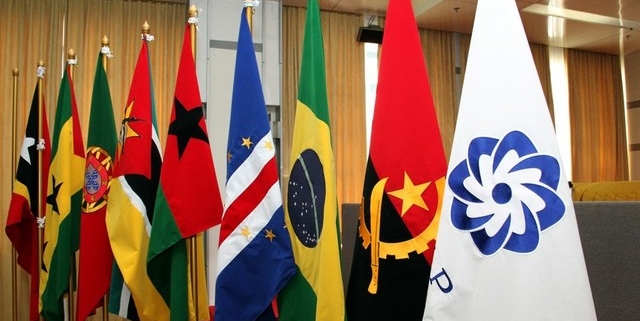
The Community of Portuguese Language Countries (CPLP), whose rotating presidency will be assumed by Angola until 2023, has so far been a mix of an imperial farewell, like its British counterpart Commonwealth, and a club of sympathies and photographic opportunities, not showing being a structure capable of leveraging the political or economic progress of its members.
The current intention of Angola and of the presidency that is starting now seems to be to change this apparent lethargy and to endow the CPLP with instruments, or at least concrete and practical goals, that promote the interest and prosperity of the countries that belong to it.
In this sense, there is a clear commitment to making the CPLP an economic organization that promotes economic and financial collaboration among its several members, possibly creating in the future an integrated market or at least a tax-free free trade area between members.
This strand (free trade area) will likely be added with some structuring funds that allow the richest CPLP countries to support development or create strategic partnerships with the poorest countries in the community. It must not be forgotten that within the CPLP there are oil powers such as Brazil, Angola, Equatorial Guinea and even Timor-Leste, there is a member of the European Union, such as Portugal, there is enormous potential population and natural resources. So, it is normal that economic integration and strategic financial cooperation between the CPLP countries are promoted and reinforced.
Thus, Angola will certainly bet on emphasizing the economic dimension of the CPLP, pointing out goals linked to a free market with reinforcement of economic cohesion and strategic partnership among its members.
A second point is linked to the free mobility of people. Once the Covid-19 crisis is overcome, it makes perfect sense beginning to deepen in practice a project for the free movement of people residing in the CPLP. Obviously, this project has to be combined with the free movement that already exists in Portugal in relation to the European Union, as well as greater economic integration, and also dispelling fears of intercontinental demographic pressures. However, it will be the most practical and tangible example that the CPLP is an organization with a future and that it says something to the population.
Do not doubt that at a time when peoples yearn for the improvement of living conditions, any organization only has a future if it embraces these aspirations, which are reflected in the goals we have stated:
i) free market in CPLP,
ii) cooperation for economic cohesion and
iii) population mobility.
These will be the pillars that will allow the CPLP development beyond its post-imperial imagination and that seem to guide the Angolan policy for its CPLP presidency, as is clear from our reading of the notes released by Angola regarding the XIII Conference that Luanda will host under the motto “Building and Strengthening a Common and Sustainable Future”, having significantly scheduled for 15 July, a Round Table on Economic and Business Cooperation, in a hybrid format (face-to-face and virtual meeting).
Angola seems to bet on a CPLP that goes beyond post-imperial nostalgia and that stands as an engine of economic growth and improvement in the quality of life of populations belonging to the Community.
https://www.cedesa.pt/wp-content/uploads/2021/07/CPLP.jpg427640CEDESA-Editorhttps://www.cedesa.pt/wp-content/uploads/2020/01/logo-CEDESA-completo-W-curvas.svgCEDESA-Editor2021-07-15 17:34:592021-07-15 17:35:01Angola wants new direction for CPLP
A Comunidade dos Países de Língua Portuguesa (CPLP), cuja presidência rotativa será assumida por Angola até 2023, tem sido até agora um misto de despedida imperial, tal como a sua congénere britânica Commonwealth, e de clube de simpatias a oportunidades fotográficas, não demonstrando ser uma estrutura capaz de alavancar o progresso político ou económico dos seus membros.
Ora, a intenção de Angola e da presidência que agora começa parece ser mudar essa aparente letargia e dotar a CPLP de instrumentos, ou pelo menos objetivos concretos e práticos, que promovam o interesse e prosperidade dos países que lhe pertencem.
Nesse sentido, há uma clara aposta em tornar a CPLP uma organização económica que promova a colaboração económica e financeira entre os seus vários membros, possivelmente, criando no futuro um mercado integrado ou pelo menos uma zona de comércio livre sem taxas entre os membros.
Essa vertente (zona de comércio livre) será provavelmente adicionada com alguns fundos estruturantes que permitam aos países mais ricos da CPLP apoiar o desenvolvimento ou criar parcerias estratégicas com os países mais pobres da comunidade. É preciso não esquecer que dentro da CPLP há potências petrolíferas como o Brasil, Angola, a Guiné Equatorial e mesmo Timor-Leste, há um membro da União Europeia, como Portugal, e há um potencial populacional e de recursos naturais enorme. Por isso, é normal que seja promovida e reforçada a vertente de integração económica e cooperação financeira estratégica entre os vários países da CPLP.
Assim, Angola apostará, certamente, na enfatização da vertente económica da CPLP, apontando objetivos ligados a um mercado livre com reforço da coesão económica e parceria estratégica entre os seus membros.
Um segundo ponto liga-se à livre mobilidade de pessoas. Ultrapassada a Covid- 19 tem todo o sentido começar a aprofundar na prática um projeto de livre circulação das pessoas residentes na CPLP. Obviamente que este projeto tem de ser compaginado com a livre circulação que já existe em Portugal em relação à União Europeia, aliás tal como a maior integração económica, e também afastar medos de pressões demográficas intercontinentais. No entanto, será o exemplo mais prático e palpável que a CPLP é uma organização com futuro e que diz algo às populações.
Não tenhamos dúvidas que um tempo em que os povos anseiam pela melhoria das condições de vida, qualquer organização só tem futuro se abraçar esses desideratos, que se traduzem nos objetivos que enunciámos:
i) mercado livre na CPLP,
ii) cooperação para a coesão económica e
iii) mobilidade da população.
Serão estes os esteios que permitirão o desenvolvimento da CPLP para além da sua imaginação põs-imperial e que parecem nortear a política angolana para a sua presidência da CPLP, tal como resulta da leitura que fazemos das notas divulgadas por Angola a propósito da XIII Conferência que Luanda vai albergar sob o lema “Construir e fortalecer um Futuro Comum e Sustentável”, tendo significativamente agendado para 15 de Julho, uma Mesa Redonda sobre a Cooperação Económica e Empresarial, em formato híbrido (presencial e virtual).
Angola parece apostar numa CPLP que ultrapasse o saudosismo pós-imperial e que se erga como motor de crescimento económico e melhoria da qualidade de vida das populações pertencentes à Comunidade.
https://www.cedesa.pt/wp-content/uploads/2021/07/CPLP.jpg427640CEDESA-Editorhttps://www.cedesa.pt/wp-content/uploads/2020/01/logo-CEDESA-completo-W-curvas.svgCEDESA-Editor2021-07-15 15:33:382021-07-15 15:42:58Angola quer novo rumo para a CPLP
At the moment, when we finish this report, the President of the Republic of Angola is in Paris with the President of the French Republic. This meeting represents one of the points in the ongoing realignment of Angola’s foreign policy. One has only to remember that in the last days of José Eduardo dos Santos, the French were “punished” due to their role in Angolagate.
Angola is not an indifferent country. It has played a geopolitically relevant role throughout its short but intense history after independence. First, it was one of the violent stages of the Cold War, where Americans and Soviets clashed with the virulence that they could not adopt in other geographic locations. Angola ended up being a Soviet bastion of great nomination, where they in reality won when in confrontation with the United States. After the Soviet phase, Angola was once again innovative and became the first African country to receive the new China that opened up to the world and sought in Africa a continent for its expansion and testing of its ideas. Angola has become a partner par excellence of China.
Obviously, this being a simplification, from the point of view of the major trends, the geopolitical position of Angola started to be aligned with the Soviet Union and after its fall, with China. Not being a country that is enraged anti-Western, very far from that, because Angola has a profound influence of European culture, the country has anchored itself in other places over time.
For several reasons, at this moment, Angola is rehearsing a different geopolitical approach that tends to devalue the role of both Russia and China, and to find new references and political dialogues. This text will focus on this devaluation, the new vectors that influence the Angolan repositioning, the countries that will now play a more relevant role in Angola’s external concerns, in addition to a short note on Portugal. Angola’s influence in southern Africa and its stabilizing role in Congos will not be addressed.
2-The decline of the Angolan relationship with Russia and China
The decline in the Soviet (now Russian) relationship with Angola is easy to describe. The Soviet Union’s commitment to Angola was part of a long-term strategy for the involvement of the North Atlantic through the countries of the South. The incursion into Africa that was accelerated by the “loss” of influence in the Middle East in the 1970s due to the cut promoted by Sadat from Egypt and by the Kissinger’s full exploitation. Suddenly, the Soviet Union found itself without one of the main supports it had in the Middle East and from where it hoped to condition the Americans. What is certain is that this situation led to a deepening of several alternatives, among which Angola later stood out. Naturally, the fall of the Berlin Wall in 1989 and the end of the Cold War, with the consequent disintegration of the Soviet Union, meant that Russian interest in Africa waned considerably. The Russia that emerged after Gorbachev’s collapse was no longer interested in any global competition with the United States, but in its survival and transformation. He quickly lost interest in Angola.
It is true that at the present time, Putin has recovered some of the imperial dynamics and is looking for some influence in Africa, but it is still of short reach and has resulted in the sending of mercenaries from the Wagner group, which have had little efficiency, namely in Mozambique. In Angola, there is no significant behaviour by Russia, especially as an essential and determining partner. There are obviously contacts and relationships. There is a lot of talk about the Russian influence on Isabel dos Santos, who might be a citizen of that country, but the fact is that there are no visible Russian investments or ties with Luanda with obvious relevance. In 2019, Russian investments in Angola of 9 billion euros were announced, but there is no known sequence of that. In addition, Angola’s external public debt to Russia is zero according to data from the National Bank of Angola (BNA), having been fully settled by 2019.
It is more difficult to wind up the declining relationship with China. In fact, Chinese investment in Angola has been growing, at least until 2020, and the Angolan external public debt vis-à-vis China in 2020 represented US $ 22 billion, equivalent to more than 40% of the total. The Chinese implantation in Angola is profound, suffice to mention in sociological terms the relevance of the City of China.
However, there is evidence that the Chinese preference is decreasing, or at least, being mitigated. The first indication refers to the negotiations for a new loan that took João Lourenço to China at the beginning of his term. The first information for the press reported large amounts to be made available by China, of around 11 billion dollars. The reality is that there were several procrastinations on that loan, which apparently ended up involving a reduced amount of US $ 2 billion that might have suited to make payments of Angolan debt to Chinese companies.
What is certain is that if we observe the evolution of the Angolan public external debt to China, we will see that there was a remarkable leap between 2015 and 2016, from about US $ 11.7 billion to US $ 21.6 billion, which the debt reached the peak in 2017, 23 billion dollars and that since then has been decreasing with a significant cadence. It seems that China does not want to be involved with Angola any more, preferring to go on managing the current involvement.
If on the part of China it is possible to glimpse some recalcitrance in the relationship with Angola, on the Angolan side there are also obstacles. The first of them is the nature of the Angolan debt to China. Many claim that a good part of this debt is what is called “odious debt”, that is, it served to benefit corrupt private interests and not the country’s development. There is the impression that the opacity with which doing business with China has allowed the creation of situations of corruption that are too evident and harmful to the country. Thus, China’s debt is partly seen as a debt of corruption. In addition, quality problems have arisen in some Chinese buildings in Angola financed by Chinese debt. It is not clear whether this lack of quality is due to any Chinese negligence or objectionable behaviour on the part of Angolan officials, but it is certain that the image persists.
This means that since China is still a key partner for Angola, it is currently in a kind of reassessment phase. It is necessary to resolve the problem of the debt of the past linked to corruption, of the way of contracting too opaque on the part of China and also issues related to quality. It is a demanding task, but required to reactivate the Chinese and Angolan common interest.
If the relationship with Russia does not have the relevance of the past and with China is in a phase of reevaluation and reconditioning, it is clear that Angola, above all, given the changes as it passes, will have to actively seek new partners.
3-The new vectors of Angolan action: goals and countries
The Angolan relationship with Russia and China concurred with the need to assert its own sovereignty, independent of external interference, and also to obtain funds for war and post-war reconstruction. João Lourenço’s current foreign policy is placed at a slightly different level, in which it is important to gather external support for the two major reforms that are being carried out internally: economic reform and the fight against corruption. Both reforms need external collaboration, without which they may not survive.
Economic reform is based on the so-called Washington consensus proposed by the International Monetary Fund (IMF), although international intellectuals and bureaucrats have already abandoned this designation and refuse it. Even so, it implies the adoption of policies to raise taxes and restrict expenditure with the respective fiscal consolidation. Naturally, this type of policy is recessive, in the short term, it increases the economic crisis in Angola. The great way to overcome this effect is to obtain foreign investment and a lot. In fact, says the theory followed, that with these disciplinary reforms of the IMF, foreign investors start to trust the governments that follow them and feel safe to invest. In short, foreign investment is the necessary counterweight to the IMF reforms and the key to their success. Consequently, it is not surprising that one of the main vectors of Angolan foreign policy is the approach to countries with a remarkable reproductive investment capacity and with proven evidence.
In what concerns the fight against corruption, the panorama that is presented is that, in general, it is the countries with the potential to invest in Angola, those in which judicial collaboration is required to recover assets or trace illegal financial movements. The Angolan oligarchies that diverted public funds sent them to the most advanced countries or those with the greatest financial potential.
Therefore, there is a group of countries that currently are of great interest to Angola: they are those with an efficient investment capacity and with a financial system through which many of the illicit movements of Angolan funds have passed, as well as where assets bought, possibly with these funds. At the moment, neither China nor Russia are countries where more investment is expected, nor were the places chosen, apparently, to park illicit goods or assets. Or if they were, there is no knowledge of what is going on there and it is sheltered.
It is in this context that a number of countries have assumed relevance. A first group is the Western Europe countries that have stood out in visits and announcements of investments in Angola. At the beginning of April 2021, the Prime Minister of Spain, Pedro Sanchez, paid a visit to Angola. This visit was accompanied by a great Spanish commitment, affirming Angola as one of Spain’s preferred partners in Africa, and this as a great Spanish bet. It was announced that Angola was the “prow” of a project in Madrid that he called “Focus Africa 2023.” Last year, it was the turn of German Chancellor Angela Merkel to visit Angola within the framework of an Angola-Germany Economic Forum and more broadly of a German Marshall Plan for Africa. Also, President Macron announced a visit to Angola, which has been postponed due to Covid-19. In turn, the Italian President had already visited Angola in 2019. In relation to the United Kingdom, there have been no visits of such high level, but some interest in Angola is beginning to be noticed due to the impositions of Brexit, which they demand new markets for the UK, although there is a huge lack of knowledge.
Visits have followed several promises of investment from Western Europe. The Italian oil company (ENI) plans to invest seven billion dollars (5.9 billion euros) over the next four years in research, production, refining and solar energy, it announced in early April 2021. Before, British businessmen said they intend to invest around US $ 20 billion in Angola. Germany and France also have several projects underway.
This axis of Western Europe has become vital in Angolan foreign policy, as these countries need new markets and investments, to get out of excessive dependence on China, and in the British case, also to look for post-Brexit alternatives, and being mature markets, they have to find out where the youth and the future is, and that is in Africa.
With João Lourenço able to convey the image that governs a competent government and with stable macroeconomic rules and turned to the free market, Spanish, French, British, Italian or German investors will feel safe to invest. At the same time, many of the fortunes out of Angola lay there, so there will be an opportunity to create mechanisms for their recovery or redirection.
It should be noted that, contrary to what one might think, this Westernization of Lourenço’s foreign policy does not pass through Portugal, but indicates a direct approach between European countries and Angola and vice versa.
To this Western European axis it is necessary to add another one, the Gulf axis. The Gulf countries, in which the United Arab Emirates and Saudi Arabia stand out. These countries, previously dependent on oil, have entered into a diversification policy. Dubai for some years now and with tremendous success. Saudi Arabia is still taking its first steps, with the so-called Vision 2030, but what is certain is that they want to invest outside their traditional scope and find new markets. In fact, Dubai already has several investments in Luanda and one of its companies has now taken over the Port of Luanda and in Saudi Arabia, Luanda has now opened an Embassy, which reveals its interest in the kingdom. On the other hand, we know, Dubai is a quite important international financial center and where several Angolan financial movements have gone through, as well as being used in tax evasion schemes in the diamond trade. Allegedly, contrary to what has been its practice, Dubai will be collaborating with requests for Angolan legal aid, representing a typical example of the new geopolitical axis that we are describing, countries with potential for investment and judicial collaboration in the fight against corruption.
In summary, we conclude that a new Angolan geopolitical approach focuses on the countries of Western Europe and the Persian Gulf. But it doesn’t stop there.
4-India’s potential
The amount of trade between Sub-Saharan Africa and India has grown steadily, and today India is a key trading partner for Africa. With regard to Angola, the country is today the third most important exporter in sub-Saharan Africa to India, when in 2005 it was irrelevant. In 2017, the Ambassador of India issued a statement in which he highlighted: “Trade between Angola and India increased 100% to US $ 4.5 billion in 2017, (…) At the end of July, outside the 10th BRICS summit , in Johannesburg, the President of Angola, João Lourenço, met with the Indian Prime Minister, Narendra Modi, and the two reaffirmed the need to increase trade and cooperation in areas such as energy, agriculture, food and pharmaceutical processing. ” As India grows and becomes a very important player worldwide, it is normal for Angola to look at this country with a new vision. It is a millionaire market to which an immensity of Angolan exports can reach.
5- The United States of America. The ultimate prize
The relationship between Angola and the United States has been ambiguous. In fact, even in the days when the US administration supported Jonas Savimbi and UNITA, there was a relationship with Luanda linked to oil and the protection of American multinationals operating in territory dominated by the MPLA government.
Currently, the United States represents everything Angola wants, the country of the dollar with an enviable investment capacity and financial innovation, with a universalizing legal structure that allows it to use multiple legal instruments around the world to pursue the fortunes of corruption. It is also from the United States that Angola needs to raise the various “red flags” that were erected during the time of José Eduardo dos Santos and made Angolan financial life much more difficult. The United States is the key country for this new Angolan phase of foreign investment and fight against corruption, because from here the definitive stimulus for progress can come.
In a way, João Lourenço was unlucky to come across Trump when he needed the USA. It is known that Trump had no interest in Africa, that he only served for his wife to take a trip in colonial style attire. Worse would have been impossible. But American indifference does not have to be an obstacle to a greater Angolan commitment to relations with the superpower. In the early 1970s, Anwar Sadat from Egypt also decided that he wanted to get closer to the United States. These occupied with a thousand and one crises, among which Vietnam stood out, paid no attention to Sadat, who continued to follow his line, expelling Soviet advisers and starting a rapprochement with the Americans.
Historical comparisons and evolutions aside-Sadat ended up murdered for having signed a peace agreement with Israel on American auspices- what seems more logical for Angola at this stage is to accentuate a closer relationship with the United States, even if they are not attentive. And they won’t be, because between Covid-19, China and Russia, and multiple small internal crises have a lot to deal with. However, effective and real US support for the new Angolan policy is essential for the country to come out of the doldrums and no longer have external financial constraints, so a vigorous approach to the US administration would be advisable on the part of Angola, despite of the mutual distrust that exists.
6-Portugal is different
Regarding the visit of Pedro Sanchez, Spanish Prime Minister, Angola came up with some criticisms of the Portuguese government, accusing him of inaction and of being overtaken by Spain. This is nonsense. Not even Portugal can think of having a monopoly on relations with Angola, nor is there any danger in Portuguese-Angolan relations. Portugal is always a separate case, its influence comes less from the government and more from soft power, from the umbilical connection that remains between the peoples of both countries. Luanda continues to stop when Sporting wins the championship or Benfica have a very important game, the favorite destination of most Angolans is Portugal, easy personal relationships are established between Portuguese and Angolans. Portuguese businessmen always look to Angola as a possibility for expanding their business. The relations between Angola and Portugal have an underlying relationship between the peoples before the intervention of the governments.
At the official level, the Portuguese government is generally welcoming towards Angola. Around 2005, he welcomed the wishes of Angolan investment, currently he accepted the requests for judicial cooperation from Angola in relation to Isabel dos Santos, as it ended up sending Manuel Vicente’s case to Angola after great pressure from Luanda. Let’s say there is a manifest porosity of the Portuguese position, easily adapting to the positions and needs of Luanda. This position, combined with the interest of the Angolan elites in Portugal, has ended up consolidating a good relationship between the two countries, despite a bump or two. It is clear that after April 25, 1974, Portugal lost interest in Africa, making its accession to Europe and becoming a modern western country its number one priority. This project has been a little tangled since 2000, but it has not led Portugal to a revision of its European focus yet, it only forced it to take a longer look at Africa, after decades of disinterest. Perhaps there is a time when Portugal wants to focus its foreign policy on Portuguese-speaking countries, but this is not the time, as it is not for Angola, which wants to embrace other “voices”, such as the English-speaking and French-speaking countries, thus, the best that governments can to do is to make life as easy as possible for its population who wish to work in common and mutually support each other’s requests, but little else.
Conclusion
The summary of the new Angolan geopolitical position is that Angola is betting on vectors linked to foreign investment and fighting corruption, assuming relevance in foreign policy, partnerships with Western Europe, Spain, France, Italy, Germany, United Kingdom, with the Persian Gulf, Emirates and Dubai, and with India. At the same time, a strengthening of relations with the United States is anticipated. Portugal will always have a place apart.
Reference Bibliography:
-Banco Nacional de Angola-Statistics- www.bna.ao
-Douglas Wheeler and René Pélissier, História de Angola, 2011
-Ian Taylor, India’s rise in Africa, International Affairs, 2012
-José Milhazes, Angola – O Princípio do Fim da União Soviética, 2009
-Robert Cooper, The Ambassadors: Thinking about Diplomacy from Machiavelli to Modern Times, 2021
-Rui Verde, Angola at the Crossroads. Between Kleptocracy and Development, 2021
1-Introdução. O reposicionamento geopolítico de Angola
No momento, em que terminamos este relatório, o Presidente da República de Angola encontra-se em Paris com o Presidente da República Francesa. Este encontro representa um dos pontos do realinhamento em curso da política externa de Angola. Basta lembrar que nos últimos tempos de José Eduardo dos Santos, os franceses estavam de “castigo” devido ao seu papel no Angolagate.
Angola não é um país indiferente. Tem desempenhado um papel geopoliticamente relevante ao longo da sua curta, mas intensa história após a independência. Primeiramente, foi um dos palcos violentos da Guerra Fria, onde americanos e soviéticos se digladiaram com a virulência que não podiam adotar noutras localizações geográficas. Angola acabou por ser um bastião soviético de grande nomeada, onde estes na realidade ganharam quando em confronto com os Estados Unidos. Depois da fase soviética, Angola foi mais uma vez inovadora e tornou-se o primeiro país africano a receber a nova China que se abria ao mundo e procurou em África um continente para a sua expansão e teste das suas ideias. Angola tornou-se um parceiro por excelência da China.
Obviamente, sendo uma simplificação, do ponto de vista das grandes tendências a posição geopolítica de Angola começou por estar alinhada com a União Soviética e após a queda desta, com a China. Não se tratando dum país rabidamente antiocidental, muito longe disso, até porque Angola tem uma profunda influência da cultura europeia, o país ancorou-se em outras paragens ao longo do tempo.
Por várias razões, neste momento, Angola ensaia uma diferente aproximação geopolítica que tende a desvalorizar o papel quer da Rússia, quer da China, e a encontrar novas referências e diálogos políticos. Este texto debruçar-se-á sobre essa desvalorização, os novos vetores que influenciam o reposicionamento angolano, os países que agora desempenharão um papel mais relevante nas preocupações externas de Angola, além de uma curta nota sobre Portugal. Não se abordará a influência de Angola na África Austral e o seu papel de estabilização nos Congos.
2-O declínio da relação angolana com a Rússia e a China
O declínio da relação soviética (agora russa) com Angola é fácil de descrever. A aposta da União Soviética em Angola fazia parte de uma estratégia de longo-prazo de envolvimento do Atlântico Norte através dos países do Sul. A incursão em África que foi acelerada pela “perda” da influência no Médio-Oriente nos anos 1970s derivada do corte promovido por Sadat do Egipto e pelo aproveitamento oportuno de Kissinger. De repente, a União Soviética viu-se sem um dos suportes principais que tinha no Médio Oriente e de onde esperava condicionar os americanos. O certo é que essa situação levou a um aprofundamento de várias alternativas entre as quais mais tarde se destacou Angola. Naturalmente, que a queda do Muro de Berlim em 1989 e o final da Guerra Fria, com a consequente desagregação da União Soviética levaram a que o interesse russo em África esmorecesse consideravelmente. A Rússia que emergiu após o colapso de Gorbachev já não estava interessada em qualquer competição mundial com os Estados Unidos, mas na sua sobrevivência e transformação. Rapidamente perdeu o interesse em Angola.
É certo que atualmente, Putin recuperou alguma da dinâmica imperial e procura alguma influência em África, mas ainda é de curto alcance e tem-se traduzido no envio de mercenários do grupo Wagner, que têm tido pouca eficácia, designadamente em Moçambique. Em Angola, não se nota uma atuação relevante da Rússia, sobretudo como parceiro essencial e determinante. Existem obviamente contactos e relações. Fala-se muito na influência russa em Isabel dos Santos, que será cidadã desse país, mas o certo é que não são visíveis investimentos ou laços russos com Luanda com manifesto relevo. Em 2019, foram anunciados investimentos russos em Angola de 9 mil milhões de euros, mas não se conhece sequência de tal. A isto acresce que a dívida pública externa de Angola à Rússia é zero de acordo com os dados do Banco Nacional de Angola (BNA), tendo sido liquidada na sua totalidade até 2019.
Mais difícil é concluir pelo declínio da relação com a China. Na verdade, o investimento chinês em Angola tem vindo a crescer, pelo menos até 2020, e a dívida pública externa angolana face à China representava em 2020, 22 mil milhões de dólares, o equivalente a mais de 40% do total. A implantação chinesa em Angola é grande, bastando referir em termos sociológicos a relevância da Cidade da China.
No entanto, há indícios que a preferência chinesa está a diminuir, ou pelo menos, a ser mitigada. O primeiro indício refere-se às negociações de um novo empréstimo que levou João Lourenço à China no início do seu mandato. As primeiras informações para a imprensa davam conta de montantes avultados a serem disponibilizados pela China, na ordem dos 11 mil milhões de dólares. A realidade é que houve variadas procrastinações nesse empréstimo, que acabou aparentemente para envolver uma quantia reduzida de 2 mil milhões de dólares que terá servido para fazer pagamentos de dívida angolana a empresas chinesas.
O certo é que se analisarmos a evolução da dívida pública externa angolana à China verificaremos que um houve um salto assinalável entre 2015 e 2016, de cerca de 11,7 mil milhões de dólares para 21,6 mil milhões de dólares, que a dívida atingiu o pico em 2017, 23 mil milhões de dólares e que desde aí tem vindo a diminuir com uma cadência significativa. Afigura-se que a China não se quer envolver mais com Angola, preferindo ir gerindo o atual envolvimento.
Se da parte da China se poderá vislumbrar alguma recalcitrância na relação com Angola, da parte angolana também existem obstáculos. O primeiro deles é a natureza da dívida angolana à China. Muitos alegam que uma boa parte desta dívida é o que se chama “dívida odiosa”, isto é, serviu para beneficiar interesses privados corruptos e não o desenvolvimento do país. Existe a impressão que a opacidade com que se fazem os negócios com a China permitiu a criação de situações de corrupção demasiado evidentes e prejudiciais ao país. Assim, a dívida da China é, em parte, vista como dívida da corrupção. A isto acresce que surgiram problemas de qualidade nalgumas construções chinesas em Angola financiadas por dívida chinesa. Não está claro se essa falta de qualidade se deve a qualquer negligência chinesa ou a comportamentos censuráveis por parte de responsáveis angolanos, mas o certo é que a imagem persiste.
Isto quer dizer que sendo ainda a China um parceiro fundamental de Angola, está-se, neste momento, numa espécie de fase de reavaliação. Forçosamente há que resolver o problema da dívida do passado ligada à corrupção, do modo de agir contratual demasiado opaco por parte da China e também as questões ligadas à qualidade. É uma tarefa exigente, mas necessária para reativar o interesse comum chinês e angolano.
Se a relação com a Rússia não tem a relevância do passado e com a China está numa fase de reavaliação e recondicionamento, é evidente que Angola, sobretudo, atendendo às mudanças porque passa, terá que buscar novos parceiros ativamente.
3-Os novos vetores de atuação angolana: objetivos e países
A relação angolana com a Rússia e a China coincidiu com a necessidade de afirmar uma soberania própria e independente de interferências externas, e também da obtenção de fundos para a guerra e reconstrução pós-guerra. A atual política externa de João Lourenço coloca-se num patamar ligeiramente diferenciado, em que é importante congregar o apoio externo para as duas grandes reformas que estão a ser levadas a cabo internamente: a reforma económica e a luta contra a corrupção. Ambas as reformas necessitam de colaboração externa, sem o qual podem não sobreviver.
A reforma económica assenta no chamado consenso de Washington proposto pelo Fundo Monetário Internacional (FMI), embora os intelectuais e burocratas internacionais tenham já abandonado esta designação e a recusem. Ainda assim, implica a adoção de políticas de alargamento dos impostos e restrição da despesa com a respetiva consolidação fiscal. Naturalmente que este tipo de políticas é recessivo, aumenta, no curto-prazo, a crise económica em Angola. A grande forma de ultrapassar este efeito é obter investimento externo e muito. Aliás, diz a teoria seguida, que havendo estas reformas disciplinadoras do FMI, os investidores estrangeiros passam a confiar nos governos que as seguem e sentem-se seguros para investir. Em resumo, o investimento estrangeiro é o contrapeso necessário às reformas do FMI e a chave do sucesso destas. Consequentemente, não admira que um dos principais vetores da política externa angolana seja a aproximação a países com capacidade de investimento reprodutor assinalável e com provas dadas.
Naquilo que diz respeito à luta contra a corrupção, o panorama que se apresenta é que, de uma maneira geral, são os países com potencialidades para investir em Angola, aqueles em que é necessária a colaboração judicial para recuperação de ativos ou traço de movimentos financeiros ilegais. As oligarquias angolanas que desviaram fundos públicos remeteram-nos para os países mais avançados ou com maior potencial financeiro.
Portanto, há um grupo de países que atualmente interessa de sobremaneira a Angola: são aqueles com capacidade de investimento eficiente e com um sistema financeiro por onde passaram muitos dos movimentos ilícitos de fundos angolanos, bem como onde se sedearam ativos comprados, possivelmente, com esses fundos. Neste momento, nem a China, nem a Rússia são países de onde se espere mais investimento, nem foram os locais escolhidos, aparentemente, para parquear bens ou ativos ilícitos. Ou se foram não há qualquer conhecimento do que lá se passa e está acolhido.
É neste contexto que tem assumido relevância uma série de países. Um primeiro grupo são os países da Europa Ocidental que se têm destacado em visitas e anúncios de investimentos em Angola. No início deste mês de Abril de 2021, o primeiro-ministro de Espanha, Pedro Sanchez, fez uma visita a Angola. Esta visita foi acompanhada de grande empenho espanhol, afirmando Angola como um dos parceiros preferenciais de Espanha em África, e esta como uma grande aposta espanhola. Anunciou-se que Angola era a “proa” duma empreitada de Madrid a que chamou “Foco África 2023.” No ano passado, tinha sido a vez da Chanceler alemã Angela Merkel visitar Angola no âmbito de um Fórum Económico Angola-Alemanha e mais alargadamente de um Plano Marshall alemão para África. Também, o Presidente Macron anunciou uma visita a Angola, que tem sido adiada devido à Covid-19. Por sua vez o Presidente italiano já havia visitado Angola em 2019. Em relação ao Reino Unido não tem havido visitas deste nível tão elevado, mas começa a notar-se algum interesse por Angola devido às imposições do Brexit, que exigem novos mercados para o Reino Unido, embora haja um enorme desconhecimento.
Às visitas têm sucedido variadas promessas de investimento da Europa Ocidental. A empresa italiana de petróleos (ENI) prevê investir sete mil milhões de dólares (5,9 mil milhões de euros), nos próximos quatro anos, na pesquisa, produção, refinação e energia solar, anunciou no início de abril de 2021. Antes empresários britânicos afirmaram pretender investir em Angola cerca de 20 mil milhões de dólares. Também a Alemanha e a França têm vários projetos em curso.
Este eixo da Europa Ocidental tornou-se fundamental na política externa angolana, pois estes países necessitam de novos mercados e investimentos, para saírem da excessiva dependência da China, e no caso britânico, também para procurar alternativas pós-Brexit, e sendo mercado maduros, têm de ir ao encontro de onde está a juventude e o futuro, e isso está em África.
Conseguindo João Lourenço passar a imagem que rege um governo competente e com regras macroeconómicas estáveis e viradas para o mercado livre, os investidores espanhóis, franceses, britânicos, italianos ou alemães sentir-se-ão seguros para investir. Ao mesmo tempo, nestes países residem muitas das fortunas saídas de Angola, portanto, haverá oportunidade de criar mecanismos para a sua recuperação ou redirecção.
Note-se que ao contrário do que se poderia pensar, esta Ocidentalização da política externa de Lourenço não passa por Portugal, mas indica uma abordagem direta entre os países europeus e Angola e vice-versa.
A este eixo Europeu Ocidental há que adicionar outro, o eixo do Golfo. Os países do Golfo, em que se destacam os Emirados Árabes Unidos e a Arábia Saudita. Estes países, previamente dependentes do petróleo, entraram numa política de diversificação. O Dubai já há alguns anos e com tremendo sucesso. A Arábia Saudita ainda dá os primeiros passos, com a chamada Visão 2030, mas o certo é que querem investir fora do seu âmbito tradicional e encontrar novos mercados. Na verdade, o Dubai já tem vários investimentos em Luanda e uma sua empresa tomou agora conta do Porto de Luanda e na Arábia Saudita, Luanda abriu agora uma Embaixada, o que revela bem o interesse no reino. Por outro lado, como se sabe, o Dubai é um centro financeiro internacional de grande nomeada e por onde passou variada movimentação financeira angolana, bem como foi utilizado nos esquemas de fuga ao fisco no comércio de diamantes. Alegadamente, ao contrário do que tem sido a sua prática, o Dubai estará a colaborar com os pedidos de auxílio judiciário angolanos, representando um exemplo típico do novo eixo geopolítico que estamos a descrever, países com potencial de investimento e de colaboração judicial na luta contra corrupção.
Sumariamente, concluímos que uma nova aproximação geopolítica angolana se centra nos países da Europa Ocidental e do Golfo Pérsico. Mas não se fica por aqui.
4-O potencial da Índia
A quantidade de comércio entre a África Subsaariana e a Índia tem crescido de forma consistente, e hoje a Índia é um parceiro comercial fundamental de África. Relativamente a Angola, o país é hoje o terceiro exportador na África subsaariana mais importante para a Índia, quando em 2005 não tinha relevância. Em 2017, o Embaixador da Índia emitiu um comunicado no qual destacou: “O comércio entre Angola e a Índia aumentou 100% para US $ 4,5 biliões em 2017, (…) No final de julho, à margem da 10ª cimeira dos BRICS, em Joanesburgo, o presidente de Angola, João Lourenço, reuniu-se com o primeiro-ministro indiano, Narendra Modi, e os dois reafirmaram a necessidade de aumentar o comércio e a cooperação em áreas como energia, agricultura, alimentos e processamento farmacêutico.”. Há medida que a Índia vai crescendo e se tornando um ator muito importante a nível mundial, é normal que Angola olhe para este país com uma nova visão. Trata-se de um mercado milionário para onde uma imensidão das exportações angolanas pode chegar.
5-Estados Unidos da América. The ultimate prize
A relação entre Angola e os Estados Unidos tem sido ambígua. Na verdade, mesmo nos tempos em que a administração norte-americana apoiava Jonas Savimbi e a UNITA, havia um relacionamento com Luanda ligado ao petróleo e à proteção das multinacionais americanas a operar em território dominado pelo governo do MPLA.
Atualmente, os Estados Unidos representam tudo o que Angola deseja, o país do dólar com uma capacidade de investimento e inovação financeira invejável, com uma estrutura jurídica universalizante que permite lançar mão de múltiplos instrumentos legais por todo o mundo para perseguir as fortunas da corrupção. É também dos Estados Unidos que Angola necessita que sejam levantados os vários “sinais vermelhos” que foram sendo erguidos nos tempos de José Eduardo dos Santos e tornaram a vida financeira angolana muito mais difícil. Os Estados Unidos são o país chave para esta nova fase angolana de investimento externo e combate à corrupção, porque daqui pode vir os estímulos definitivos de avanço.
De certa forma, João Lourenço teve azar em se deparar com Trump, quando necessitava dos EUA. É conhecido que Trump não tinha qualquer interesse em África, que apenas serviu para a sua mulher realizar uma viagem em trajes estilo colonial. Pior teria sido impossível. Mas a indiferença americana não tem de ser um obstáculo a um maior empenho angolano nas relações com a superpotência. No início dos anos 1970, Anwar Sadat do Egipto também decidiu que se queria aproximar dos Estados Unidos. Estes ocupados com mil e uma crises, entre as quais se destacava o Vietname não deram qualquer atenção a Sadat, que não deixou de seguir a sua linha, expulsando os conselheiros soviéticos e iniciando uma aproximação aos norte-americanos.
Comparações e evoluções históricas à parte-Sadat acabou assassinado por ter assinado um acordo da paz com Israel sobre os auspícios americanos- o que parece mais lógico para Angola nesta fase é acentuar uma aproximação aos Estados Unidos, mesmo que estes não estejam atentos. E não estarão, pois entre a Covid- 19, a China e a Rússia, e múltiplas pequenas crises internas têm muito com que se ocupar. No entanto, o apoio efetivo e real dos EUA à nova política angolana é fundamental para que o país saia do marasmo e deixe de ter os condicionalismos financeiros externos, portanto, uma vigorosa aproximação à administração norte-americana seria aconselhável por parte de Angola, apesar da desconfiança mútua que existe.
6-Portugal é diferente
A propósito da visita de Pedro Sanchez, primeiro-ministro espanhol, a Angola surgiu algumas críticas ao governo português, acusando-o de inação e de estar a ser ultrapassado por Espanha. Isto é um disparate. Nem Portugal pode pensar ter o monopólio das relações com Angola, nem sequer há qualquer perigo nas relações luso-angolanas. Portugal é sempre um caso à parte, a sua influência vem menos do governo e mais do soft power, da ligação umbilical que se mantém entre os povos de ambos os países. Luanda continua a parar quando o Sporting ganha o campeonato ou o Benfica tem um jogo muito importante, o destino preferido da maior parte dos angolanos é Portugal, as relações pessoais fáceis estabelecem-se entre portugueses e angolanos. Os empresários portugueses olham sempre para Angola como uma possibilidade de expansão dos seus negócios. As relações entre Angola e Portugal têm subjacente um entrosamento entre os povos antes da intervenção dos governos.
A nível oficial o governo português é geralmente acolhedor em relação a Angola. Em 2005 acolheu os desejos de investimento angolano, atualmente, acedeu aos pedidos de cooperação judicial de Angola relativamente a Isabel dos Santos, como antes acabou por enviar o processo de Manuel Vicente para Angola após grande pressão de Luanda. Digamos que há uma porosidade manifesta da posição portuguesa, adaptando-se com facilidade às posições e necessidades de Luanda. Esta posição aliada ao interesse das elites angolanas em Portugal, tem acabado por consolidar uma boa relação entre os dois países, apesar de um ou outro solavanco. É evidente que após o 25 de Abril de 1974, Portugal desinteressou-se de África, fazendo como sua prioridade número um a adesão à Europa e o tornar-se um país moderno ocidental. Este projeto está um pouco enrodilhado desde 2000, mas não levou Portugal ainda a uma revisão do seu foco europeu, apenas o obrigou a um olhar mais prolongado para África, depois de décadas de desinteresse. Talvez exista um momento em que Portugal queira centrar a sua política externa nos países lusófonos, mas esta não é a altura, como não é para Angola, que quer abraçar outras fonias, como a anglófona e francófona, portanto, o melhor que os governos podem fazer é facilitar o máximo a vida aos seus povos que desejem trabalhar em comum e apoiar mutuamente as solicitações de cada uma das partes, mas pouco mais.
Conclusão
O sumário da nova posição geopolítica angolana é que Angola aposta nos vetores ligados ao investimento externo e combate contra a corrupção, assumindo relevância na política externa parcerias com a Europa Ocidental, Espanha, França, Itália, Alemanha, Reino Unido, com o Golfo Pérsico, Emirados e Dubai, e com a Índia. Ao mesmo tempo, antecipa-se um reforço das relações com os Estados Unidos. Portugal terá sempre um lugar à parte.
Bibliografia utilizada
-Banco Nacional de Angola-Estatísticas- www.bna.ao
-Douglas Wheeler e René Pélissier, História de Angola, 2011
-Ian Taylor, India’s rise in Africa, International Affairs, 2012
-José Milhazes, Angola – O Princípio do Fim da União Soviética, 2009
-Robert Cooper, The Ambassadors: Thinking about Diplomacy from Machiavelli to Modern Times, 2021
-Rui Verde, Angola at the Crossroads. Between Kleptocracy and Development, 2021
-Tom Burgis, The Looting Machine. Warlords, Tycoons, Smugglers and the Systematic Theft of Africa’s Wealth, 2015.
-Factos públicos e informativos retirados da Lusa, DW, Jornal de Negócios, Jornal de Angola, Angonotícias e Novo Jornal.
https://www.cedesa.pt/wp-content/uploads/2021/05/jlourenco-pol-externa.jpg440780CEDESA-Editorhttps://www.cedesa.pt/wp-content/uploads/2020/01/logo-CEDESA-completo-W-curvas.svgCEDESA-Editor2021-05-18 10:09:002021-12-29 20:44:28Os realinhamentos da política externa de Angola
We may request cookies to be set on your device. We use cookies to let us know when you visit our websites, how you interact with us, to enrich your user experience, and to customize your relationship with our website.
Click on the different category headings to find out more. You can also change some of your preferences. Note that blocking some types of cookies may impact your experience on our websites and the services we are able to offer.
Essential Website Cookies
These cookies are strictly necessary to provide you with services available through our website and to use some of its features.
Because these cookies are strictly necessary to deliver the website, refuseing them will have impact how our site functions. You always can block or delete cookies by changing your browser settings and force blocking all cookies on this website. But this will always prompt you to accept/refuse cookies when revisiting our site.
We fully respect if you want to refuse cookies but to avoid asking you again and again kindly allow us to store a cookie for that. You are free to opt out any time or opt in for other cookies to get a better experience. If you refuse cookies we will remove all set cookies in our domain.
We provide you with a list of stored cookies on your computer in our domain so you can check what we stored. Due to security reasons we are not able to show or modify cookies from other domains. You can check these in your browser security settings.
Other external services
We also use different external services like Google Webfonts, Google Maps, and external Video providers. Since these providers may collect personal data like your IP address we allow you to block them here. Please be aware that this might heavily reduce the functionality and appearance of our site. Changes will take effect once you reload the page.
Google Webfont Settings:
Google Map Settings:
Google reCaptcha Settings:
Vimeo and Youtube video embeds:
Privacy Policy
You can read about our cookies and privacy settings in detail on our Privacy Policy Page.